ብዕለት 22 ሰነ 2015 ዓ.ም.ፈ. ብመራኸቢ ብዙሓን ኣቢሉ ካብ ስዓት 19.00 ክሳብ 22.30 ብምልኣት ተሳተፍነት ኣባላት ጨንፈር ኣብ ትሕቲ ንታሪኻዊ 2ይ ጉባኤ ሰልፍና ንምዕዋት ንቡር መትከላዊ ዕጥቅና ንደርብ !!! ዝብል መሪሕ ጭርሖ ብልዙብ መንፈስ ዓመታዊ ጉባኤ ኣሳላሲሉ። ኣብ መኽፈቲ ኣቦወንበር ጨንፈር ንህልዊ ኩነታት ህዝብናን ሃገርናን ዝርኤ ዘሎ ኣሰካፊ ኩነታትን፡ ህልዊ ድርብ ዉራይት ሰ.ዲ.ህ.ኤ ንምዕዋት ተባዕ መትከላዊ መሰረታት ተዓጢቁሉ ዘሎ ተንኪፉ ንኩሎም ኣመንቲ ሃይማኖት እስልምና ሮሞዳን ከሪም ብምባል ከፍትዎ። ጉባኤ ብኣካያዲት ሽማግለ ዝቀረበ ስሪዒታውን ፖሊቲካውን ንጥፈታትን ገንዘባዊ ጸባጸብን ናይ ዓመተ 2014 ሰሚዑ ድሕሪ ኣገደስቲ ሃነጽቲ ሕቶታትን መብርህን ብሙሉእ ድምጺ ኣርጊእዎ። ቀጺሉ ንዓመተ 2015 እትመርሕ ሽማገለ 5 ዝኣባላታ ብዲምክራስያዊ ኣገባብ መሪጹ። ኣስዒቡ ንኣብ ዕዉት ምቅርራባት ዝርከብ ዘሎ ታሪኻዊ 2ይ ጉባኤ ሰልፊ ዝውክልዎ ክልተ ኣባላት መሪጹ። ኣብ መደምደምታ ኣገደስቲ ለወባታት ንመጻኢት ሽማግለን ንነፍሲወከፍ ኣባልን ብሓባራዊ ሓላፍነት ንምቅላስ ዕጥቅና ክንድርብን ዝብል ብምትሕልላፍ ጉባኤ ተዛዚሙ።

ነባሪ ክብርን ዝኽርን ንጀጋኑ ሰማእታትና !!!

ንታሪኻዊ 2ይ ጉባኤ ሰልፍና ንምዕዋት ንቡር መትከላዊ ዕጥቅና ንደርብ !!!

ውድቀት ንመላኺ ስርዓት ህግዲፍ።

22/06/2015

Wednesday, 24 June 2015 10:31

DC Demonstration 2015 Discussion 1

Wednesday, 24 June 2015 10:24

DC Demonstration 2015 Discussion 2

Wednesday, 24 June 2015 10:19

DC Demonstration 2015 Part II

Wednesday, 24 June 2015 09:58

DC Demonstration 2015 Part I

“Dire Eritrea situation should no longer be Ignored” - Mike Smith

At the start of its Eritrea meeting Tuesday afternoon, 23 June, the UN Commission of Human Rights was shocked by the revelations on the situation in Eritrea as well as by harassment reportedly directed against the UN fact-finders on Eritrea by “unknown” assailants in Geneva.

UN Commission 1

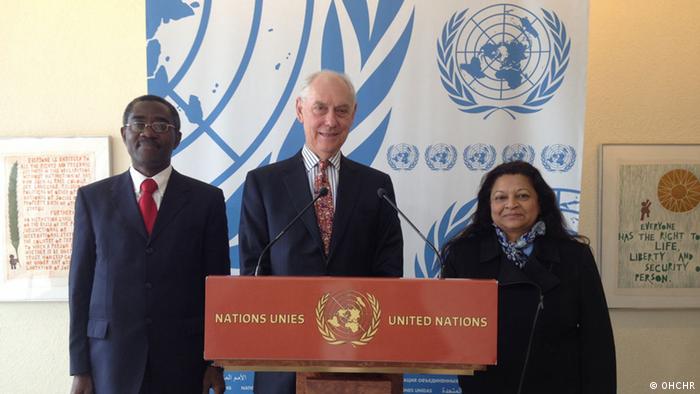
It was before inviting the UN Commission of Inquiry on Eritrea to introduce the report that the meeting chairman informed the delegations of nearly 200 countries in the hall that UN Commission of Inquiry members Mr. Mike Smith, Ms Sheila Keetharuth and Mr. Victor Dankwa have received threats to their lives in their hotel as well as in the streets of Geneva in the last two days and that the Swiss authorities are taking appropriate measures to protect their safety. The head of the Eritrean delegation, Mr. Tesfamichale Gherhatu, said he had no previous knowledge of the report, “but if true, it is sad” that it happened.

When invited to the podium, the chairman of the Eritrea inquiry commission, Mr. Smith, made a strong introductory statement to the 483-page report by listing some of the harrowing crimes against one’s own people and unreservedly condemning the perpetrators of those unbelievably excessive abuses not seen being employed anywhere in the world”. He hoped their actors would one day be accounted for their acts. Mr. Smith added that the country under report is ruled by “the most repressive” regime in the world today and that the “dire situation in Eritrea should no longer be ignored”.

Mr. Smith also warned that “human rights conditions must be at the forefront” of any future relation with the regime in Eritrea, adding that “little is changing in the country” to this day.

UN Commission 2

In his rebuttal, the Eritrean delegate tried to “falsify” the scathing UN report by claiming a concerted conspiracy of “big enemies” of Eritrea and the so-called state of “no-war-no-peace” that his country is forced to live under. The meeting chairman stopped and warned Mr. Gerhatu not to use unacceptable language like “travesty of justice” in his accusations against the UN Commissioners who prepared the report after consulting 550 witnesses and receiving 160 written submissions from victims and eyewitnesses.

When the flour was open for discussion on the report, a large number of the 47 members of the UN Commission of Human Rights listed their country names to make interventions.. So far, only 8 of those in the list could get time to make statements. Out of these only China expressed sympathies with the regime in Asmara.

Others made uncompromising condemnations of what is going in Eritrea. The speakers were delegates of the European Union, the United States, Australia, Ghana, Belgium, the Czech Republic and Djibouti. The seven delegations fully supported the report of the Inquiry Commission on Eritrea and speaker after speaker called for “brining to justice” all the alleged perpetrators by any means possible. The Djibouti delegation revealed that Cameroon and Djibouti are drafting a motion to the UN Commission of Human Rights so that the alleged crimes against humanity in Eritrea can be further investigated.

The meeting on Eritrea will continue as of 9am Wednesday, 24 June 2015

AFP

 
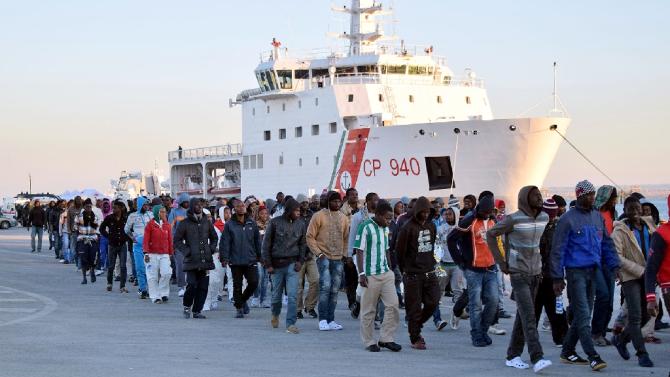
Shipwrecked migrants disembark from a rescue vessel as they arrive in the Italian port of Augusta in Sicily on April 16, 2015
.

View gallery

  • .
  • .

Peshawar (Pakistan) (AFP) - The United Nations refugee chief Tuesday warned the European Union about its planned military operation to target people-smugglers in the Mediterranean, saying migrants attempting the risky sea crossing must be protected.

Antonio Guterres, the UN High Commissioner for Refugees, welcomed the initial intelligence-gathering phase of the new mission, which could begin as early as next week, but said rescuing migrants at sea should be the top priority.

More than 100,000 people have made the perilous journey across the Mediterranean to Europe so far this year, and some 1,800 have drowned trying.

Many of them have been fleeing war or poverty in parts of Africa and the Middle East and paid huge sums to risk their lives in barely seaworthy boats for a chance of reaching Europe.

EU leaders agreed at a summit in April, overshadowed by the sinking of a rickety migrant boat with the loss of 800 lives, to formulate a plan to tackle the crisis at source on the southern shores of the Mediterranean, including a military option to go after smugglers in Libya.

On Monday EU foreign ministers approved the launch of a three-stage military strategy beginning with intelligence-gathering.
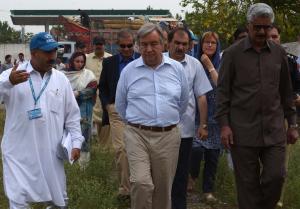
Guterres, visiting Afghan refugee facilities in Pakistan, said the lives of those attempting the crossing must come first.

"Our position has been very clear: first priority rescue at sea -- lives need to be saved, nobody should be left to die in the Mediterranean," he said.

The 28-nation EU scaled down its search and rescue operations last year, to the dismay of Italy, where the bulk of the migrants arrive.

The new military mission, dubbed "EU NAVFOR Med", will initially involve five warships, two submarines, three maritime patrol aircraft, drones and helicopters.

- 'Protect victims' -
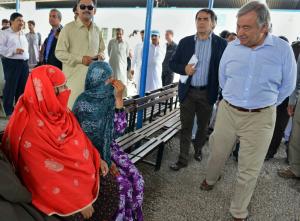
Guterres said action to deal with those who were cashing in on the Mediterranean migrant crisis was welcome, but international law must be respected.

"Smuggling and trafficking are horrible things. People are exploited, their rights are violated, people die in unseaworthy boats," he said.

"So whatever can be done to crack down on traffickers and smugglers is positive, with one essential condition -- that the protection of the victims is guaranteed and the access to European territory is guaranteed."

Last week the UN human rights chief Zeid Ra'ad Al Hussein called on the EU to open its doors wider to migrants and said the bloc could easily take in a million refugees.

The Mediterranean migration crisis has become a hugely sensitive political issue in Europe, driving gains for far-right and eurosceptic parties across the continent.

The second phase of the EU mission involves intervention to board and disable smuggler vessels and arrest the traffickers, while the third would extend these actions into Libyan waters and possibly inside the country itself.

Recognising the reluctance of some members to commit to the potentially complex and dangerous second and third stages, the April summit agreed a UN Security Council resolution would be needed before they went ahead.

The situation is complicated by the unstable picture in Libya, where rival factions are fighting for control and the internationally-recognised government has been forced to flee the capital.

Source=http://news.yahoo.com/protect-migrants-mediterranean-military-crackdown-un-warns-eu-181857903.html
INTERVIEW

The UN Human Rights Council in Geneva is debating a report on human rights abuses in Eritrea. Each month, 5,000 Eritreans flee their country.

A recent report by a three-member panel from the United Nations alleged that the Eritrean government was responsible for systematic and widespread human rights violations on an almost unprecedented scale. These abuses are driving thousands of Eritreans out of their country. Many of them end up making the perilous sea journey to Europe - Eritrean migrants are the second largest group after Syrian refugees.

DW spoke to Barbara Lochbihler, vice chairperson of the subcommittee on human rights at the European parliament.

DW: What should the European parliament be doing in order to help put an end to these abuses in Eritrea?

Barbara Lochbihler: Already in March we had a debate in our human rights subcommittee. It is quite difficult to influence the Eritrean government to change its policy. We have to think about the possibilities how we can do this. Since they [Eritrea] got independence in 1991, there are no political parties, there is no independent media, there have not been any elections and, as stated in theUN inquiry report, the country is run not by law but by fear. This is very widespread and so I think we should view the migrants who come to Europe from Eritrea with the knowledge that they are coming with a political background;they cannot continue to stay there. They have this abusive military and national service which on paper says it is only for 18 months, but de facto they can go on to spend their whole working life in such service. When we discussed this on the human rights committee, we can say this is some sort of slavery-like practice.

Are those Eritrean refugees who arrive in Europe getting the asylum to which they are entitled?

Not always. But to my understanding, at least from my country [Germany], they are not being sent back. We know from many individual cases they are very poor, they take the little money they have and escape by taking very dangerous routes through the desert and also perhaps staying in other neighboring war-torn countries. We have examples, years ago when they were stuck in the Sinai, they were treated like kidnapped people and some had their organs taken away. They are subjected to all kinds of cruelty. We have to see their desperate situation and give them some form of preferential status that can allow them to come to Europe and receive asylum status.


The European Union finances development programs in Eritrea which it enacts together with the Eritrean government, do you think those programs ought to be stopped or at least reviewed?

I think we should review them and we should clearly state that if we want to continue, then the human rights situation has to change.

Barbara Lochbihler: 'EU needs to review its aid policy with Eritrea'

The UN inquiry report also says that some of the human rights violations documentedmay constitute crimes against humanity. This is not a term you use easily. All things together, disappearances, killings, this permanent surveillance, no freedom of movement and all these abuses at the national and military services, all this together, these are very serious human rights violations.


I think the European Union should not continue with their development aid as it is. They have to make a special effort to influence the Eritrean government and perhaps demand that what is on paper concerning the 18 months of military service will then definitely be implemented.

Do you think the Eritrean government will be susceptible to that kind of pressure?

It's very difficult. What we heard is that no foreign government has influence there but we have to give it a try. Eritrea is also part of other consultation forums like the Khartoum process, where the European Union and member states are discussing with the Eritrean government how to fight the spread of human trafficking and also terrorism. In all those occasions where we have the possibility of direct dialogue with them, we should let the Eritrean government know. Perhaps also in the future in the European parliament we have to make our own resolution.

Barbara Lochbihler is the vice chairperson of the subcommittee on human rights at the European parliament

Source=http://allafrica.com/stories/201506232046.html

Eritrea
Refugees From Sudan, Eritrea and Somalia Participate in Refugee Day Cycling Race

Refugees from Sudan, Eritrea and Somalia took part in the grand Refugee Day cycling race that took place around the …see more »

HORN VON AFRIKA

Verfolgung und Folter treiben Eritreer in die Flucht nach Europa. Wenn die EU nun ihre Abschottungspolitik gegenüber dem Land öffnen will, sei Vorsicht geboten, sagt der Bundestagsabgeordnete Frank Heinrich im Interview.

Ein Afrikaner, ein Australier und eine Frau aus Mauritius sind die Mitglieder der UN-Untersuchungskommission zur Menschenrechtssituation in Eritrea

UN-Untersuchungskommission zur Menschenrechtssituation in Eritrea

Deutsche Welle: Herr Heinrich, Überwachung, Zwangsarbei und Folter - die Bilanz des Berichts, den die UN-Kommission zur Untersuchung der Menschenrechtssituation in Eritrea am Dienstag dem UN-Menschenrechtsrat vorlegt, ist erschütternd. Ist das für Sie eine Überraschung?

Frank Heinrich: Es ist keine Überraschung. Ich habe mich schon seit zwei Jahren verstärkt mit dem Thema beschäftigt und mit Personen gesprochen, die das immer wieder benennen. Selbst "Human Rights Watch" konnte nur einen Bericht schreiben mit den Zeugenaussagen derer, die das Land verlassen haben. Auch die Untersuchung, die jetzt vorgestellt wird, konnte nie vor Ort stattfinden, weil die Menschenrechtssituation so restriktiv ist.

Ist die Tatsache, dass der Bericht entgegen üblicher UN-Praxis nicht vor Ort vorbereitet werden konnte, eine Einschränkung für dessen Glaubwürdigkeit?

Natürlich muss man sich in Bezug auf Einzelinterviews fragen: Wie viel ist davon subjektiv? Man selber ist immer zu einem Maße geprägt und damit auch die Interviews. Wenn aber 550 vertrauliche Gespräche für die Untersuchung geführt wurden, konnte man für den Bericht die Schnittmenge berücksichtigen und Randaussagen herausfiltern. Die drei UN-Experten (Siehe Artikelbild, Anmerk. der Redaktion)bekamen keine Erlaubnis, im Land zu sein. Auch die 550 (Zeugen) waren zu verängstigt, um genau zu sagen, wer sie sind. Man kann das für unglaubwürdig halten, aber bei dieser Menge gibt es schon deutliche Überschneidungen, die auf gravierendste Menschenrechtsverletzungen hinweisen.

Was für Konsequenzen hat das für die internationalen Beziehungen zu so einem Land, das immerhin schon seit 24 Jahren unter der Führung von Staatschef Issaias Afewerki steht?

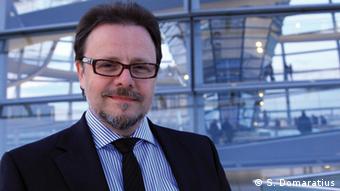
Bundestagsabgeordneter Frank Heinrich. (Foto: Susanne Domaratius)

Bundestagsabgeordneter Frank Heinrich

Beziehungen muss man haben, um überhaupt noch sagen zu können, was man über die Situation im Land denkt. Man darf sie nicht einfach abbrechen. Wenn sie sich aber auch finanziell ausdrücken sollen, ist höchste Vorsicht geboten. Wenn Eritrea eine Zwangssteuer für die eritreische Diaspora erhebt und die zum Teil auch eintreibt, muss unser Auswärtiges Amt denen sagen: Das geht auf deutschem Boden so nicht. Der Bundesentwicklungsminister Gerd Müller wird in wenigen Wochen dort hinreisen. Dann wird er diese Themen natürlich auch ansprechen. Das kann man aber nur, wenn Beziehungen bestehen. Bei Geld sieht das anders aus: Wenn dort Menschenhandel betrieben wird, wenn Korruption und Ausnutzung von Menschen immer wieder vorkommen, dann darf man keine finanziellen Beziehungen aufnehmen.

Welche Fragen würden Sie als Bundestagsabgeordneter und Mirglied des Ausschusses für Menschenrechte des Bundestags in Eritrea stellen?

Mir ist bewusst, dass ich nicht sofort auf Konfrontation gehen darf. Es gibt aber Fragen, auf die ich Antworten will. Zum Beispiel: Warum lassen Sie die drei UN-Experten nicht ins Land, wenn Sie uns mitteilen wollen, dass an den Vorwürfen nichts dran ist? Und warum haben Sie bestimmte Sachen unterschrieben, wenn Sie sich offensichtlich nicht daran halten? Diese Fragen würde ich ihnen stellen, und wenn sich vertrauenswürdige Gesprächssituationen ergeben, kann man auch mal tiefer gehen und einzelne Vorwürfe benennen.

Wie sehen Sie die Rolle der Europäischen Union, die bisher eine Politik der Isolation gefahren hat?

Es ist gut, nach so einem Bericht neu darüber nachzudenken. Damit sind wir im Ausschuss noch nicht fertig. Teilweise muss man Gesprächsebenen aufrechterhalten und zu einem gewissen Maß dem anderen erlauben, sein Gesicht zu wahren. Man darf aber damit auch keine Kompromisse eingehen, was Menschenrechte angeht, die unteilbar sind. Förderung über staatliche Stellen darf es nicht geben. Wenn sie von Nichtregierungsorganisationen geleistet werden kann - vorausgesetzt, diese dürfen frei arbeiten - dann könnte ich mir eine Unterstützung und eine verstärkte Auseinandersetzung mit dem Land sehr gut vorstellen.

Wäre es ein richtiger Schritt, die Beziehungen nun zu öffnen?

Wenn es Signale gibt, dass die Kritik auf fruchtbaren Boden fällt und das Land sich gesprächsbereit zeigt und nicht nur diplomatische Floskeln ausgetauscht werden - dann sehr gerne. Das ist meine persönliche Meinung. Dann sollte man gerne auch Schritte auf Eritrea zugehen. Bis jetzt sehe ich solche Signale nicht. Ich erhoffe mir aber, dass der Minister solche Signale aus Eritrea mitbringt, die zeigen, dass eine Bereitschaft zur konstruktiven Zusammenarbeit da ist.

Seit seiner Unabhängigkeit Anfang der 1990er Jahre entwickelt sich Eritrea nicht zum Guten. Das zeigen nicht nur die Erkenntnisse der UN-Kommission. Schon die Tatsache, dass eine Verfassung von 1997, die Hoffnungen auf eine Demokratisierung im Land weckte, bisher nicht implementiert ist, ist bezeichnend. Lassen diese Entwicklungen noch Hoffnung zu?

Die Umsetzung der Verfassung von 1997 wäre einer der Schritte, die kommen müssten, und auch die Anerkennung einiger Menschenrechtsverbrechen, die seitdem passiert sind.

Was in Eritrea passiert, betrifft Europa ganz konkret. Die Menschenrechtssituation treibt unzählige Menschen in die Flucht. Ein großer Teil der afrikanischen Flüchtlinge, die an den Küsten Europas ankommen, stammt aus Eritrea. Müsste die EU nicht noch viel stärkere Konsequenzen ziehen, um die Situation der Menschen in deren Herkunftsland mit zu beeinflussen?

Als Sprecher für humanitäre Hilfe und Mitglied von zwei Ausschüssen, sage ich ganz klar: ja. Daran müssen wir einerseits als deutscher Staat mithelfen und andererseits unsere Stimme in Europa dazu einbringen. In Deutschland werden aus keinem anderen Land Flüchtlinge zu so hohen Prozentzahlen willkommen geheißen wie aus Eritrea. Syrien versteht im Moment jeder. Bei Eritrea wird sehr deutlich, dass diese Menschen aus tiefster Not und Leiden unter ihrer eigenen Regierung kommen. Darauf müssen wir Einfluss nehmen. Dazu müssen wir Stellung beziehen. Wir können schlecht nur sagen, was andere Länder machen müssen. Die müssen das auch mit uns wollen.

Frank Heinrich ist deutscher Bundestagsabgeordneter. Er ist Mitglied im Ausschuss für wirtschaftliche Zusammenarbeit und Entwicklung und als Obmann für die CDU/CSU-Fraktion im Ausschuss für Menschenrechte und humanitäre Hilfe.

Das Interview führte Philipp Sandner.

DIE REDAKTION EMPFIEHLT

Source=http://www.dw.com/de/eritrea-europa-darf-keine-kompromisse-eingehen/a-18530744