Few Eritrean intellectuals continue to serve the ruling Eritrean regime which is stopping at nothing in destroying our country and our society. Names such as Dr. Wolday Futur, Prof. Asmerom Legesse, Dr. Araya Tsegai, Dr. Girmai Abraham, Dr. Tadesse Mehari and Dr. Abraham Kidane are representative of this group of Eritrean intellectuals who allowed themselves to be used as horn speakers and apologists for the brutal regime. All of these are fronted by the brutal one-man regime to defend the indefensible and reprehensible crimes and failures of their patron regime. These intellectuals and their likes have displayed “intellectual dishonesty” in greater scale. Generally speaking “Intellectual dishonesty” is understood as intellectual exercise with the sole purpose of advocating a position known to be false. In other words, a dishonest intellectual is someone who advances an argument which is misused to advance an agenda or to reinforce one's deeply held beliefs in the face of overwhelming evidence [to the] contrary. It is a gross violation of acceptable standards of rational evaluation and intellectual ethics based on objectivity and rigor. It is synonymous to an intellectual opportunism. When the intellectual produces and disseminates knowledge motivated by selfish ends often by compromising accepted principles, standards, and virtues it is called an intellectual opportunism.
For today we will focus on Dr Abraham Kidane. But who is Dr. Abraham Kidane? According to our quick scouting, he studied Economics in the United States and later became a university lecturer at the University of California. In the wake of Eritrea’s independence, Dr. Abraham Kidane returned home and began a new career as ‘Economic Advisor to the President’. As the chief economic advisor to the regime, he was instrumental in the drafting of the 'Eritrean Macro[economic] Policy' adopted in 1994. He is now serving as ‘Economic Advisor’ to the ‘Ministry of Development’ (needless to say once led by another self-serving dishonest Eritrean intellectual in the form of Dr. Wolday Futur). In browsing the internet we are unable to find a single publication by Dr. Abraham Kidane which is strange for an academic. In any case, we can assume that while a lecturer at university, he taught the critical importance of the principles of ethics, intellectual integrity, rigor, and pursuit of the objective truth. These principles are an intrinsic part of the intellectual. The question is, whether or not Abraham Kidane abides by and respect these principles and standards.
Why are we interested in Dr. Abraham? He recently wrote a serialised article in Tesfanews and Hadas Ertra (both the repressive regime’s media outlets). In his article titled, Eritrea’s Development Policy, Achievements of the Last 25 Years, Challenges and Prospects, Abraham Kidane attempts to provide an appraisal of the last 25 years in the area of development and the economy of the country. His assessment, however, is fraught with falsehood, misrepresentations, dishonesty, selectivity, and exposes his sheer opportunism. In the face of such distortion of the objective realities in Eritrea, we cannot sit by and allow such self-serving individuals to insult the intelligence of the Eritrean people, whitewash the regime’s failures, and lie about the economic woes of the country. Hence, we are forced to debunk his erroneous claims and assertions head-on and set the record straight.
On policy framework, he tried to convince the reader that there were valid policy documents called ’National Charter’ and ‘Macro Policy’. However, he, more than anyone else, knows better that the two key documents he made reference to were never implemented since they were adopted in 1994 by the PFDJ transitional government. Right now there is no macroeconomic policy that gives direction and guidance to achieve the elusive development in the country. In fact, the current economic practice pursued by the current regime is devoid of any consistency and reliability which would have indicated the existence of a semblance of a policy. If there is any policy it can only be characterized as cannibalism or predatory. Should Dr Abraham’s intention have been the futile personal pursuit of referring to a document he possibly contributed or designed, then he can be forgiven. But he was not lamenting about the rejection of his ‘advice’ by the regime. In fact, he set out to defend the very invalidation of the policy document he helped to draft. He had deliberately avoided to make reference to and explain the strategic and specific objective and content of the 1994 proposed policy in order to advance his regime apologetic position.
Due to the fact that he is a trained economist, he knows well that a macroeconomic policy generally contains two aspects, namely the fiscal and monetary. Broadly, fiscal policy is primarily concerned with budget (government expenditure and allocation) and taxation (revenues). Let us see now whether the regime has done anything visible towards the objectives of these two aspects as outlined in the Macroeconomic Policy that the country supposed to have implemented. What we note at first glance is that the regime has never announced any national budget and has no budgetary system to plan, implement and monitor income and expenditure of the state. This is a very rudimentary requirement of any government; has to be applied even at family level when dealing with financial and other resources. However, the regime that Dr Abraham is hard pressed to defend is devoid of any normalcy and convention of tried and tested governance systems. In place of a budgetary system the regime practices obscure ways to allocate resources and managing national wealth. In the last twenty five years financial and other resources have been the exclusive discretional affairs of two people, namely the dictator and his personal chief financial officer, Mr Hagos Gebrehiwet. Not even the minister of finance whom Dr. Abraham is supposed to advise is privy to know about the financial affairs of the nation. In fact, Dr. Abraham as an advisor to the Minister of Finance knows well that his minister by extension himself are public officials manning a ministerial portfolio without function. Can Dr Abraham Kidane advise his Minister to tell the public with certainty the size of national revenues of 2014 and 2015 were? Can he ask the Minister to share with the public how much the income of the state was in two years in respect to tax collection, service charges, income from the mining, ports as rented to Emirates, and foreign aid? Can he also inform the public how much was the expenditure in respect to all sectors including the military?
Of course, Dr. Abraham and his Minister are not privy to such information. Not only that there are no proper records of these vital data, but also, if they do, they are the prerogative of the de facto cashier of the dictator, Mr Hagos. So, Dr. Abraham cannot make us believe on things that do not exist in reality. We challenge him to provide proof to the contrary. In the absence of budgetary system, will it be possible to know how resources are allocated, used and accounted for? It is quite a wonder for an economist to make sense of what is going on in Eritrea today. How is it possible then for Dr Abraham Kidane, the ‘architect’ of the macroeconomic policy, to miss and ignore this key component of the ‘macropolicy'? Did he forget them? No, it was not a case of a demented person but rather a dishonest intellectual. At all levels of his argument, “resources limitation” was blamed as the main reason why the objectives of the Microeconomic policy were not achieved as intended. Firstly, as an economist he should know well that economies always exist and function under resources constraints. Resources are always limited. That is why budgetary system is necessary in order to allocate resources in areas of priorities. Secondly, more importantly, he failed to explain why there is severe “resources limitation” in the first place. First, the predatory regime has created varied and unscrupulous ways to extort money from Eritreans, both within and outside the country. In the prevailing economic decline characterized by total absence of production and high-level of an employment, the extraction collection has only one consequence, namely deepening poverty. The regime might have paid leap service to attraction of Eritrean and foreign direct investment. But with the exception of the few mining ventures that heavily rely on forced labor, the regime was highly successful in closing the country from meaningful productive investment. Practically, all national investors who initially started (albeit limited) promising firms (owned by Eritreans) in construction, manufacturing, services, hospitality and other sectors of the economy found it very difficult and existentially dangerous to operate under the current political environment. Most of them are out of the country now, and some of them have taken their money to other African countries such as South Sudan, Angola, and South Africa. Worse, some had their assets expropriated without compensation. These firms (investments) were critical in the country’s development by creating employment and paying taxes (including from the employees). Consequently, the tax-base is very thin which has a direct impact on revenue and availability of resource to implement policies. The other contributing factor to what Dr. Abraham terms “resource limitation” is as a result of misplaced priorities and lack of financial accountability. One is the high level of militarization and unproductive expenditure on military. The excessive reliance of the regime on military and tentacles of intelligence services to ensure national security and its own survival continues to deny the country the meagre resources that it desperately needs towards fighting poverty. Most of the national projects that so far has been put in place has not been tested in terms of economic utility, viability and cost effectiveness. No one really knows whether the expenditures made towards those projects adhered to commonly accepted financial prudent practices. There are a number of anecdotes (in the absence of data) that reveal a huge wastage of resources by the regime. Given these glaring reality, how is then Dr. Abraham able to just deduce the failure of the regime to “resources limitation”?
The picture remains the same when one looks at the monetary policy. In all national economies the national reserve banks are the custodians of the monetary policy fulfilling two critical functions: managing inflation through control of money circulation as well as currency exchange control. Money circulation in the economy is facilitated by the control of lending interest rates as well as volume of money inserted into the economy. In the case of the former function, the national reserve bank which is in some countries called central bank determines the ‘Repo Rate’, the interest rate at which commercial banks borrow money from the national bank. On this basis commercial banks determine the cost of borrowing or the interest rate at which individuals and businesses could borrow money to carry out their economic activities in the form of consumption, capital investments, service upgrading, etc. When the interest rate is high, there is naturally less demand for credit from the businesses and individuals which in turn means decreased circulation of money in the economy (deflation). In situations where the cost of borrowing is relatively low, businesses and individuals see the incentive to borrow money from the banks which in turn increase the volume of money circulation in the economy (inflation). Often than not, central banks use also the amount money printed and released in the economy as a mechanism to control the volume of money circulation. Such decisions are often made in consideration of a number of factors such as production, rate of employment, consumption, balance of trade, etc. This requires a huge data that is up to date and reliable. Economic factors are determinants, not political; hence, the central banks are preferred to be politically independent in making monetary decisions. Its highest decision making body is monetary committee consisted of experts in the area which does not exist in Eritrea.
In the prevailing Eritrean context, the situation is contrary to what is generally considered fundamental common wisdom. First of all, the National Bank of Eritrea (NBE) is far from being independent and exists under close political pressure. It has never been seen to make any monetary decisions on the basis of economic factors. Never has NBE been heard to announce repo rate. The only time its Governor came to public was to justify the recent ill-advised change of currency. In fact, he was said to have been detained for few days in the middle of the change process to a new currency. The economic quagmire prevailed as a result of the change of currency is indeed indicative of the mismanagement of monetary policy drafted by Dr. Abraham. Moreover, the other banks, the Commercial Bank and Housing Bank are owned by the regime itself and are awash with cash (savings) because people are unable to invest in the country and do not need to borrow. The ‘pfdj’ cartel also controls the exchange rate space and engages in money laundering activities. The NBE’s inability to intervene in the ‘market’ and the abuses by the regime’s cartel created a space for the expansion of a black market which effectively sidelined both the NBE and the other institutions. This level of mismanagement and reckless interventions and abuses has rendered the National Bank powerless and unable to even manage its own currency. As a result, inflation has been continuously increasing and the recent currency change was forced by that and is not going to address the underlying problems in financial governance. The fact that the regime’s minister of fiannce recently admitted that 60% of the old notes were not returned to the national bank tells it all- the economy has been seriously sabotaged by shadowy practices of the very regime and there is no expectation that this will change anytime soon.
Against all these glaring facts and reality, the true verdict is that the ‘Macroeconomic Policy’ has been effectively discarded and shredded to pieces by the very regime that Dr. Abraham Kidane and his likes are hard pressed to defend by creating an illusionary parallel universe. And this is, indeed, intellectually dishonest par excellence.
On the ‘Charter’-the ‘Charter’ he refers to is the PFDJ ‘National Charter’ adopted at the EPLF’s 3rd Congress in Nakfa in February 1994. This too has suffered a similar fate. It is disingenuous to attempt to validate this document which has long been undermined, compromised, violated, and rejected by the very author of the document (the pfdj and its chairman). Let alone implementing the Charter, the very 'PFDJ' itself is effectively non-existent; all its structures (Central Council, Executive, and Congress) have been dismantled and never held a congress for the last twenty-two years. Surprisingly, two decades later, Dr. Abraham Kidane digs up the dusty and faded documents and tries to revive them to support his deliberate act of disinformation. Worse, he misrepresented both the contents and the outcomes of such policy frameworks. This is what makes him a dishonest intellectual. In any case let’s assume this document was valid and see what it promised and ‘achieved.’ There were two core components (vision statements) of the Charter: 2(1) ‘Building A Democratic Political System’ and 2(2) ‘Building an Economy that Meets the Needs of Our People’. Let’s see what the document promised and compare them with the reality on the ground today.
In committing to ‘Build a Democratic Political System’, the Charter outlined the following objectives:
• To establish a constitutional system whose constitution is drafted and ratified with broad public participation, which respects basic human rights, whose legislative, executive and judicial bodies check and balance one another, in which the rule of law prevails throughout Eritrea and which anchors the unity and development of the people of Eritrea.
• On the basis of a constitution, to build a strong government and society which accelerates nation-building, guarantees national unity, creates a suitable climate for economic and social development, has broad social foundations in both urban and rural areas, is open and participatory to all sectors of society, guarantees balanced development, respects citizens'
rights, is free from corruption, gives priority to national interest, safeguards national independence and develops national consensus.
• On the basis of a constitution, to strive to uphold basic human and political rights, which include freedom of faith and of the press, the right to political organization, peaceful demonstration, information, work and education, freedom from fear and suppression and equality under the law.
• To have a political system that fosters harmony among Eritrean people, rejects and weakens all divisive tendencies, develops national institutions, and guarantees that nationalism and secularism are the basis of all political activities. We must ensure that the political system is based on the principle of complete and developing nationalism.
• To ensure that the political system is founded on people, guarantees the participation of people in decisions on local and national affairs, is built from the grass-roots, operates on the principles of decentralization, political plurality, openness, tolerance and accountability, respects basic rights to political organization and freedom of expression and is a democratic, pluralist and participatory system.
• To make the political system a multi-party system in which political parties legally participate, and compete among themselves in a peaceful and democratic way.
• To strive to establish and develop democratic institutions such as a free and strong judicial body, various associations and movements (e.g. those oft women, farmers, youth and students), a conscious civil society embracing trade unions and other non-governmental institutions, and a free, trustworthy, critical and responsible press.
As we can see in its stated objectives, the Charter, regardless of its shortcomings, rightly stated that the ‘constitutional system’ underpins economic and social development of the country and its people. But do we have a constitutional system or a constitution in Eritrea today? Woefully, these ideals and commitments were betrayed and rejected entirely by the sadistic one-man regime. Even the 1997 ratified constitution is described as ‘dead’ by the regime’s leader in 2015. So we wonder why Dr Abraham Kidane did not want to admit that both the documents and their prescripts are betrayed, sabotaged, and reneged by the same regime he works for. Be it as it may, shouldn’t we measure the ‘achievements’ and ‘challenges’ using the above ideals of ‘constitutional system’, ‘democratic political system’, ‘multi-party system’ ‘basic human rights’, ‘political rights’, ‘freedom of faith and of the press’, ‘the right to political organisation, peaceful demonstration, information, work and education’, ‘freedom from fear and suppression and equality under the law’, ‘accountability’, as indicators? We ask Dr Abraham Kidane, what happened to these commitments of the Charter? By the way, why is it that the 1997 Constitution was not mentioned in his biased assessments? Well, the Charter inspired the drafting and ratification of the Constitution. What happened to it? This is a case of naked dishonesty and selectivity. He might confuse few gullible souls but not the Eritrean people who have seen and experienced the betrayal and undermining of these aspirations that are fundamental to its broader development. The fact of the matter is the 'PFDJ' and the 'Charter' are no more. Tragically the 1997 ratified Constitution is 'dead' too.
On ‘Building an Economy that Meets the Needs’ of the Eritrean people, the Charter makes the following points:
Accepting a significant role by the government is not the same as having an economy that is dominated by the government. The economy of Eritrea must be a mixed economy in which both public and private sectors exist. It must be a market economy and not a command economy. For the private sector to become strong and play a leading role, the government has the responsibility to create a conducive climate. The relationship between the government and the private sector must be complementary, in a spirit of cooperation and not adversarial.
Second, Encouragement of the Private Sector: The private sector we inherited from colonialism was devastated, as was the public sector. In order to play a leading role in our economy, to be viable, free, and competitive, the private sector has to be revived and developed with modern economic knowledge and skills. Because Eritrea cannot reconstruct and develop its economy with national investment alone, it is also essential that the country establish economic policies that encourage and attract foreign investment.
The question is what happened to these pronouncements? We will tell you what happened later but first let’s see the ‘progress’ report of Dr Abraham Kidane fabricated:
Economic Growth (GDP)- it measures the total goods and services produced by a country’s economy in a given period (annually). In other words, it is only an aggregate measure of a country’s economic activity and does not reflect the distribution of income amongst a country’s citizens. Even if you do it ‘per-capita’ it would mean theoretically dividing what is owned by few individuals or a regime to the entire population- just a hypothetical arithmetic. In his part II of the misleading article, he brags that Eritrea had achieved a double digit (10.9%) economic growth between 1993-1997 and 9% in 2010-2012. Our problem is that his numbers do not add up and his sources tell a different story. First of all the latter was a World Bank (2015) estimation but he chose to present it as definite which is not. The Bank attributed the estimation to the mining sector which is unsustainable as he agrees himself.
In his final act of disinformation Dr. Abraham blindly declares ‘Eritrea’s future [under the ruling regime] is bright not because of climatic and geopolitical advantages or the discovery of substantial mineral deposit but because of its focus on other significant sources of growth human capital development’. In the first instance he argues that Eritrea has started to attract FDI investment (Mining companies) and the World Bank links the GDP growth to mining revenues but later shoots himself in the foot by discounting mining in his ‘bright’ future illusion. How does that work? In any case, compare his mirage hopes with the WB’s assessment which says despite the regime’s claims ‘Eritrea’s economic conditions remain challenging as a result of … limited physical and human capital.’ Again, the Bank has nullified his false hopes-‘human capital development’. His other act of misrepresentation is where he says ‘The Wold Bank also reports that other indicators such as fiscal deficit including grants at 12.6% of GDP (2010-2012) and inflation (estimated single digit in recent years) are declining, thus improving macroeconomic stability’. Contrary to his disingenuous characterisation, the Bank says the country faces ‘difficult macroeconomic situation…high budget deficits, resulting mainly from large military expenditure…revenue as a percentage of GDP moves drastically over time, for example from about 50% in 2003 to less than 19% in 2009, partly due to decline in private sector activity and foreign aid.’ Yes, the data is old but that is what there was in 2015. While we will address the prevailing economic realities later to set the record straight, we would like to help the reader by providing the tools to understand how economic growth works and let you decide whether those tools exist in today’s Eritrea. Here are some of the key preconditions for economic growth Abraham didn’t want you to know;
• Labour market and labour participation: Is there a labour market in Eritrea? What is the size of the labour force? What is the percentage of unemployment? What are the production levels of the labour force?
• Rule of law: As the ‘PFDJ Charter’ rightly stated, constitutional system (rule of law) underpins the economic development of the country. Does Eritrea have a constitutional system or a constitution? The UN has branded as a country ‘Ruled by Fear’ rather than laws.
• Capital, Domestic savings (eg. household and individual savings), and Foreign Investment: These are virtually insignificant in Eritrea and the only once off and limited foreign investment was made in mining to extract raw commodities and to what extent the revenues are managed and spent remain a mystery to the people.
• Technological progress: Is there any technological progress (whether bitsfrna or otherwise) in Eritrea? Even the internet is pathetically rudimentary (by design we must say) and not everyone is allowed to own a mobile phone. Leave other things aside, these two are facilitating economic progress by spurring entrepreneurship in the rest of Africa.
• Supply of natural resources, such as land, minerals, oil, fish and so on: To what extent is the country developing these sources? Is there any official land policy? Is there any mining policy? Why are Eritrean nationals not allowed to invest in mining but foreign companies are allowed? Do we
know how the mining revenues are managed, where it is going, and how they are spent?
• Property Rights: This is generally related to rule of law. Why Eritrean investors' hard currency savings have been appropriated by the banks in Eritrea? Why are enterprises taken from private investors? Is there a legal recourse when the regime expropriates private property?
These and other factors are either missing or distorted in Eritrea. While we will address these elements in our reality check later on, let’s say, for argument’s sake, the economic growth Abraham says Eritrea achieved is true. But what does GDP growth mean to the economy and the people in the country? Let’s find out.
Economic Development: Just to remind the demented Abraham of Economics 101, Economic growth is a prerequisite to Economic Development. And the key goals of economic development include: job creation (high level employment), private investment, tax base expansion, wealth creation, and higher quality of life. Have these goals been achieved in Eritrea? Let’s start with what he deliberately excluded from the World Bank ‘updates’ he refers in his article. The updates are from 2015 and say this: 'Despite recent growth, Eritrea remains one of the least developed countries in the world. Anecdotal evidence indicates that poverty is still widespread in the country where 65% of the population lives in rural areas and 80% depend on subsistence agriculture for their livelihoods, impacting negatively on human development, which is evident in human-development statistics. In 2012, Eritrea’s Human Development Index at 0.351, was below the average of 0.466 for countries in the Low Human Development group and below the 0.475 average for countries in the Sub-Saharan Africa region.' We don’t have to say more, it is clear. Our question is how does it happen that ‘impressive’ GDP growth cannot match economic development? Note that the ‘high’ growth rate was achieved 2 to 3 years before 2015. This is where the rotten fish stinks. In fact, another ‘respected’ but now subservient intellectual, Prof. Asmerom Leggesse, argued in defence of the regime’s brutality and enslavement, that the mass asylum seekers and refugees are leaving the country because of ‘economic’ problems. Isn’t this an admission that economic conditions are nose-diving then? The regime and his cronies like the dishonest Dr Abraham Kidane are just peddling fiction here. The Bank’s ‘updates’ are revealing (and remember that they don’t even rely on reliable and up-to-date data). If there is any genuine economic growth in Eritrea, Abraham should tell us if that has translated into development by giving us indicators: what is the wealth status of households? How many jobs it has created? Has private investment increased? Has the tax base expanded, how much revenue is being collected? And finally, has the growth translated into higher quality of life in Eritrea? Can he give us evidence or indicators for that? And what do the people say about these critical factors in their daily lives? Let’s just highlight some examples of misrepresentation by him and his patron regime.
Social Development: Abraham has unashamedly touted that ‘basic needs of households are met.’ Really? Let’s just refer the source he refers, the World Bank 2015 ‘updates’ to challenge his false claims;
1
. Healthcare: Dr Abraham says ‘Eritrea also shines in the area of health care’ and the healthcare ‘needs of households are met’. Let’s see what the Bank (2015) says, ’Rural households suffer worse health outcomes, and improvements are coming more slowly. Malnutrition is of particular concern among women and children. An estimated 46% of the population were estimated to be undernourished in 2002, and 40% of children were found to be underweight for their age. Around 37% of women have a low body mass index. Maternal mortality ratios have drastically reduced but are currently still high (380 per 100,000 in 2013 from 1,770 per 100,000 in 1990).' Now link this with the discredited MDG report by the regime. If the majority of the people (65% ?) live in rural areas and face ‘worse health outcomes’ and women and children are malnourished, then it means they are very vulnerable to early death. So, what do you think the mortality rate of children and women would be or even the 46% of population? This is one example where the much criticised regime’s MDG’s report is exposed. Maybe he lives in another privileged world in Eritrea but the people are suffering from chronic shortages of medications, treatment, and access to hospitals. For the ‘referral hospitals built’ hype, Sudan has become the real referral for many Eritrean patients (and only if you are outside of the conscription age and if you can afford). This was even never the case in the late 1990s. Dr. Abraham doesn’t need to go elsewhere, he should just watch Eri-TV and listen when a woman in Keren says some patients are dying on the operating table because electricity goes off and there is no back up- the crisis is to such extent.
2. Education: Dr. Abraham has provided us with ‘indicators’ on education ‘progress’. According to him primary enrolment has increased from 30% in 1993 to 85% in 2015, and the proportion of people aged 15-24 ‘with some education’ grew from 59% in 1993 to 94% in 2015. Now this is not unachievable in two decades but let’s ask him how he was able to generate these stats in a country where nobody knows the total population? Without reference total he dishes out figures which is amusing. He also missed the opportunity to tell us about drop outs which is one indicator of education success. It is true that many school infrastructures have been built in different areas of the country and it is true that many children were able to access education. But what Abraham did not want to talk about is the quality of education at all levels. He also ‘forgot’ to tell us whether or not those who were trained in those schools and colleges are still in the country? Above all, has education translated into higher income and better life for those who were able to access education at all levels? We will discuss the state of the crumbling education system in Eritrea later.
3. Energy (Electricity): according to Abraham Kidane Eritrea’s power generation grew from 30.1 in 1993 to 141.70 Megawatts in 2015. Now this is not quite remarkable and impossible to achieve in more than two decades. So, be it as it may, our problem is again with the source of the data. Where does Abraham get his data? He says he got this information from the ‘sector ministries’ which means he got these figures from the Ministry of Energy and Mining. Let’s say it is true. In that case the grime’s ruler has a different pot to pull ‘data’ from? In his 2014 interview he was asked about the lack of electricity or the load shedding problems in the country. This is what he said ‘During liberation [1991] we generated about 100 Megawatts but now [2014] we are not even close to half of that….we are managing a crisis' and he added 'we cannot make large investment on energy because there is no demand for it, what are you going to produce with it…' Who should we believe? While the despot is pathological liar, he can be brutally honest at times. It just exposes Dr. Abraham Kidane’s parallel universe- a shameless lie. The above example of people dying on the operating table is enough evidence that let alone generating more, it is unable to keep the pre-independence capacity.
4. Water: for all the hype of ‘dams constructed’, water crisis has deteriorated from bad to worse in all parts of the country. The capital Asmara is going through the worst water shortage problems, probably in its entire history. In the same interview in 2014, the regime’s despot openly told people to relocate to where water is available- a pathetic and heartless sarcasm. So we don’t understand when Abraham says the water ‘needs of households are met’ mid this glaring crisis admitted by his patron. Or was he referring to access by the ruling elite, maybe.
5. Private sector- the private sector is decimated by the very domination of the predatory pfdj cartel and restrictions that have created unfavourable conditions for private investors. Except micro and perhaps some medium enterprises, there are no big companies employing more than 100 workers as the 2009 World Bank ES survey found. The survey also found out that ‘political instability’ is a major factor in their operations. It is essential to note that the Survey was conducted under the obvious restrictive political situation which affects the response of the respondents who participated in the research. In the wake of independence there was hope that national (Eritreans) investors, mostly from the Diaspora, would return and invest in the country. Indeed, there were many people who went in and tried to establish medium and larger companies. They were engaged in manufacturing, hospitality, construction, and other areas. In most cases, the pfdj cartel would force itself into these companies and often becomes the biggest shareholder, in the process pushing out the investors. As a result, many investors realised that there was not even playing field and decided to pack and leave the country. Not only that, local investors were unable to sustain and maintain their investments due to lack of work force and intrusive behaviour of the regime and as a result they moved their money to other countries which is a terrible loss for the country. Recent investment by foreign mining companies is not going to be sustainable unless the revenues are properly managed and stimulate further economic activities in the country which would be virtually impossible under the prevailing approach.
6. Labour Market and Employment: the labour market is virtually non-existent as a result of regime policy. It is impossible to measure aggregate unemployment rate in Eritrea where the labour force (above 15 of age) is banned from seeking employment. In other words, Eritrea’s labour force is mobilised into the army through the indefinite forced conscription which is now found to be modern day slavery by a UN Commission of Inquiry on Eritrea. This deliberate act of sabotage has denied the country of its most productive section of the population. The question is can a country with ‘unproductive’ labour force produce anything? The crisis has resulted in individuals and households loosing their basic incomes which in turn cause extreme poverty which is the reality in Eritrea. Without income households are left to mend for themselves which affects every aspect of life. Apart from those who have some level of position in the regime, no one is able to pay rent, much less own a house. In the army, the productive work force is obliged to engage in forced labour: working for the pfdj construction companies and in some cases forced to work for mining companies such as Nevsun. Similarly, those that fall outside of the army (the unfit) routinely participate in forced labour, building roads, soil erosion terraces, in the name of ‘development’. Apart from that, they are left to fend for themselves in mostly self-employment activities. Thus, no one in their mind can expect any improvement in the lives of citizens, much less sustainable development.
7. Household (Family) Income: First of all, it is hard to treat Eritrean households as normal households. As we have seen above, they are denied of their productive labour force (bread winners) and therefore it is highly likely that their income would plummet. That is why the World Bank (2015) says 'economic growth has slumped and per capita incomes have
been in decline”.Even for those who are not in the military, for example teachers and nurses, they are made to work without salaries. Repeated promises by the regime of salary adjustments never materialised. The situation has led the remaining elderly (aged above 75), women, and children to fend for themselves. In many cases, children are forced to drop out of school in order to help their mothers. This is the only option they have because unless they drop out early they will not get the opportunity to participate in employment, they would go to the military never to return. The situation has put unbearable pressure on women who are forced to participate in prostitution and begging. The situation is compounded by the fact that the regime has rejected humanitarian aid to help the poor. On aggregate, the only life line for many households is remittances which according to the World Banks are declining. There is nothing which can be said, except the state of Eritrean households is dire.
8. Consumer goods prices: On top of the above pressures, over the last 25 years the prices of basic consumer goods have increased rapidly and exponentially. Few years ago, we remember that there was acute shortage of sugar and tea; they disappeared from the ‘market’, despite the monopoly of the market by the predatory pfdj cartel (one wonders why couldn’t they even buy sugar and sell it at artificially raised prices?). Perishables such as bread, vegetables, meat, milk, eggs, cooking oil, washing powder were affordable in the wake of independence but now at a time when there is no means to generate income their prices have skyrocketed. This is a double blow for households whose incomes have long vanished. This shows that the country cannot produce (provide) the basic needs of households.
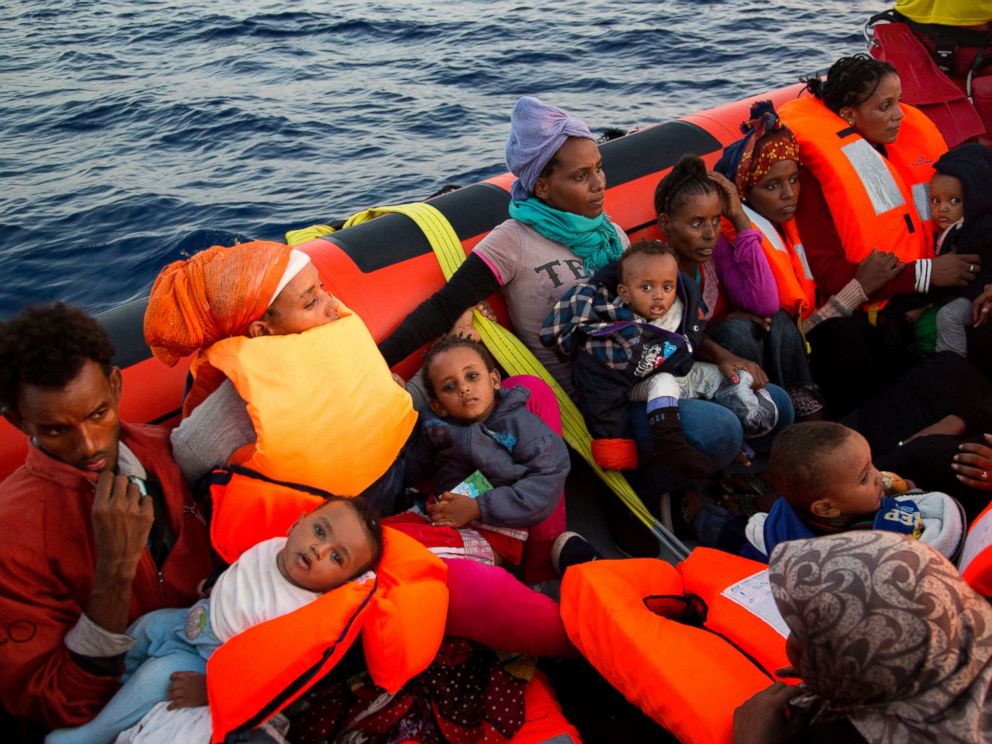
9. Food Security: Eritrea depends on coupon food rationing. Thanks to the regime’s misguided policies food insecurity is going from bad to worse. Agriculture is the mainstay of the Eritrean population and some sections of the society depend on pastoralism. Both have been affected by the forced conscription of the productive work force. Only those infirm, mothers and children are left to struggle in villages around the country. Note that the regime has also mobilised the elderly aged 60-80, further exacerbating the crisis in the agricultural and pastoral communities. Immediately after independence, there was a promising plan developed by the Ministry of Agriculture under the leadership of Minister Dr. Tesfay Ghirmatsion. The plan was expected to ensure food security through deliberate programs to assist traditional farmers to increase their harvests. Unfortunately the plan was dropped without any reason or explanation by none other than the regime’s leader. This became a source of conflict between the Minster and the despot, resulting in the reassignment, demotion, and later abandonment of the regime by the former Minister. The result of the disastrous policy or lack thereof led to sharp increases in food prices beyond the reach of average households. Cereals were way below 1000 Nakfa/quintal in the wake of independence before they hiked up to 10000 Nakfa/quintal in some cases. At some point, the regime had prohibited the circulation of cereals from place to place- truckloads of grain have been confiscated during that time. The regime had gone to extent of a bizarre practice whereby farmers were required to report the amount of produce they harvested and actually regime officials who turn up during harvesting and register the amount. This and other sinister regime controlling policy has led to the rationing of food in Eritrea where sorghum, cooking oil, sugar, and bread are rationed in grams. Indeed, the regime’s leader had asked Eritreans to ‘skip breakfast’ at some point. According to the UNDP’s report on Eritrea, child malnutrition is on the increase. It means children are going hungry which makes them vulnerable to diseases and result in high child mortality. According to the World Bank, Malnutrition is of particular concern among women and children. An estimated 46% of the population were estimated to be undernourished in 2002, and 40% of children were found to be underweight for their ages. Around 37% of women have a low body mass index. Maternal mortality ratios have drastically reduced but are currently still high (380 per 100,000 in 2013 from 1,770 per 100,000 in 1990).' Humanitarian organisations have captured the same reality with children who were ‘lucky’ enough to make it to refugee camps in Ethiopia- so much for progress in infant mortality- which is a hoax. Indeed, hunger and malnutrition has affected every age in today’s Eritrea. The truth is Eritrea is going hungry.
10. Human Capital: skilled work force is a prerequisite for investment and productivity, but Eritrea is neither able to attract nor retain skilled human resources. The regime has given lip service to the importance of human resources development, ‘the wealth of Eritrea is its people’. Well its people are fleeing as fast and as far as possible and in hundreds of thousands. How many of those who graduated from the University of Asmara are in Eritrea today? Probably few hundreds if not only dozens whose skills are wasted in the military anyway have not yet left Eritrea. There are instances where medical doctors were forcibly taken to Sawa to undertake military training in a country which desperately needs health professionals of any level. We would imagine, even in war time medical doctors are needed to treat the injured rather than engaging in combat. Who in their right mind would do such a thing? Only in Eritrea! Leaving the dismantlement of the only fledgling university aside, the ‘colleges’ have lost their staff and the quality of education they provide has deteriorated. One indicator is this: before the closure of Asmara University, every single student had to write their own final Thesis (Research Report) but at the moment, a decade later, because of lack of lecturers, up to a dozen of students would write a single Thesis (Final Research Report). Most of the lecturers (expats or national) could no longer tolerate the militarisation and maladministration of higher education and left the country in their numbers. In other institutions such as the ministries, graduates who are assigned to them were just required to sign and go home- inexplicable wastage of skill and talent. How can one expect improvement in productivity under these circumstances? Dr. Abraham has miserably failed to tell us whether or not the country has been able to retain whatever human resources it had in the last 25 years? It just shows he is a phony and a fraud ‘economist’. The truth is Eritrea has wasted and lost its human resources to the military and exile. Period.
These are just examples of the appalling reality in which the regime has hamstrung the economy and development of the country. The truth of the matters is that the predatory regime has reduced what could have been a vibrant and competitive economy to a coupon economy. The absence of transparent budgetary system, compromised financial systems, predatory and extractive economic practices sabotaged any possibility for economic growth and development. Even the revenues extracted from the recently developed mining sector are unable to make dent on the crisis simply because they are either stolen or mismanaged. Development cannot be achieved under the prevailing conditions in Eritrea. The economy has long plummeted to the extent that it cannot be measured by conventional econometrics. And this truth is not hidden from the world and much less Eritreans. So we are stunned to see some phoney ‘advisors’ defend the reversal of the very fortunes of the society and the nation.
Data and Statistics Conundrum: all reports on Eritrea confess (or reveal) the absence and/or the unreliability of the data they depend on. Let’s look at the following realities;
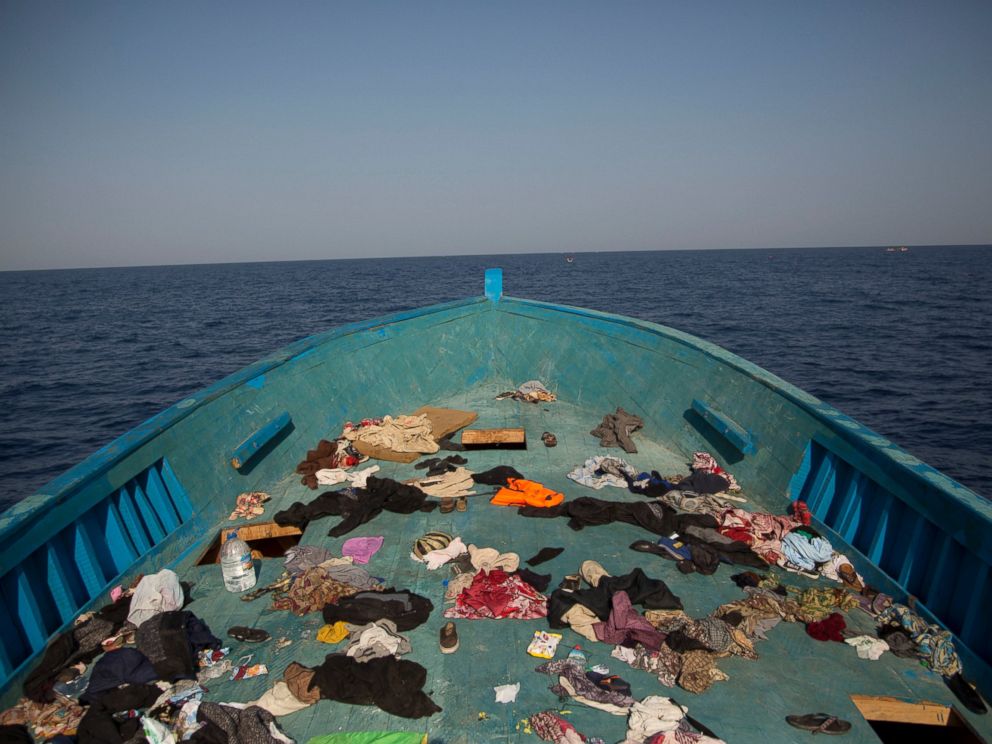
• Population- Dr. Abraham says Eritrea’s population is 3.7 Million (or 4 million as Yamane Gebreab said in June 2016) where as Wold Banks’s figure is 5.110 Million. And when searched on the internet one can find 6.33 Million.The discrepancy is a whopping 1.4 - 2.7 Million which may have significant implications to all other measures and indicators. Where do these figures come from? Where are, at least, the 1.4 Million Eritreans? Are they the ones who have fled the country? Are they the ones who are languishing in refugee camps or the ones that continue to drown in MD Sea? If so, how are they expected to produce something that constitutes a GDP? Dr. Abraham, can you explain please? This itself is a fraud of national proportion.
• Sources of data: Is there a reliable and up-to-date data about Eritrea? Leaving their reliability aside, let’s see when the last surveys were conducted according to the Wold Bank (2016):
• Household Survey- 2003- by National Statistics Office
• Demographic and Health Survey- 2002- by National Statistics Office
• Demographic and Health Survey- 1995- by National Statistics Office
• Indoor Residual Spraying (IRS) Impact Evaluation Survey 2009
• Enterprise Survey- 2009- World Bank
This is the state of statistics in Eritrea. It is based on the above sources that the dubious reports of ‘progresses’ are concocted by people like Dr. Abraham and desperately relied upon by international actors. The question is, why is the National Statistics Office unable to conduct further surveys on all the relevant areas? Could it be because the statisticians have fled the country? Or is it because there has been nothing to find or because they would reveal the terrible situation? Which is it? If you look at the World Bank Enterprise Survey, owners of small and medium enterprise (by the way they couldn’t find large enterprise employing more than 100), were asked whether or not political factors are a problem in their work. The first problem is who was asking those questions? And what do you think people will say under such conditions of fear? We don’t have to tell you, you can figure it out yourself. Surveys can only be credible and reliable if they are conducted with appropriate standards and free environment which are both scarce commodities in Eritrea. That is why the Eritrean MDG’s reports are discredited by researchers and experts. They used ‘report of sector Ministries’ without any verification by independent bodies and the world is expected to believe the phoney reports. The Truth is if independent and standard surveys are conducted, they would reveal the darker side of the Eritrean story.
The World Bank (2016) states that, ’Much of the data comes from the statistical systems of member countries, and the quality of global data depends on how well these national systems perform. The World Bank works to help developing countries improve the capacity, efficiency and effectiveness of national statistical systems. Without better and more comprehensive national data, it is impossible to develop effective policies, monitor the implementation of poverty reduction strategies, or monitor progress towards global goals.'
Eritrea’s statistical systems are characterised as poor or non-existent and therefore any report that comes out of Eritrea must be seen as suspicious and should be verified beforehand. Eritrea does not register birth and death of infants and yet it provides a report in which it pats itself for its ‘success’ in redacting infant mortality. It is clear that the problem is not only the lack of data but alas reliability of it. In cases like Eritrea ruled by a regime that routinely lies, misrepresents, denies access to information (if they have at all), it is difficult to measure real progress. The regime produced a number of reports on MDGs and the methodology and sources of data do not stand to scrutiny. Here is what the 2015 MDG report itself admits (surprising in and of itself):
'Data sources on which assessment of progress in achieving the MDG goals has been based are: (a) the focal MDGs ministries/ sectors, and (b) the 1995 and 2002 Eritrea Demographic and Health Survey (EDHS) and the 2010 Eritrea Population and Health Survey (EPHS) published reports of the National Statistics Office (NSO) of Eritrea. Focal ministries/ sectors submitted information on data templates provided them by the MND. For the great majority of indicators, data was available from 1993-1995 through 2012-2013, albeit with some missing data for one year or another or for one or the other indicator. In a few cases, data for 2014 was available.'
Let’s get back there in case you were quick to notice '… some missing data for one year or another or for one or the other indicator. In a few cases, data for 2014 was available.’ This is astounding!
So, this is how Eritrea’s MDG report has been constructed or cocked up. By its admission, the report shows that progress on MDGs in Eritrea is checkered at best and flat dark at worst. There is no one who wouldn’t rejoice good news from Eritrea, especially its citizens. But we all including Dr Abraham Kidane included know that it is absolutely false, just extensions of the usual boring propaganda read by Eri-tv. Of course, people like Abraham Kidane are attempting to play spin doctors but up to scrutiny they fail dismally. For those of you who believe the MDGs reports, we hope that we have persuaded you to think twice! If not go find it for yourself in the UNDP and World Bank reports. The disconnect between different sources of data, policies, and outcomes are just too conspicuous. Above all the daily experiences Eritreans are forced to face are stark and tell it all. No amount of disinformation and misrepresentation will be able hide the grim conditions people are living under.
Clearly, Dr. Abraham Kidane has abandoned all norms, principles, and standards that constitute intellectual honesty. By allowing himself to be a pawn of the brutal one-man regime, he has compromised his own integrity to extent that he has internalised the boring, hallow and distasteful propaganda of his patron regime. Abraham Kidane and his other opportunist colleagues have chosen the path of pathological dishonesty. They have degenerated to intellectual disability and make arguments that are devoid of reasoning, knowing well that what they spew are falsehoods. They have the audacity of proudly defending the most reprehensible regime that is committing crimes against humanity- against innocent Eritrean citizens. It is time that these individuals undertake a soul-searching journey and do some introspection and return to their senses. In the face of glaring evidence of economic, political and social crises in the country, they routinely misrepresent the realities. Not only that, these deceitful intellectuals are serving the regime as enablers and tools to sabotage the development and progress of the country and its people. Instead of becoming role models for young generation Eritrean intellectuals, they have become a disgrace and an embarrassment. They are timid and tuck their tails (minds) between their legs and attempt to sanctify the most barbaric regime which is destroying the fundamentals of the nation through deliberate acts of sabotage, coercion, repression, and intransigence. Their conduct is an affront to norms and principles of intellectual honesty and we must confront and expose them. We are committed in defending the dignity of our people and we shall name and shame such unscrupulous intellectuals. This is part of rebuking them for their shameless role in the destruction of the Eritrean nation and tainting the integrity of the Eritrean scholarship.
References
EPLF (1987) National Democratic Program, Adopted by the 2nd and Unity Congress, 19 March 1987.
PFDJ (1994) PFDJ National Charter,Adopted by the 3rd Congress of the EPLF/PFDJ Naqfa, February 10-16, 1994.
State of Eritrea (2014) Health Millennium Development Goals Report: Innovations Driving MDGs Goals in Eritrea’ http://www.er.undp.org/content/eritrea/en/home/library/mdg/eritrea-health-mdgs-report-2014.html
UNDP (2015) Human Development Report: Working for Human Development, New York.
Wrold Bank (2015) Overview, Eritrea, http://www.worldbank.org/en/country/eritrea/overview
World Bank (2016) Data Overview, http://data.worldbank.org/about/data-overview
EMDHR
August 2016


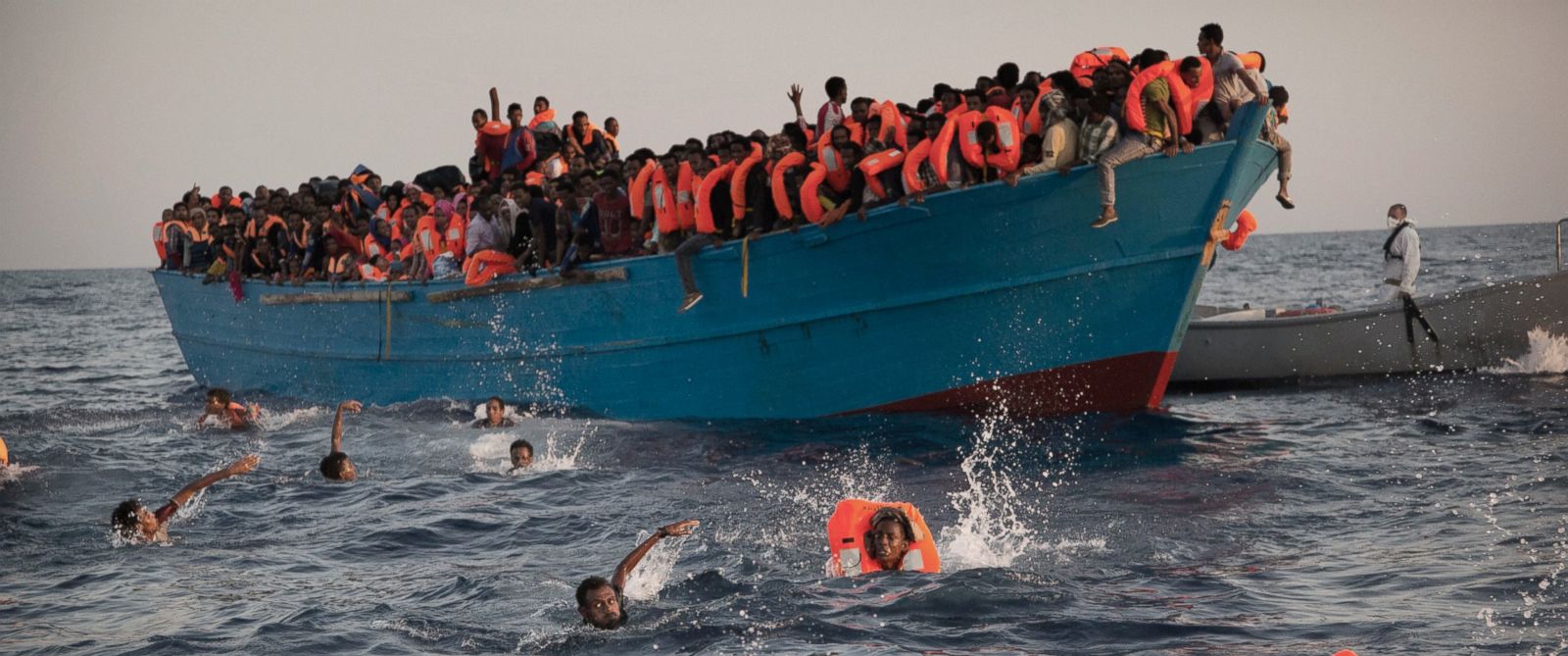
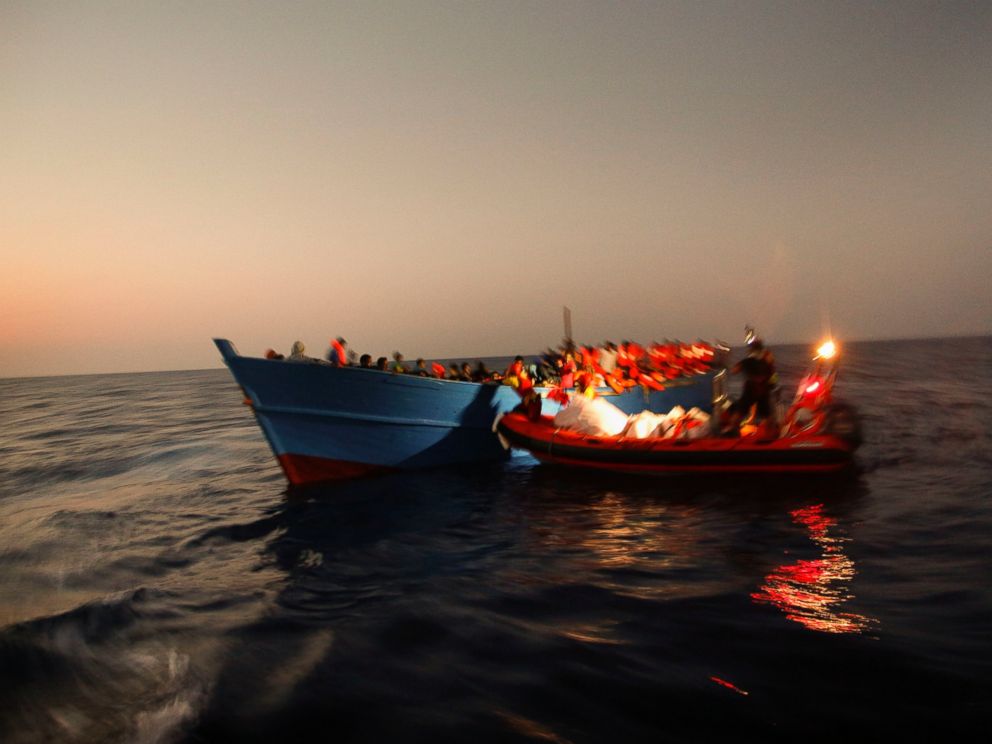 Emilio Morenatti/AP Photo
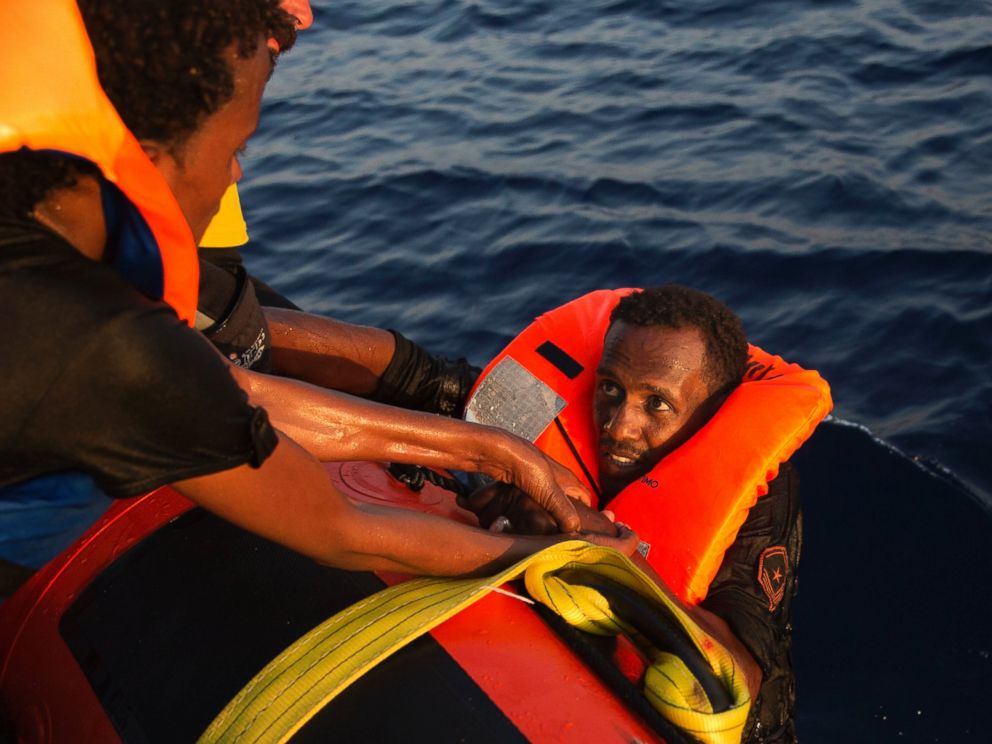 Emilio Morenatti/AP Photo
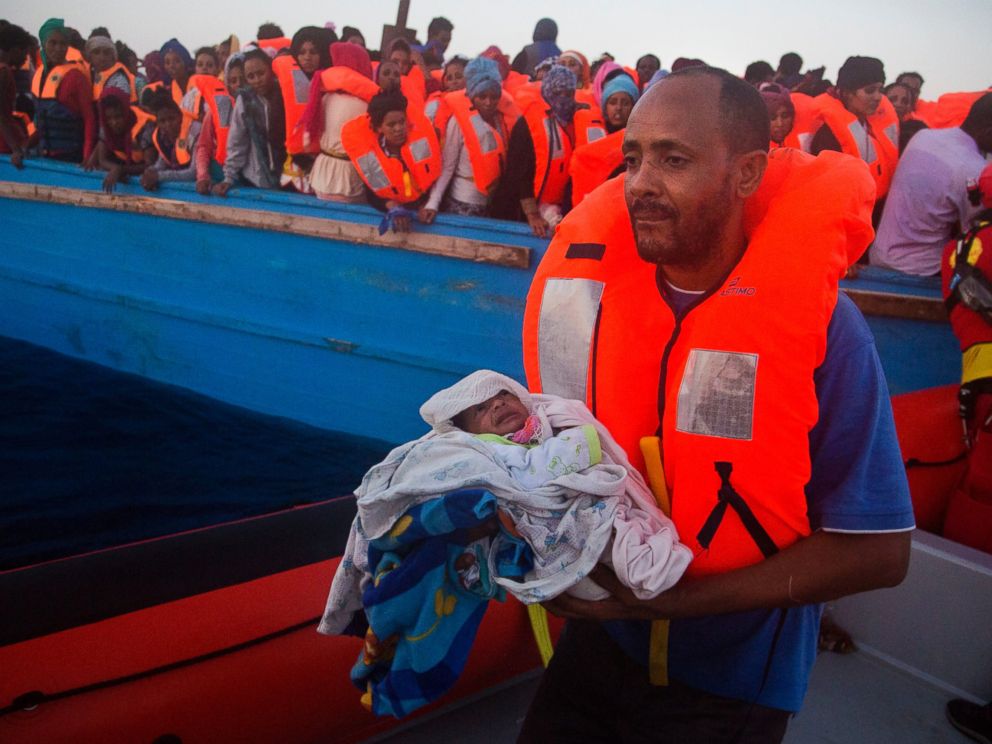 Emilio Morenatti/AP Photo
 Emilio Morenatti/AP Photo
 Emilio Morenatti/AP Photo

 Time is moving on; the clock keeps on ticking without a break, and we have no control of it. As it is said, “Time and tide wait for nobody” Time is uncontrollable; time cannot be managed; we can only manage ourselves and the use of time. Frequently, we take for granted that there is always plenty of time. It is evident that there is plenty of time for everything, if the value of time is properly understood and if the use of time is effectively managed. Managing the use of time is critical to the success and happiness of any person in our professional career and personal life. Managing the use of time is actually self-management. It is interesting that the skills we need to manage others are the same skills we need to manage ourselves and our own families. In our rapidly-changing, time-conscious world, we are encouraged to get more done in less time by effectively managing the use of time. We need to realize that we cannot make more time because the quantity of time has already been set by the Almighty God and it will never change at all. There will always be sixty seconds in a minute, sixty minutes in an hour, twenty-four hours in a day, seven days in a week, and fifty two weeks in a year that we have to use for various purposes in life. Time has more value than money. We can make more money, but we cannot make more time. Time is the most valuable and precious resource given to us every day from God and we often fail to appreciate this divine gift.


