The Local

Italian police bust neo-Nazi group who targeted foreigners
Some of the propaganda material found in the gang's caravan hideout. Photo: Carabinieri La Spezia
12:59 CEST+02:00
Italy's police on Monday dismantled a neo-Nazi group which had targeted migrants in a series of escalating raids lasting more than two years.

The gang of six are suspected of several arson attacks across La Spezia in northern Italy, and are believed to have carried out nighttime raids targeting migrants.

Police discovered knives, other blade weapons, and instructions for creating explosives in the group's caravan hideaway when busted the cell early on Monday morning. They also found a large stash of neo-Nazi propaganda, including two swastika flags.

Six people, all aged in their early 20's, were identified and now face investigation for various crimes including arson, criminal damage, and racial violence.

For around two years, the group had carried out nighttime raids over a two-year period, targeting migrants as well as Catholic charity Caritas, which has been active in assisting migrants across the country.

They are suspected to be behind two arson attacks on Caritas containers used to collect second-hand clothes to be given to migrants, as well as several acts of vandalism, including damage to plaques commemmorating Italian partisans and the daubing of swastikas on the walls of a local Democratic Party office. The latter incident, dating back to May 2016, kicked off the investigation.

Police also said they believe the group may have carried out acts of violence against migrants which went unreported, as its members discussed attacks on migrants in a WhatsApp group which they also used to attract new recruits.

Source=

https://www.thelocal.it/20170502/italian-police-break-up-neo-nazi-group-who-attacked-foreigners

How is Sweden tackling its integration challenge?

Wednesday, 03 May 2017 21:43 Written by
 

Share this article

How is Sweden tackling its integration challenge?
Asylum seekers learning Swedish at Swedish For Immigrants classes. Photo: Fredrik Sandberg/TT
12:26 CEST+02:00
Sweden has received some 280,000 asylum applications since 2014, a significant number for a country of 10 million people. Integrating all of those granted asylum into Swedish society is a big task, so just who exactly is responsible for trying to make that happen? What is being done to pull it off, and what are some of the challenges as well as opportunities created along the way? In the first of our Sweden In Focus series, The Local attempts to answer those questions.

How best to approach asylum policy is arguably the most polarizing issue in Sweden of recent years. It is certainly one of the most important on a political level, exemplified in the rise of the anti-immigration Sweden Democrats. After first entering parliament in the 2010 election with 5.7 percent of votes, they went on to claim almost 13 percent in the 2014 election, and have polled as high as 21 percent since.

The pertinence of the issue can also be seen in the marked change in discourse from the more mainstream parties. That has meant the abandonment of Sweden’s "open door" attitude towards asylum seekers and the introduction of border controls designed to keep numbers down. Reports of crime and religious extremism in inner-city suburbs, where the foreign-born population is often high, have gained enough attention that even the country's Social Democrat Prime Minister felt obliged to give a speech on the matter last summer.

READ ALSO: Gothenburg one of Europe's 'most segregated cities'

Sweden granted protection to 69,350 people last year alone – so the subject is clearly not going to go away. Instead, the question of how best to integrate the newcomers will likely be one of the key points of debate in the 2018 Swedish election.


Asylum seekers at Malmö's Hyllie station during the peak of the refugee crisis in 2015. Photo: Johan Nilsson/TT

But what is integration in the first place? Depending on who you ask, the definition can vary. Is a person integrated if they have a home, a job and pay taxes, or is it about something more? Perhaps it's about accepting the social norms of a society?

The Swedish Government department with the prime responsibility for integration is the employment ministry, led by Minister for Employment and Integration Ylva Johansson. In a meeting at the ministry's head office in central Stockholm, Johansson's press secretary Natalie Sial explains their definition of integration:

"For the Red-Green government and Social Democrat leadership, integration means people coming to Sweden being given the right conditions to establish themselves within and become a part of Swedish society."

"It's about having respect for basic Swedish values – you have both rights and duties here – and also having the right opportunities to establish yourself in Swedish society. The chance to learn the language, start working for example," she adds.

READ ALSO: More about our new Sweden In Focus series

The key to newcomers being able to establish themselves within Swedish society is access to employment, the employment ministry believes, after which the process of integration starts to move forward. That explains why the Swedish government handed the overarching responsibility for integration to this department in the first place.


Employment and Integration Minister Ylva Johansson. Photo: Claudio Bresciani/TT

But it's not going to be easy. Figures from Sweden's Public Employment Agency (Arbetsförmedlingen) show that as of March 2017, the unemployment rate among Sweden's foreign-born population was 22.2 percent, compared to 4.1 percent among Sweden-born citizens. The rate is even higher in areas judged by police to be "particularly vulnerable".

READ ALSO: Rinkeby residents on the area's problems

With many of the people who sought asylum in Sweden during the peak of the refugee crisis in 2015 only now being given their residence permits, the challenge of trying to get them into work is only just beginning. And it's important to understand that those asylum seekers are not a homogeneous group.

Their degree of work experience and education varies from person to person just like any other group of people, which also means the chances of finding work will vary. The Public Employment Agency's attempt to solve that conundrum is the Introduction Programme (Etableringsuppdraget), a plan tailored according to each individual.

So while one newcomer to the country may need further education in order to have the best chance of success in Sweden, another may require work experience. The goal is to best meet each person's needs on an individual level – complicated, but also something Sweden believes will create the best possibility of integrating in the long term.

"The idea is that when the programme is finished the person can then go on to work or pursue further education. And it's important to point out that it's work or studying, because going straight into work isn't always best for a person if they don't have an education suitable for Sweden, which a large section of the people who came here recently don't have," Fredrik Möller from the Public Employment Agency’s Integration and Establishment Department tells The Local.

READ ALSO: Multiculturalism in Sweden from an Indian's perspective

"It's very important for those people to get a good education, because in the long term if they don't have that they won't be an established part of society or a stable part of the labour market. On the other hand, there are people who came with a very high level of education and have worked in advanced jobs like being a surgeon or a teacher. For them, it's important to try and reduce the time before they start working as much as possible," he adds.

As such, there is a different programme designed specifically for those newcomers with a good degree of previous skills or education – the "fast track" (snabbspår) programme. Created in collaboration between the employment ministry, employers and unions, the fast track programme delivers work experience and training which, when completed, should make it easier for a Swedish employer to accurately weigh up whether a new arrival is suitable for a job.


This graph charts the total number of people registered in the Introduction Programme. Note the sharp rise in 2016 and 2017 as more people were granted residence permits. Photo: Arbetsförmedlingen

With the majority of people who sought asylum in Sweden from 2015 onwards only now entering the Public Employment Agency's jurisdiction, just how successful these programmes are will be seen in the long term. It's no secret that long waiting times are a reality of Swedish life – not only for asylum seekers – but when it comes to that group in particular, making the best possible use of their time from the day they first arrive in the country is another key to helping their chances of integrating, the employment ministry's Sial emphasises.

"We've made it so that – with the help of civil society organizations who have been given economic resources to offer language education – people can already start to learn Swedish when they're in an asylum centre. We've also started mapping skills, so that people can easily register what their work experience is as early as possible," she says.

Language issues are a major factor in the time it takes for a newcomer to Sweden integrating into the country's labour market, according to Professor Pieter Bevelander, an integration expert from the Malmö Institute of Migration, Diversity and Welfare. On a comparative level Sweden is performing fairly well, he points out, but it could still take as long as a decade for the majority of that group to be integrated.

"The available evidence in Sweden suggests between five and ten years to achieve up to a 60-70 percent employment level. The time is due to language learning, as well as other specific knowledge needed to get a job according to education. Compared to our neighbouring countries of Denmark and Norway, Sweden is mostly doing a bit better in labour market integration of refugees though. It's doing quite well so far, and certainly not worse than its neighbours," he says.

Plenty is being done in Sweden to try to aid the side of integration linked to employment, but what about less quantifiable questions of culture and social norms which some would argue are equally important?

It's those things that Mustafa Panshiri focuses on in his work. A former police officer, he recently quit his job to focus full-time on travelling around Sweden and speaking to lone refugee children (more than 37,500 have come to Sweden since 2015) about the process of adapting to their new country. In his opinion, helping the kids to get a proper understanding of Swedish values is vital if they are going to integrate.

"A job is important of course, but integration is also to do with respecting Swedish society's values and rules. What I focus on is what it means for someone who comes from Afghanistan for example to enter a democratic society. How can that transition impact a person's view of life? How can the ideas they bring with them collide with ideas in Sweden? I try to find a common ground between the kids and Swedish society," he tells The Local.


Mustafa Panshiri. Photo: Mustafa Panshiri

Panshiri understands the process better than most. Originally from Afghanistan, he came to Sweden when he was 11, and he tries to tap into his personal experience when helping kids from a similar background who have arrived today.

"In my meetings with the kids I go back and think 'what was weird for me when I came to Sweden?' and start from there. In our conversations I notice it's the same questions they have," he explains.

Being a relatable figure also helps.

"When I walk into the room I look like the kids, speak the same language as them. And you know, when we speak about these things – things we take as a given here in Sweden like equality of the sexes, for example – it can be a challenge for them. But that reduces to some degree when they speak with me. I can say to them 'I made that journey'."

READ ALSO: 'Integration is about more than a job'

In Panshiri's opinion, Sweden has in the past been guilty of not properly addressing the cultural challenges for newcomers. On his Creative Integration (Kreativ Integration) Facebook page, the ex-police officer tries to illustrate the reality of the integration process for these young people – both the positive stories he encounters on a daily basis, and the problems that also arise.

So while there are tales of triumph and inspiring encounters with youngsters, there are also honest accounts of conversations with kids who at first found it difficult to grasp concepts like freedom of expression, only eventually coming round to the idea after a dialogue was created. Integration is sometimes not possible without an initial degree of friction, he argues.

"This subject is very polarized at the moment. On one side there's Donald Trump and Fox News talking about Sweden from afar, and on the other politicians in Sweden saying there's no problem. I try to show that the truth can be found somewhere in the middle, we have to work towards that," he says emphatically.


Another person who dedicates time to helping younger refugees with a big challenge in adapting to Sweden is Mohammad Arvan. An actor by trade who moved from Iran to Sweden when he was six, every Wednesday he holds a class in Örebro where asylum seekers can receive advice on how to interact with women according to Swedish social norms. 

That's not a trivial subject, Arvan believes, as the home cultures of people who sought asylum in Sweden can sometimes be significantly different to that of their new home when it comes to gender norms.

"The class started because one day one of the refugee kids from Afghanistan asked me about the subject," he recalls.

"I think it's good that someone explains these things. They have no idea about it. That's why you see so many stories of things happening at concerts and swimming pools where refugee kids are said to be involved," he adds. 

With that, Arvan is referring to stories from 2016 of groping among young people at music festivals in Sweden, where newspapers like Dagens Nyheter alleged the perpetrators were young refugee males

"They ask me stuff like 'if someone is standing at a bar, how should I go forward and speak with her?' Or it could be on the street, in the shops, wherever. How do you start a conversation? Most people think I'm doing a good thing by teaching people how life is here in Sweden."


Mohammad Arvan. Photo: Mohammad Arvan

For most of us it is probably difficult to grasp the confusion that may be caused for a youngster who, after months or maybe years of fleeing from a troubled country, is then thrust into a culture completely different to theirs, where the social norms and habits are not the ones they are accustomed to from back home.

One of the most innovative attempts to tackle that tricky side of integration for youngsters is Youmo, a recently launched website from Sweden's Youth Guidance Centres (UMOs). Available in the four most commonly spoken languages by new refugee kids in Sweden – Dari, Somalian, Tigrinya and Arabic – as well as English and simple Swedish, the goal is to answer questions they may have about a broad range of subjects, from sexuality to mental health, gender equality and even friendship.

Many of them have fled countries where these subjects are not discussed to a great extent, and as such, Youmo could be the first time they are given vital information.

"We started out with an analysis of what people need to feel secure and strengthen their self-esteem in order to become a part of their new society in a good way. Young people are in many cases keen to become a part of their new country and understand the context, culture and rules," Youmo project leader Lotta Nordh Rubulis details to The Local at their office in Södermalm, Stockholm.


A screenshot from the Youmo website. Photo: Youmo

Putting the site together has been an extensive process. Texts were written in Swedish, translated, then cross-checked by a further translator, and also examined by people who are experts in the areas the texts address. On top of that, young asylum seekers were then asked to check the texts to make sure the language has a style that other youngsters would engage with. No stone was left unturned in trying to maximize the possibility of kids actually going on to use the site after its launch.

Some of the most popular pages so far are those with information about making friends in Sweden. Something that could be a big factor for the youngsters one day integrating into Swedish society.

"We can already see from the few statistics we have that exactly those pages about meeting new friends have been really popular. It's a really important issue: it can often be that someone comes here and perhaps lives in a home and is isolated from other Swedish kids as the home is a bit further out of town. So they're very interested in learning how you go about forming friendships," Nordh Rubulis explains.

"Many of them have also lived a very gender segregated life and perhaps never had a friend from the opposite sex. It's exciting to see (them learning about that)."

It is hoped that Youmo can ultimately provide reliable answers for the youngsters to both serious questions but also more everyday things in Sweden that they are curious about, and therefore help them to integrate.

The challenges of integrating thousands of newcomers into Swedish society are clearly many then, but what about the opportunities it could also create? One of those is the possibility of providing more blue-collar people to employ, with the Swedish ranks in that category almost exhausted, the Public Employment Agency's Möller explains.

"If you look at the labour market, the pool of Sweden-born working class labour is almost empty. So as a result, we have to try and equip the newcomers to the country as best as possible to take the jobs that are available there."

Indeed, the agency's director general Mikael Sjöberg recently predicted that Sweden needs as much as 64,000 immigrants annually if it wants to prevent labour shortages from hampering economic growth, in part because the native birth rate is currently too low.


The Public Employment Agency office on Tunnelgatan in Stockholm. Photo: Emma-Sofia Olsson/SvD/TT

Research suggests that if Sweden can integrate its newcomers into the labour market then it could lead to improved economic growth. A 2016 report by four researchers at Stockholm University into immigration's impact on Sweden's economic development points out that while 15 years ago, Sweden faced the demographic challenge of a population weighted heavily towards those in the 65 plus age bracket, migration between 2000 and 2015 comprised largely of people aged 15-39 means the country's age structure is changing.

"Overall, the results suggest a relatively bright future for Sweden as 15 years of high net immigration have led to an increasing working age population, providing the necessary conditions for significantly faster economic growth than an alternative scenario with lower net immigration," the report states in its conclusions.

That's a point that the Employment Ministry's Sial was also keen to highlight:

"We have big ambitions. We don't just want people to work, we need it. In the past there was talk of the generational shift in Sweden. But most of those who have come in recent years are under 40, so it's a very young population. If we get the matching process between people and jobs to work, it'll be a big opportunity for Sweden. But it's important we get it right."

And that last part is the key. Botch the process of trying to integrate newcomers, and Sweden will not only have wasted money and resources, but it may also further the political fragmentation in the country and increase poverty and crime. Get it right, and in the long run, Sweden could solve some of its big challenges.

READ ALSO: Could a new political climate be on the horizon in Sweden?

It's a complicated issue, but it's clear that a lot of people, both on a national as well as a local, more individual, level are investing their time and energy to try to make it work.

Source=https://www.thelocal.se/20170502/how-is-sweden-tackling-its-integration-challenge

Ethiopia announces arrest of '98 Eritrea sponsored' rebels in last 2 months

Ethiopia’s security forces have disclosed the arrest of 98 ‘Eritrean sponsored anti-peace elements’ in the past two months alone, the state-run FANA Broadcasting Corporate (FBC) reported on Friday.

According to FBC, the west Tigray zonal administration confirmed that the arrested persons were trying to cross into Ethiopia after having received training to execute a mission by Eritrean-based terrorist organizations, Ginbot 7 and Oromo Liberation Front (OLF).

A senior security official of the zone, is reported to have disclosed that the ‘anti-peace elements’ were arrested as a result of coordinated efforts of the defense force and local residents.

‘‘According to him, 15 of them were arrested this week while attempting to enter into the central part of the country to attack socio-economic institutions,’‘ the FBC report added.

Tensions between the two countries have been simmering with the most recent being claims by Ethiopia that Eritrea-backed rebels were behind an attempt to attack the Grand Ethiopian Renaissance Dam (GERD) project.

Ethiopia has also accused Eritrea of accommodating persons behind the Amhara and Oromia protests that have swept through the country since November 2015. Ethiopia is currently under a state of emergency which was imposed to quell the unrest.

Eritrea achieved independence from Ethiopia in 1993 after decades of armed struggle. In 1998, the two neighbouring countries fought a two-year long war over their disputed border which has claimed the lives of at least 70,000.

The two countries have had tense relations as a peace deal signed in 2000 to end the war has never been fully implemented.

Source=http://www.africanews.com/2017/04/22/ethiopia-announces-arrest-of-98-eritrea-sponsored-rebels-in-last-2-months//

By Selam Kidane and Martin Plaut
 

A devastating famine has hit the Horn of Africa. El Nino has taken a terrible toll on the people across the region and Eritrea is no exception. The coming famine across the Horn was covered by the New Statesman a year ago, with predictions of its severity which have tragically come true.

An appeal by the UK’s Disaster Emergency Appeal has raised over £54m four weeks after it was launched. But unlike the victims in Somalia, Ethiopia and Kenya, the people of Eritrea are unable to benefit from this generosity.

The reason for this tragedy is simple: the Eritrean regime, led by the dictatorial Isaias Afewerki, is refusing all outside help. Denial is official government policy. Quoting the President the official media declared in January 2016: “The country will not face any crisis in spite of reduced agricultural output.”

But evidence of the scale of the suffering, particularly among the children, is now filtering out. It is being smuggled out by men and women of the “Freedom Friday” resistance network, at great personal risk. If they are discovered they will be jailed, indefinitely, and almost certainly tortured.

Nurses and carers working in clinics across the country have been banned from using their cell-phones, but some have dared to take the images below, and sent them abroad, in a desperate attempt to make the plight of these children know.

Picture1


These photographs are from the town of Mendefera. Normally a bustling market town, in the fertile Southern region of Eritrea, it has a range of small scale factories that provide employment and an income.


But villagers in the vicinity, including Areza, Mai Dima, Awha, Adi Quala, Mai Mine, Enda Gergis, Adi Felesti, have been badly hit by the drought. These pictures are from the clinic in Mendefera, to which the children have been brought. The pictures and the information has been anonymized, for their security.


Since January this year 66 children, many of them babies, have been brought into the clinic suffering from acute forms of malnutrition the clinics were unable to cope with. Many revived, but two died and a further four children were sent to Asmara for specialist treatment.

Picture 2They suffered from the swollen bellies typical of kwashiorkor, a severe type of malnutrition – the result of an extreme shortage of protein in their diet.
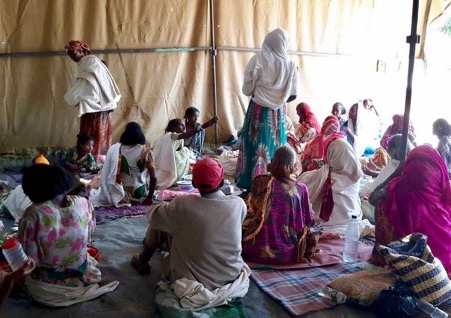
The symptoms include swollen abdomens, skin disorders (hypo and hyper pigmented skin) and excessive fluid retention throughout the body.


Health workers believe they are only seeing the tip of the iceberg.

Most children are simply not being brought to the clinics and the actual scale of the crisis is much more severe.

A national crisis

In other areas of the country the situation is, if anything, more dangerous.

There are reports of cholera in the area around the western town of Barentu. Villagers are having to draw water from pits dug into the Mereb river.

More than 1,300 patients were registered at one makeshift clinic when these images were smuggled out of the country in October last year. Thirteen deaths had been registered by the health workers. Teams of doctors were sent into the area to try to halt the spread of the cholera while roads were closed, transport halted and movement into and out of the effected areas has been tightly controlled. Members of the local militia, the police and the army were closely restricting movement.

Picture 4

There were reports of medical teams being sent to attend the cholera outbreak in remote areas, leaving their the patients in hospital unattended.

The medics said there is constant pressure from security agents, who warn them warn them not to take any photos not and tell any one about what is taking place.

An aid worker operating inside Sudan described families crossing the border to seek aid. He said that those who arrived spoke of acute shortages of food and water. These people come from the remote regions of western Eritrea where villagers are used to some of the most challenging of circumstances. If they believe it is time to pack up and leave the situation must be very serious indeed.


Government in denial

Obtaining accurate information from Eritrea is extremely difficult, since the government prevents aid agencies and many UN organisations from operating.

As one crisis warning system put it: “The Eritrean government severely restricts the access of humanitarian actors inside the country. Very little is known about humanitarian needs: Unicef estimates that the total affected population is 1.5 million.”

The UN’s children’s agency, Unicef, reported that: “Data from the Nutrition Sentinel Site Surveillance system indicates an increase in malnutrition rates over the past few years in four out of six regions of the country, with 22,700 children under five projected to be affected by severe acute malnutrition (SAM) in 2017.

This crisis was not unforeseen.

Picture5

A year ago, aid agencies were already warning that the situation was looking bleak.

Satellite imagery showed the scale of the looming drought.

Current maps of the region now show no information for Eritrea: it is almost as if the country has vanished from the face of the earth.

Eritreans have become the silent victims of their President’s unwillingness to call for aid, and the inability of the international community to come to their aid.

Source=https://martinplaut.wordpress.com/2017/04/19/the-famine-the-eritrean-government-doesnt-want-you-to-know-about/

Africa, Eritrea,

H

By Selam Kidane and Martin Plaut
 

A devastating famine has hit the Horn of Africa. El Nino has taken a terrible toll on the people across the region and Eritrea is no exception. The coming famine across the Horn was covered by the New Statesman a year ago, with predictions of its severity which have tragically come true.

An appeal by the UK’s Disaster Emergency Appeal has raised over £54m four weeks after it was launched. But unlike the victims in Somalia, Ethiopia and Kenya, the people of Eritrea are unable to benefit from this generosity.

The reason for this tragedy is simple: the Eritrean regime, led by the dictatorial Isaias Afewerki, is refusing all outside help. Denial is official government policy. Quoting the President the official media declared in January 2016: “The country will not face any crisis in spite of reduced agricultural output.”

But evidence of the scale of the suffering, particularly among the children, is now filtering out. It is being smuggled out by men and women of the “Freedom Friday” resistance network, at great personal risk. If they are discovered they will be jailed, indefinitely, and almost certainly tortured.

Nurses and carers working in clinics across the country have been banned from using their cell-phones, but some have dared to take the images below, and sent them abroad, in a desperate attempt to make the plight of these children know.

Picture1


These photographs are from the town of Mendefera. Normally a bustling market town, in the fertile Southern region of Eritrea, it has a range of small scale factories that provide employment and an income.


But villagers in the vicinity, including Areza, Mai Dima, Awha, Adi Quala, Mai Mine, Enda Gergis, Adi Felesti, have been badly hit by the drought. These pictures are from the clinic in Mendefera, to which the children have been brought. The pictures and the information has been anonymized, for their security.


Since January this year 66 children, many of them babies, have been brought into the clinic suffering from acute forms of malnutrition the clinics were unable to cope with. Many revived, but two died and a further four children were sent to Asmara for specialist treatment.

Picture 2They suffered from the swollen bellies typical of kwashiorkor, a severe type of malnutrition – the result of an extreme shortage of protein in their diet.

The symptoms include swollen abdomens, skin disorders (hypo and hyper pigmented skin) and excessive fluid retention throughout the body.


Health workers believe they are only seeing the tip of the iceberg.

Most children are simply not being brought to the clinics and the actual scale of the crisis is much more severe.

A national crisis

In other areas of the country the situation is, if anything, more dangerous.

There are reports of cholera in the area around the western town of Barentu. Villagers are having to draw water from pits dug into the Mereb river.

More than 1,300 patients were registered at one makeshift clinic when these images were smuggled out of the country in October last year. Thirteen deaths had been registered by the health workers. Teams of doctors were sent into the area to try to halt the spread of the cholera while roads were closed, transport halted and movement into and out of the effected areas has been tightly controlled. Members of the local militia, the police and the army were closely restricting movement.

Picture 4

There were reports of medical teams being sent to attend the cholera outbreak in remote areas, leaving their the patients in hospital unattended.

The medics said there is constant pressure from security agents, who warn them warn them not to take any photos not and tell any one about what is taking place.

An aid worker operating inside Sudan described families crossing the border to seek aid. He said that those who arrived spoke of acute shortages of food and water. These people come from the remote regions of western Eritrea where villagers are used to some of the most challenging of circumstances. If they believe it is time to pack up and leave the situation must be very serious indeed.


Government in denial

Obtaining accurate information from Eritrea is extremely difficult, since the government prevents aid agencies and many UN organisations from operating.

As one crisis warning system put it: “The Eritrean government severely restricts the access of humanitarian actors inside the country. Very little is known about humanitarian needs: Unicef estimates that the total affected population is 1.5 million.”

The UN’s children’s agency, Unicef, reported that: “Data from the Nutrition Sentinel Site Surveillance system indicates an increase in malnutrition rates over the past few years in four out of six regions of the country, with 22,700 children under five projected to be affected by severe acute malnutrition (SAM) in 2017.

This crisis was not unforeseen.

Picture5

A year ago, aid agencies were already warning that the situation was looking bleak.

Satellite imagery showed the scale of the looming drought.

Current maps of the region now show no information for Eritrea: it is almost as if the country has vanished from the face of the earth.

Eritreans have become the silent victims of their President’s unwillingness to call for aid, and the inability of the international community to come to their aid.

orn of Africa

The famine the Eritrean government doesn’t want you to know about

By Selam Kidane and Martin Plaut
 

A devastating famine has hit the Horn of Africa. El Nino has taken a terrible toll on the people across the region and Eritrea is no exception. The coming famine across the Horn was covered by the New Statesman a year ago, with predictions of its severity which have tragically come true.

An appeal by the UK’s Disaster Emergency Appeal has raised over £54m four weeks after it was launched. But unlike the victims in Somalia, Ethiopia and Kenya, the people of Eritrea are unable to benefit from this generosity.

The reason for this tragedy is simple: the Eritrean regime, led by the dictatorial Isaias Afewerki, is refusing all outside help. Denial is official government policy. Quoting the President the official media declared in January 2016: “The country will not face any crisis in spite of reduced agricultural output.”

But evidence of the scale of the suffering, particularly among the children, is now filtering out. It is being smuggled out by men and women of the “Freedom Friday” resistance network, at great personal risk. If they are discovered they will be jailed, indefinitely, and almost certainly tortured.

Nurses and carers working in clinics across the country have been banned from using their cell-phones, but some have dared to take the images below, and sent them abroad, in a desperate attempt to make the plight of these children know.

Picture1


These photographs are from the town of Mendefera. Normally a bustling market town, in the fertile Southern region of Eritrea, it has a range of small scale factories that provide employment and an income.


But villagers in the vicinity, including Areza, Mai Dima, Awha, Adi Quala, Mai Mine, Enda Gergis, Adi Felesti, have been badly hit by the drought. These pictures are from the clinic in Mendefera, to which the children have been brought. The pictures and the information has been anonymized, for their security.


Since January this year 66 children, many of them babies, have been brought into the clinic suffering from acute forms of malnutrition the clinics were unable to cope with. Many revived, but two died and a further four children were sent to Asmara for specialist treatment.

Picture 2They suffered from the swollen bellies typical of kwashiorkor, a severe type of malnutrition – the result of an extreme shortage of protein in their diet.

The symptoms include swollen abdomens, skin disorders (hypo and hyper pigmented skin) and excessive fluid retention throughout the body.


Health workers believe they are only seeing the tip of the iceberg.

Most children are simply not being brought to the clinics and the actual scale of the crisis is much more severe.

A national crisis

In other areas of the country the situation is, if anything, more dangerous.

There are reports of cholera in the area around the western town of Barentu. Villagers are having to draw water from pits dug into the Mereb river.

More than 1,300 patients were registered at one makeshift clinic when these images were smuggled out of the country in October last year. Thirteen deaths had been registered by the health workers. Teams of doctors were sent into the area to try to halt the spread of the cholera while roads were closed, transport halted and movement into and out of the effected areas has been tightly controlled. Members of the local militia, the police and the army were closely restricting movement.

Picture 4

There were reports of medical teams being sent to attend the cholera outbreak in remote areas, leaving their the patients in hospital unattended.

The medics said there is constant pressure from security agents, who warn them warn them not to take any photos not and tell any one about what is taking place.

An aid worker operating inside Sudan described families crossing the border to seek aid. He said that those who arrived spoke of acute shortages of food and water. These people come from the remote regions of western Eritrea where villagers are used to some of the most challenging of circumstances. If they believe it is time to pack up and leave the situation must be very serious indeed.


Government in denial

Obtaining accurate information from Eritrea is extremely difficult, since the government prevents aid agencies and many UN organisations from operating.

As one crisis warning system put it: “The Eritrean government severely restricts the access of humanitarian actors inside the country. Very little is known about humanitarian needs: Unicef estimates that the total affected population is 1.5 million.”

The UN’s children’s agency, Unicef, reported that: “Data from the Nutrition Sentinel Site Surveillance system indicates an increase in malnutrition rates over the past few years in four out of six regions of the country, with 22,700 children under five projected to be affected by severe acute malnutrition (SAM) in 2017.

This crisis was not unforeseen.

Picture5

A year ago, aid agencies were already warning that the situation was looking bleak.

Satellite imagery showed the scale of the looming drought.

Current maps of the region now show no information for Eritrea: it is almost as if the country has vanished from the face of the earth.

Eritreans have become the silent victims of their President’s unwillingness to call for aid, and the inability of the international community to come to their aid.

Will the Dutch close the Eritrean embassy?

Tuesday, 18 April 2017 09:08 Written by

Africa, Eritrea, European Union, Horn of Africa, Netherlands

Dutch Protest 5

Martin Plaut

There is mounting concern in the Netherland about the behaviour of the Eritrean embassy and its staff. Last Friday’s abortive conference, held by the Eritrean regime in the Dutch town of Veldhoven, may prove to be the final straw.

The four-day conference was abandoned after a Dutch court backed the mayor of the town in closing the gathering, arguing that it was detrimental to safety and security of local residents.

Spokesmen for the majority of Dutch political parties had called for action even before the  conference opened.

News of the event, to be attended by President Isaias Afwerki’s senior adviser, Yemane Gebreab was broken last Tuesday by the Dutch website, One World.

On hearing the news of his imminent arrival Dutch MPs reacted with dismay.

“When the Turkish minister wanted to come here, public order was at stake,” said Attje Kuiken of the Dutch Labour Party. “The question is: what will the speaker (Yemane Gebreab) do at this congress? And will it be within our law?”

The Dutch cabinet also expressed its reservations about the gathering.

A statement was issued declaring that the government was “uneasy” about the conference going ahead, but could not prevent Yemane Gebreab from attending since he had an EU-wide Schengen visa.

Kubrom Dafla Hosabay, a former deputy minister of finance in Eritrea, now resident in the Netherlands, warned what would take place if the meeting took place.

He accused members of Eritrea’s ruling party of threatening anyone who refused to cooperate. “This is the message that will come from the conference,” he said. [See full statement below]

At previous European-wide conferences of the Eritrean ruling party Yemane had called for the opposition to be “destroyed.”

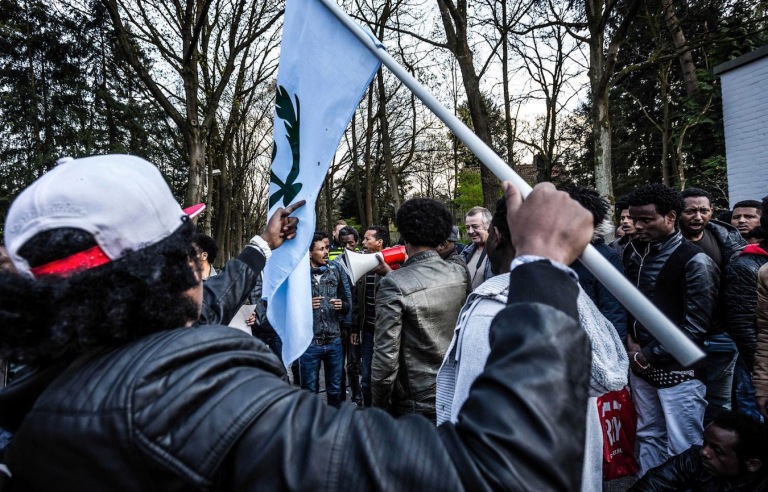
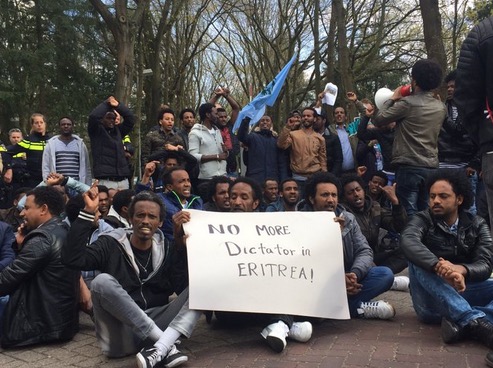
Fearing a repetition, members of the Eritrean community opposed to the regime protested outside the hotel in Veldhoven at which the conference was being held.

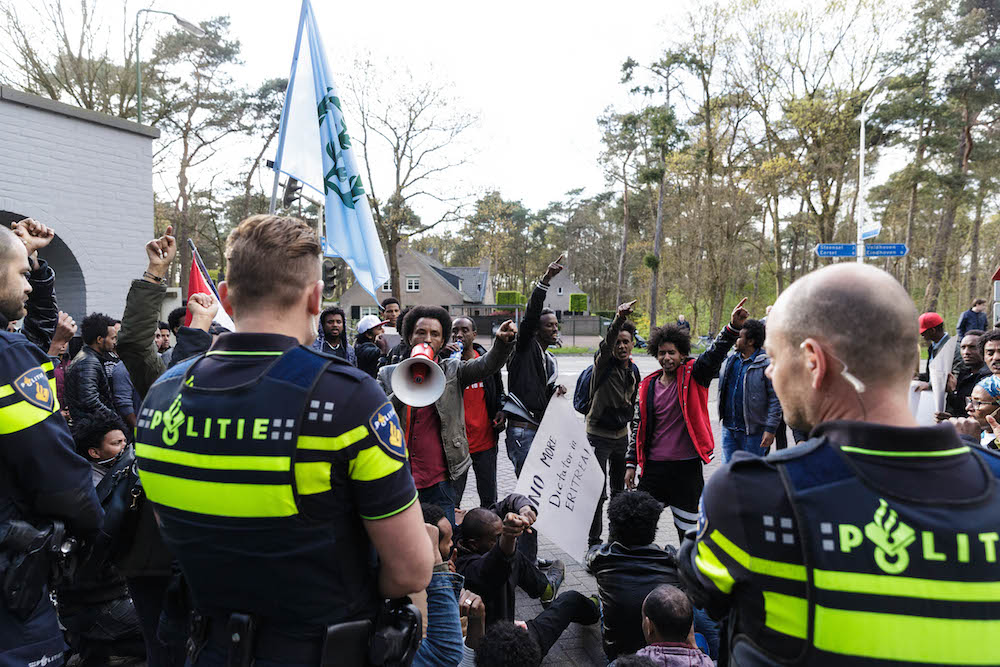
Dutch protest 1There followed a confrontation with the police and running clashes, with a number of protesters being arrested.
The mayor of Veldhoven – hearing that a further 2,500 protesters would arrive from across Europe to oppose the event, decided that it should be cancelled.

The youth wing of the ruling party (the YPFDJ) which had organised the event, challenged the ruling in court, but lost, and on Friday the four-day conference was abandoned.

Dutch politicians demand action

A number of political parties in the Netherlands had previously expressed their concern about the activities of the Eritrean government in their country and its extortion of funds from the refugee community.

They had called for action against the Embassy unless it was halted.

Last June the question was debated in Parliament.

A resolution was adopted suggesting that the Embassy should be closed if it continued to use threats and pressure to extract taxes and financial contributions from the Eritrean diaspora.

It soon became clear that the warning had not been heeded. Evidence of what was taking place was gathered by journalists Huub Jaspers and Sanne Terlingen for a radio programme – ‘The long arm of Eritrea’, produced for One World and Argos.

The journalists had gathered testimonies and documentation showing how Eritrean Embassy staff went around the Eritrean community in Rotterdam, and several other cities.  Since last December they had been going door to door among the diaspora collecting funds.

The approach of the Embassy was anything but friendly.

They demanded EU50 per person as a donation to fund the conference. Anyone who refused was warned that they would have a cross placed after their names – a clear sign of intimidation by representatives of Eritrea’s brutal regime.

Receipts for the funds were signed by Isaac Menassi – the Embassy Finance officer, using a commercial receipt book. But his signature was clear.

A handwriting expert testified that having examined the receipts, and comparing them with official Embassy receipts, he was confident that they had been signed by the same person.

When the One World journalists broke the story Dutch politicians were furious, declaring that such behaviour was completely unacceptable.

Sjoerd Sjoerdsma, from Democrats 66 said: “We no longer accept this tax collection.” “The parliament was very clear about this, after pressure from our parties. If Eritrea doesn’t listen, this could lead to the closure of the Embassy.”

These views were echoed by Attje Kuiken of the Labour Party. “This means that once again we will have to open a debate with the government on how to stop these kind of practices. We will do this unanimously: with all members of parliament.”

A year in the planning

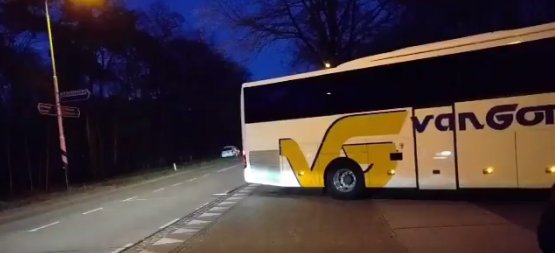
YPFJD busses leaveThe abandoned conference was the 13th in a series of meetings held to bolster support for the Eritrean regime across Europe. Around 500 YPFDJ supporters had come to hear their leader’s message.

It had been – the organisers claimed – a year in the planning. But members of the Eritrean opposition were determined that a regime which tolerates no free speech at home should not be given a platform from which to put forward its propaganda.

When an Eritrean diplomatic car drew up the protesters staged a sit-down demonstration, preventing its progress. There were clashes with the Dutch police and over 100 protesters were briefly arrested.

Opponents of the Eritrean government informed the authorities that up to 2,500 demonstrators would arrive on Saturday, as members of the diaspora mobilised across Europe. In the light of this the mayor ordered the conference to be halted.

His decision was upheld by a court, which ordered supporters of the YPFDJ – to leave the hotel by 8.00 pm that evening.

This took place, with busses removing them from the venue. The YPFDJ put out a statement attacking those who had prevented the gathering from taking place.


An Appeal to The Dutch-Eritrean Community

Action to Foil the YPFDJ European Conference in Holland

Source: Facebook

From next Thu, 13/4 to Sun 17/.4/17, the Isaias regime has organized a European wide conference for Youth-Pfdj, its daughter organization. The Dutch authorities, including the media, are wary of this conference because it has elements inviting antagonism, that pose danger to peace and order of the Dutch public.
This is a call to all Dutch-Eritreans, whether or not, we are citizens, residents, and refugees, to use our rights, to formally register, with the police, a declaration (‘aangifte’) that the Ypfdj, poses danger to our personal safety. Because what should worry us, also worries Dutch authorities, including several parliament members (2de Kamer), and the security. Issues about the Ypfdj may cause harm to Eritreans and the Dutch.
1. That Ypfdj thugs are going door-to-door, forcing Eritreans to pay money for this conference and for 2%.
2. That they are issuing false “receipts” without legal details, means they are hiding their actions from public.
3. That they are putting on a black list and intimidating those Eritreans that refuse to pay;
4. That the infamous “Eri-Blood” gang, which is feared to be armed, is capable of physically harming anyone;
5. That a Dutch court, established last year, that Ypfdj, as a possible ‘intelligence arm” of Isaias; the public speech of Yemane G/Ab, at Ypfdj conference in Germany, being the major evidence of it.
6. That all of this has been organized, in December 2016, by high ranking officials of the regime.
Etc., etc., because of all the above, is this Ypfdj conference, is a threat to, us, Dutch-Eritreans.
That is why, we should, go and declare this facts to the police. We are being threatened by phone and in person as “traitors”. The reasons are laid down above. Let us exercise this right of ours immediately, but in any case, before the conference commences. Let us support the effort of the Dutch authorities by coming out to register officially our fear of the situation.
Your brother, Kubrom Dafla Hosabay,

Source=https://martinplaut.wordpress.com/2017/04/17/will-the-dutch-close-the-eritrean-embassy/
 

The conference would start this evening 13 of April 2017, but the demonstration at the conference venue ran out of hand and tens of demonstrators are arrested. The demonstrators are the opponents of the regime president Afewerki. A top advisor of him would had spoken tomorrow against the wishes of the demonstrators.

The Youth department of the only party in Eritrea had organized the conference. This afternoon began punches and later became fiercely.

A question by the journalist to Mayor  Jack Mikkers of Veld Hoven

Journalist: In Veldhoven is Mayor Mikkers, good evening Mr Mikkers

Major Jack Mikkers: Good evening

Journalist: What has given you the breakdown why this decides

Mayor Jack Mikkers: After recent days seems that this conference would take place. I think it is important to have freedom of assembly in the Netherlands and also of expression. That's why I saw no reason to ban the conference. But  afterwards I saw the reason indeed if public order would be endangered and at the last hours and the indication for the coming days would has indeed lead to public order being at risk and that has also lead to tonight at 19.50 that I have to take the decision .

Journalist : That's already known to the people who demonstrated today that somehow went wrong, then don`t  you gave them what they wanted with such  decision  ?

Mayor Jack Mikkers: It is not all the result of the demonstrators' activities but also of the indication for the coming days. My interest is security and public order in Veldhoven. It has been compromised by the past hours and days and that has led to a decision I have taken and that is unfortunate because, on the other hand, in the Netherlands I have the right to organize a meeting and to have freedom of expression that I also find valuable, however, above all which concern is  the interest .

Journalist:There are a lot of people sleeping there who would be at the conference hotel, do those people have to leave?

Mayor Jack Mikkers: Yes. We are currently working on, working arrangements with the Koningshof hotelconference and the organization to ensure that no one in the street does not have to sleep, we are looking for a workable solution for the coming hours, next night Possibly also the day after.

What Clear, is the conference will start tomorrow at 7.30 and that conference will not more continue on the basis of the ban that I have issued.


Journalist: Clear, Mayor Jack Mikkers Thank you very much for your explanation this evening.

Source=http://nos.nl/uitzending/23906-nieuwsuur.html

Opponents of the conference demonstrate on Thursday. Photo: Bram Saeys v HH

The decision by Veldhoven’s mayor to ban a conference by the only political party permitted in Eritrea was upheld by a court in Den Bosch on Friday afternoon.

The organisers of the conference went to court to have the ban against their meeting at a conference centre in Veldhoven lifted.

Mayor Jack Mikkers said on Thursday evening he would not allow the meeting to go ahead, after police arrested over 100 demonstrators who had gathered outside the conference centre where the gathering was due to be held.

The 128 people arrested were all released from custody on Friday morning and the public prosecution department has yet to decide if any of them should face charges, broadcaster NOS said.

The People’s Front for Democracy and Justice, the only political party permitted in Eritrea, had planned to hold its annual youth European conference in the Netherlands this weekend.

Despite the ban, local broadcaster Omroep Brabant said the meeting had started on Friday afternoon. According to the conference Facebook page, some 500 people are in attendance.

However, a spokeswoman for the conference centre told the broadcaster that an alternative programme of music is taking place instead.

Provocation

Many Eritrean refugees in the Netherlands regard the conference as an act of provocation, Tilburg University professor Mirjam van Reisen told NOS earlier this week. ‘The government wants to show the Eritrean community that it still rules in the Netherlands,’ she said.

Eritrea has been condemned by the UN for crimes against humanity and the UN estimates hundreds of thousands of Eritreans have fled the country in recent years.

Dutch government ministers said earlier this week they were unhappy about the meeting being held on Dutch soil but that there were no grounds to ban it in advance.

Source=http://www.dutchnews.nl/news/archives/2017/04/eritrean-conference-organisers-appeal-ban-in-dutch-court/?utm_campaign=shareaholic&utm_medium=facebook&utm_source=socialnetwork

Part 2


By Fesseha Nair

Assessing and reassessing these conferences, dialogues, seminars and workshops that have been held in Ethiopia in the past 20 years are important requirements as experiences of bringing together the stakeholders. The aim of the meetings held in Ethiopia to unite the forces for democratic change in Eritrea to go forward and renew energy to those who really struggle for democratic change in Eritrea. They were instruments but not ends in themselves.


This article is part 2 of the article titled, " Do the Eritrean Opposition Political Organizations own the struggle from Dictatorship to Democracy in Eritrea?"


This article will delve on addressing the real causes of conflict in the Eritrean political life. The kind of conflict inside the Eritrean Opposition is a deep -rooted conflict based on identities This deep-rooted conflict has never got the right solution from the very beginning of Eritrean political struggle for self-determination and later during the armed liberation struggle and now at this time of struggle from dictatorship to democracy.


Eritrean leaders have inherited violent and destructive conflict management and this authoritarian and totalitarian culture of excluding, ignoring or attempting to eliminate others has never brought peace inside and outside Eritrea.


Developing a national awareness requires objectivity, tolerance of cultural difference and knowledge of the diverse Eritrean people's history and their struggle for independence and freedom. Tolerance is understanding cultural differences inside Eritreans and accepting and working with them. No culture is better or worse. The discussions going on in the social media are harming the Eritrean diversity. The arguments by some elements have no historical traces but oral defamations by some retarded individuals. Arguments such as Muslims cannot lead or such persons from lowland or other places in Eritrea cannot lead or come to leadership is not objective and realistic.


Leadership or management skills have no relationship with your religion or ethnicity.


Such arguments simply coming from those who in desperation living in the western world are not from the reality and objectivity of living together does not mean that you must have the same culture and religion. Human beings live together by respecting each others diversity at national and global level. Let us tell these irredentists that the Eritrean Independence and territorial integrity is irreversible. Eritrean people has lived together in peace before the birth of Eritrean nationhood even before the world's nations were formed.


The Eritrean conflict is deep-rooted conflict and deep-rooted conflict demand deep-rooted conflict management. What we need is not leaders but leadership- management who have the knowledge of managing conflicts whether they are internal or external.


What we see inside the Eritrean Opposition leaders as incapable of solving their internal conflict reminds us that still they lack the skills of managing conflicts. What can we the grass-roots do in order to help them come together. What we need is open mind and heart and discuss the issues of conflict in the Eritrean political arena.


What we see and experience in the opposition camp is the same campaign that was during the political struggle of the 1941-1952 between the pro-independence of Eritrea and union with Ethiopia. There are two elements often combined in the Eritrean conflict. One is identity. What is now going is a mobilization of the people in their communal identity groups based on race, religion, culture, language and so on. The other is distribution of sharing the political , economic social and cultural resources. It is the unjust combination of these two that are the main causes of the Eritrean conflict. We failed to build an "shared Eritrean identity" in the past, and now at the present. The leaders have been manipulating and exploiting these elements of identity for their narrow benefits, this is the main issue of conflict we as the victims of such politics must give a lesson to such leaders to change their destructive attitude of conflict management and search new tools for conflict management suitable to our case in Eritrea. We must say now enough is enough no more walls of hate and disintegration but building bridges for peace and harmony to win the dictatorship inside Eritrea and transfer the power to its owner the Eritrean people.


Tools for conflict management in the opposition camp


The Eritrean internal conflict is identity-driven and emotionally charged mobilized to violence instead of building trust and harmony. It has gone far beyond its borders. Several examples can be given since the Eritrean nationhood.


Foreign Saviours


Here  I would like to quote from Gene Sharps studies on foreign reliance:

" Some foreign states will act against a dictatorship only to gain their own economic, political, or military control over the country"

Neighbouring governments with their own interests can escalate such internal conflicts for destabilization or stabilization. Such beyond border connections have been experienced in many nations of the world and resulted with destruction and cleansing of people.


In such political situation it is difficult to identify the parties in conflict how much they independent from reliance on foreign country. The situation of the Eritrean Political organizations is more confused as some facts are being seen by the sponsor country, kin state operating in support of one group against the majority, such intervention can reduce the possibility of the conflicting parties to resolve their conflicts. It makes the conflict management process prone to abuse and disruption.


Freezing such deep-rooted conflicts or leave them latent is not sustainable solution. What we need is a new range of flexible and adoptable tools that can take consideration of the interests that helps us solve the identity-related conflict. The aim of this article is to concentrate on developing the resources and materials by assisting the construction of the process of negotiation and its outcome. Designing good conflict management based on the democratic values is criteria to come together and negotiate. Democracy itself is not a panacea itself but if we in the opposition camp believe in democratic principles we must first resolve our internal conflicts peacefully without external intervention. We must own the process. An imposed solution cannot resolve our internal conflict, such imposed or coerced conflict management failed in the post world war and even after the post cold war era.


In this article I would like to propose that negotiation is the only possibility and in this case we must assist the Opposition forces

- enter the process of negotiating a political settlement by helping them generate creative scenarios for progress towards an acceptable outcome.

- provide them with a wide range of political options both for designing the most appropriate negotiations process for them and selecting the democratic structure suitable to our situation

- assisting them in developing solutions which are acceptable and appropriate with our situation

- provide information on the range of varied approaches to building sustainable democracy inside the Opposition camp to gain the people's trust and legitimacy.


In conclusion, I would like to remind all the internal and external stakeholders both success or failure to peace building in Eritrea should first owned by us before siding with external kin or neighbouring governments. Let us keep it inside the border instead crossing borders that never benefits the Eritreans or its neighbours.


References:

1. Gene Sharp, " From Dictatorship to democracy" A Conceptual Framework for Liberation.

2. International Institute For Democracy and Electoral Assistance IDEA, " Dialogue for Democratic Development, Policy Options."

3. IDEA, " Dialogue in Pursuit of Development."

4. IDEA,  Democracy and Deep- Rooted Conflict, Policy Options

Is the Eritrean ruling party holding a four day conference in the Dutch town of Veldhoven or not?

Yesterday, protests by Eritrean refugees living in the Netherlands resulted in the mayor banning the event.

But there is now contradictory information about whether the meeting – organised by the young with the Eritrea’s sole authorised political party (the YPFDJ) – is going ahead.

A spokesman for the NH Hotel Group, Jeroen Schaling, says it is not.

“We are co-operating with the authorities following the mayor’s order and with the conference organisers to resolve the situation,” he said. He said there were many Eritreans inside the hotel, but that following the ban the meeting did not continue.

But other sources suggest it is taking place, despite the mayor’s instructions.

Maria Burger, a spokeswoman for the mayor, said it is their understanding that the conference is still under way.

Pictures have emerged on social media suggesting that this is indeed the case.

Dutch protest 6

Dutch protest 7

The YPFDJ is taking the matter to court, with an urgent application to have the injunction lifted.

The hearing will take place at 2.00 pm this afternoon. The mayor of Veldhoven, Jack Mikkers, will be in court to defend his decision.

Below is the background to this developing story.

Martin


A carefully planned European wide conference was organised by the Eritrean government’s only authorised political party.  The mayor of the town of Veldhoven, where the conference was to be held, said security and public order could not be guaranteed, and ordered that it be halted.

The conference, called by the youth wing of Eritrea’s ruling party – the YPFDJ – was the 13th such pan-European event, designed to drum up support for the Eritrean regime.

But determined there was picketing by Eritrean refugees who had made their homes in the Netherlands to try to prevent the gathering from taking place.

In a series of protests members of the opposition chanted slogans and sat down in the road.

Politie grijpt in bij betoging EritreeërsThis was the report of these events by the Volkskrant – one of the Netherland’s main newspapers.

“The mayor of Veldhoven, Jack Mikkers, has banned the meeting of the youth movement of the Eritrean regime. The reason given were “two incidents” involving opponents of the conference. Security and public order, according to the mayor, public prosecutor and police could not be guaranteed.

This fear of the government that the conference, which was due to last until Sunday, might provoke unrest had come true. Dozens of protesters gathered on Thursday to protest against the meeting. They gathered at conference center Koningshof where Yermane Gebreab, a confidant of President Isaias Afewerki, was due to speak.

Some demonstrators threw himself in front of a car in which an Eritrean diplomat would arrive. The police intervene after protesters received blows. The demonstrators then left. But some refused and there were about forty arrests. They were taken by bus to the police  bureau in Eindhoven. How many of them were held, is not known.

Kubrom Dafla Hosabay, former secretary of state in Eritrea, who fled to the Netherlands in 2010 because he no longer felt safe, organised the protest. He too was arrested. “We have been arrested, but I do not know why. We are registered and all our belongings are taken,” he said from the police station in Eindhoven.”

Of some skirmishes at the rally Hosabay said he knew nothing. He described the cancellation of the conference as a ‘success’. ‘The municipality has cancelled the conference, which is a good thing, its what we wanted.'”

Warnings and official concern

There had been plenty of warning of the danger that this conference presented. There were allegations that members of the YPFDJ were going house to house in the Eritrean refugee community demanding support for the Veldhoven event.

As the Volkskrant put it: “’We know where you live … Such expression is often regarded in the Netherlands as a threat and under certain circumstances, a criminal offense. Difficult to prove, but serious and certainly undesirable. Therefore, the commotion that has arisen over the coming of Yemane Gebreab – a senior Eritrean official, direct from Eritrea’s dictatorial President Isaias Afewerki, is not difficult to understand.”

Dutch government put out a statement on Tuesday, expressing its concern.

The Eritrean embassy in Brussels has informed the Dutch authorities by diplomatic note that Mr. Gebreab, an employee of the Eritrean President, wants to come to the Netherlands to speak to Eritrean youth at a youth conference. The government is concerned about the Human rights situation in Eritrea. The Cabinet is uncomfortable with the visit of Gebreab for this reason, because the high Eritrean official will speak to Eritreans that have left their country. The visit of Gebreab will therefore not be facilitated and will be treated as a private visit. This means that he will not be received by the Dutch government or high officials here. Because Mr. Gebreab already has a Schengen-visa the government has not been confronted with the question whether a visa should or should not be issued.

Many Dutch MPs and most of the country’s political parties called for the conference to be called off. But still the PFDJ pressed on, insisting that Yemane Gebreab should speak. The Eritrean diaspora was left with little alternative but to take to the streets to halt the regime’s propaganda.

Not the first setback for the Eritrean president

This is the latest in a series of reversals for President Isaias.

In June 2016 thousands of Eritreans from across Europe came to support the UN Commission of Inquiry report being presented to the UN in Geneva. Although the regime’s supporters were also present, they were dramatically outnumbered by those supporting the Commission’s findings that the Eritrean government was responsible for “crimes against humanity.”

Selam Kidane, one of the organisers of the protests had travelled from the UK to demand justice. “We sincerely hope that the world will see how bad things are in Eritrea and how determined Eritreans are to ensure accountability,” she said.

Then in October last year Yemane Gebreab was prevented from attending a meeting arranged by the Atlantic Council. The State Department had invoked an executive order, signed by President Obama, which listed Yemane as among those who were being sanctioned.

The Eritrean government was furious, denouncing this as “a denial of the right of assembly.”

Source=https://martinplaut.wordpress.com/2017/04/14/confusion-surrounds-eritrean-conference-in-netherlands/


EPDP Magazines