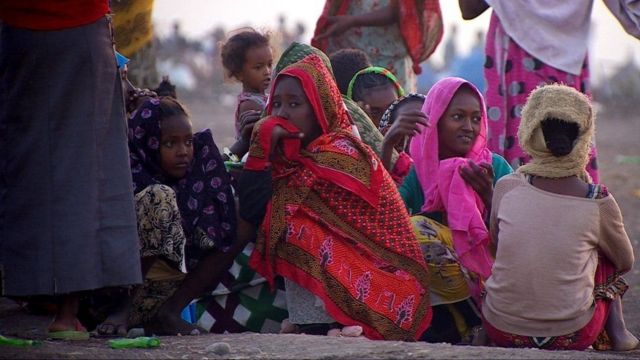
Refugees in Hitsats built small windowless homes. Some set up small restaurants or kept animals. Natalia Paszkiewicz/Handout via REUTERS
Similar scenes played out in Shimelba, about 15 kilometers (9 miles) from the Eritrean border. “They were looking for members of the opposition. They had a list,” said a Shimelba refugee leader.
The Eritrean soldiers detained around 40 people there, some of them women, said the refugee leader. Like most others interviewed for this article, he spoke on the condition that his name be withheld to protect his family in Eritrea and for his own safety in Ethiopia.
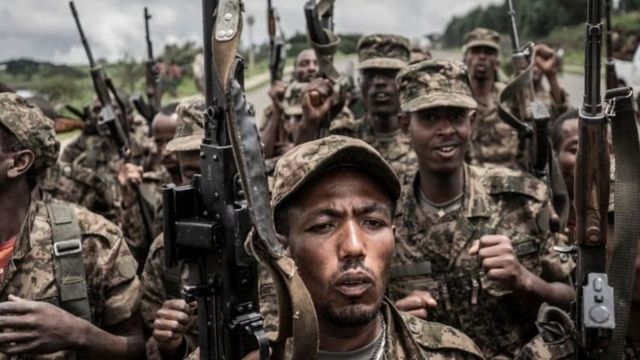
The arrival of the Eritrean troops marked the beginning of a months-long ordeal for thousands of Eritrean refugees – first hunted by the Eritrean military, then attacked by Tigrayan fighters who accused the refugees of conspiring with the enemy.
Reuters spoke to more than 60 refugees. These interviews revealed the role of the Eritrean Army division and commander who led the campaign to force the refugees back to Eritrea. Eritrean soldiers then destroyed the camps.
The refugees told of a systematic military operation: At a border town, Eritrean soldiers set up a COVID-19 quarantine centre, staffed by Eritrean doctors; soldiers then bussed thousands of refugees into Eritrea. Some went at gunpoint; others said they went voluntarily, swapping the perils of Tigray for the uncertainties of their homeland. The refugees also told for the first time how, once in Eritrea, some of their number were jailed or forced into military service.
When war broke out in Tigray last year between Ethiopia’s central government and the Tigray People’s Liberation Front, Eritrean refugees were caught in the fighting. Above, Eritrean refugees protest in Addis Ababa in July against attacks on refugees in the Hitsats and Shimelba camps. REUTERS/Tiksa Negeri
“(The Eritrean soldiers) were looking for members of the opposition. They had a list.”
An Eritrean refugee leader at Shimelba camp
A former top-ranking Eritrean military officer, now in exile, told Reuters he has seen Eritrean government documents that show more than 9,000 refugees returned to Eritrea. Reuters was unable to obtain these documents. The United Nations High Commissioner for Refugees (UNHCR) told Reuters in a statement its teams have interviewed several hundred refugees who say they escaped after a forced return to Eritrea. The agency estimates 7,600 refugees are still missing. Some have likely moved to the Ethiopian capital, Addis Ababa, UNHCR said.
The refugees interviewed by Reuters spoke of killings, gang rapes and looting both by Eritrean soldiers and Tigrayan fighters. Some incidents in late 2020 and early 2021 are documented in a recent report by Human Rights Watch. Refugees told Reuters attacks by Tigrayans have continued, including lynchings in June in the northern town of Shire.
Debretsion Gebremichael is the leader of the Tigray People's Liberation Front (TPLF), the political party that controls most of Tigray. The TPLF is locked in a battle with the Ethiopian government which has designated the TPLF a terrorist organization. Picture taken July 7, 2021. REUTERS/Stringer
Eritrea has denied that refugees were forcibly returned. It has also rejected accusations that its forces killed Tigrayan civilians and forced some into sexual slavery, as first revealed by Reuters. In August, the United States imposed sanctions on the chief of staff of the Eritrean military, Filipos Woldeyohannes, saying forces he commands committed atrocities, including massacres and sexual assaults. Eritrea dismissed the charges at the time as “utterly baseless.”
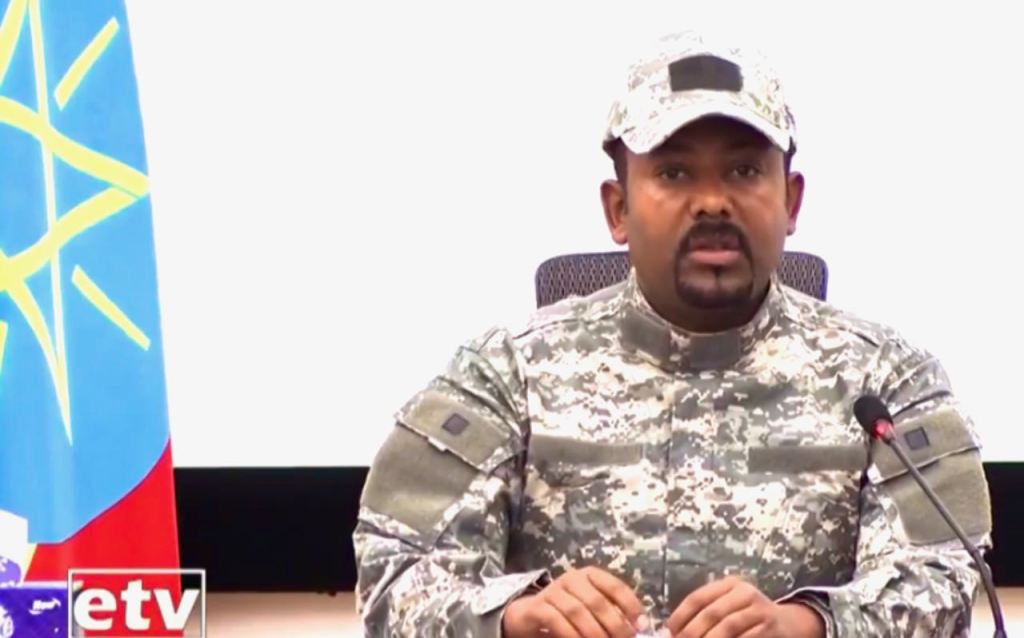
Ethiopia’s Prime Minister Abiy has said he has assurances from Eritrea that it will hold to account any soldiers found guilty of abuses. His spokeswoman, Billene Seyoum, did not respond to Reuters questions about whether any Eritrean soldiers had been charged. Eritrea’s government and military did not respond to detailed questions for this article.
Debretsion Gebremichael, the head of the party that controls most of Tigray, the Tigray People’s Liberation Front (TPLF), said his organization had no knowledge of attacks by Tigrayan fighters on Eritrean refugees. Tigrayan soldiers were ordered not to enter the refugee camps, he told Reuters. TPLF spokesman Getachew Reda said it was possible there were “vigilante groups acting in the heat of the moment.” Getachew did not respond to questions about whether the TPLF was investigating alleged crimes.
The refugees’ plight shows how Tigray has become the crucible of a power struggle between Ethiopia’s government and the TPLF, a guerilla movement-turned-political party that once dominated the country. The civil war has drawn in the authoritarian government of neighbouring Eritrea. Led by President Isaias Afwerki, Eritrea views the TPLF as its arch enemy and Tigray as a haven for refugee dissidents. For the first five months of the conflict, Eritrea denied its soldiers were inside Tigray. The Eritrean army continues to operate in northern Ethiopia, according to witnesses.
Ethiopia – home to 109 million people – is Africa’s second-most-populous nation and has been a key Western ally in an unstable region. For years it was Africa’s fastest-growing economy, and when Abiy took power as prime minister in 2018, he was hailed as a democratic reformer.
But the country is now in crisis. The war in Tigray has cost thousands of lives, triggered a famine and displaced more than 2 million people. Tiny Eritrea, a land of just 3.5 million people, plays an outsized role in the chaos.
Old enemies
Enmity between Eritrea and the TPLF runs deep. The TPLF dominated Ethiopia’s government for nearly three decades and fought a border war with Eritrea in 1998-2000. Abiy made peace with Eritrea months after becoming prime minister. The deal earned him the Nobel Peace Prize – and, in Eritrean President Isaias, a powerful ally against the TPLF.
Hitsats and Shimelba were two of four camps for Eritrean refugees in Tigray. Poor but peaceful, they were run by Ethiopia’s Agency for Refugee and Returnee Affairs (ARRA) and UNHCR. Some residents built tiny, windowless huts from stones or wattle and daub. Others set up small restaurants or kept animals to earn a few pennies.
Since agreeing a peace accord in 2018, Eritrea and Ethiopia have become allies. Above, Eritrean President Isaias Afwerki (right) and Ethiopia's Prime Minister Abiy Ahmed attend a ceremony to mark the reopening of the Eritrean Embassy in Addis Ababa in July, 2018. REUTERS/Tiksa Negeri
UNHCR says Eritrea generated the world’s third-largest number of refugees per capita in 2020, behind Syria and South Sudan. About 15% of its people – more than 520,000 – have fled. Around 150,000 of these refugees have made their way to Ethiopia; 96,000 lived in Tigray. Eritrea insists those who have left are economic migrants.
Many of the Eritrean refugees in Hitsats and Shimelba recounted brutal treatment in their homeland. With no free media and no elections, Eritrea has been described by some Western media and think tanks as “the North Korea of Africa.” Men and unmarried women over the age of 18 are conscripted into indefinite military or government service. Some told Reuters they had been forced into it years earlier. One refugee, a grey-haired military deserter who retains a soldier’s posture, told Reuters his family left Eritrea after soldiers came to his home and smashed his 14-year-old son in the face, demanding to know the father’s whereabouts. The boy still has a scar. Medical scans, seen by Reuters, show a skull fracture.
“The government will forgive you”
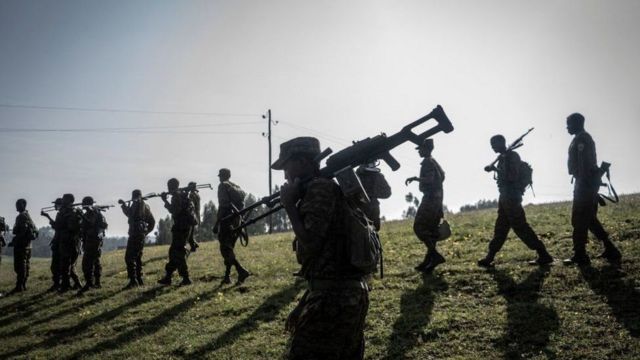
Soldiers from the 35th Division of the Eritrean Army reached Hitsats on Nov. 19, according to refugees at the camp and people living in the vicinity. The camps lay in an area where the Ethiopian Army had no presence at the time, local residents said.
The soldiers were led by an officer who introduced himself as Wedi Kecha, said two refugees, who previously served under him in the Eritrean Army and knew him by sight. Two campaigners for the rights of Eritrean refugees – British-based Elsa Chyrum and an activist in the United States – told Reuters that refugees they spoke to also identified Wedi Kecha as the commander. The former top-ranking Eritrean military officer confirmed to Reuters that Wedi Kecha leads the 35th Division.
Wedi Kecha didn’t respond to questions sent by Reuters via the Eritrean military. The Eritrean Army didn’t comment about Wedi Kecha’s role.
The soldiers gathered the refugees outside a church hall in the camp on Nov. 21. “Wedi Kecha introduced himself as the commander of the 35th Division,” said one of the refugees present, who served under Wedi Kecha in the Eritrean Army in the 1990s and spent two years stationed at the same base as him within the last decade. Wedi Kecha, this refugee said, “means ‘Son of Bread.’ It’s a nickname he has had since childhood.”
Wedi Kecha’s real name, according to this refugee and the former top-ranking Eritrean military officer, is Colonel Berhane Tesfamariam. Wedi Kecha fought in Eritrea’s war of independence from Ethiopia, which ended in 1991, the former top officer said. He is believed to be in his 60s. According to the refugee, Wedi Kecha was an excellent footballer in his younger days and used to play as a midfielder for a team that competed at a national level.
Wedi Kecha told the crowd that his soldiers had come to protect the refugees. He invited the refugees to return to Eritrea, telling them, “the government will forgive you.”
Soldiers from the 35th Division also came to Shimelba, according to refugees there. At a meeting on a football pitch at the camp on Nov. 18, leaders were addressed by an officer – described by one refugee as elderly, tall and strong, and identified by another as Wedi Kecha. The officer told the refugees that the soldiers were there to protect them. It was safe to return to Eritrea, he said, but if the refugees chose to stay, no one would help them.
“No one said a word. The commander said, ‘Go and sleep and think about what I said.’ And that was the end of the meeting,” recalled one refugee, a medical student, who was present. Two weeks later, the Eritrean soldiers started arresting refugees.
“They came at night to homes and picked up people whose names they knew,” said the medical student. “They had a list. There was no explanation.”
Many refugees at the two camps accused Eritrean troops of looting, killings and rapes. Eritrean soldiers looted Hitsats camp so thoroughly they even dismantled the water tanks, two international aid workers told Reuters. In Shimelba, a witness said they stole UNHCR’s solar panels. UNHCR said both camps were destroyed.
On Dec. 9, Eritrean soldiers shot dead four refugees and two Tigrayan civilians at Shimelba and dumped the bodies in a trench, said two witnesses – an aid worker and a refugee. Among the victims was a young Tigrayan whose mother and sister begged for his life, the aid worker said. Refugees recovered the bodies and buried them.
A female refugee at the same camp said her friend was raped twice on the same day by groups of Eritrean soldiers. Other refugees said that they witnessed Eritrean soldiers take away female refugees. When the four women returned, they said they’d been raped. Reuters was unable to verify these accounts.
Rage of the Tigrayan militias
For years, local Tigrayan families made the Eritrean refugees welcome in Ethiopia; they speak the same language and there was some intermarriage. That changed after Eritrea entered the war. Some Tigrayans began to call the refugees “shabiya” – a slang term for Eritrean troops – and accused them of colluding with the Eritrean Army.
Soon, Eritrean troops were killing Tigrayans, and Tigrayans were killing Eritrean refugees.
Human Rights Watch said in its report that on Nov. 19 Eritrean soldiers ransacked the town of Hitsats, which adjoins the camp, and killed many Tigrayan civilians.
A Tigrayan former guard for Ethiopian refugee agency ARRA told Reuters that Eritrean soldiers shot dead 17 members of his family that day. Among the dead were his sons aged 16 and 23. A second relative confirmed the account. Only the guard’s elderly mother survived. She covered the bodies with bed sheets until she ran out of linen, the guard said. Eritrea’s government did not respond to questions about the conduct of Eritrean troops.
On Nov. 23, local Tigrayan militiamen attacked Hitsats camp and shot dead eight Eritrean refugees outside the facility’s Mariam Ethiopian Orthodox Church, according to two dozen witnesses.
One of the dead was 29-year-old Tesfa Alem Habte, an aspiring geologist who loved science and football, said a relative.
“He had a good, bright future,” the relative said. Tesfa Alem’s name means “Hope of the World." Before Tesfa Alem left Eritrea, he used to organize donations of school books and other supplies to poor rural villages, the relative said.
In November last year, Tigrayan militiamen attacked Hitsats camp and shot dead eight Eritrean refugees near this church, according to two dozen witnesses. Picture taken in August, 2021.
Tesfa Alem Habte, above, was one of the victims of the attack. His name means “Hope of the World.”
“The Tigray militia forced us to move. Every time we left someone behind, we heard a gunshot. At some point I stopped counting them.”
An Eritrean refugee from Hitsats camp
A refugee shared photographs of Tesfa Alem and two other victims of the Nov. 23 attack, their bodies prepared for burial, swathed in floral sheets. Tesfa Alem’s family confirmed he is pictured there. Another source provided photos of the burial place. Yellow wildflowers adorned Tesfa Alem's grave.
Five refugees said they recognized local Tigrayans among the attackers. Four of them accused some Tigrayan staff of ARRA, the Ethiopian refugee agency, of assisting the militiamen by guiding them through the camp. ARRA didn’t respond to questions for this article.
Reuters couldn’t determine whose orders the Tigrayan militiamen were acting on when they attacked Hitsats camp. Debretsion, head of the TPLF, denied that forces directly commanded by the TPLF were involved in attacks on refugees. He said reports of abuses should be investigated.
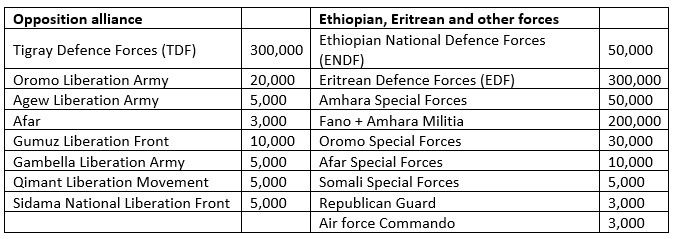
Many different forces in Tigray are fighting the central government, complicating efforts to pinpoint perpetrators of the violence.
There is a main, umbrella force that calls itself the Tigray Defense Force and answers to TPLF leaders, including Debretsion. It is made up of a combination of Tigrayan deserters from the Ethiopian army, former members of the regional police and volunteers.
Many informal, volunteer town and village militias have also joined the fight. The command structure of these militias is often opaque, and it is unclear how much direct control the TPLF had over them at the time.
The proportion of Eritrea’s population that has fled
In the first week of December, Eritrean forces withdrew from Hitsats without explanation. Tigrayan militiamen arrived the next day, shooting as they came. Four refugees said uniformed Tigrayan forces were stationed in the town of Hitsats, and a local militia, commanded by a former policeman, was in the camp through December. Uniformed Tigrayan soldiers regularly came to the camp, and the local militia appeared to obey their orders, they added.
Refugees who fled Hitsats said they too came under attack by Tigrayans.
On the morning of Dec. 6, a group of around 70 refugees was walking through a ravine near the village of Zelazele, about 16 km (10 miles) north of the camp. Five witnesses said gunfire suddenly erupted, and a grenade was thrown at the group. The attackers weren’t wearing uniforms, suggesting they belonged to a volunteer village militia. Three witnesses said between 18 and 30 refugees were killed.
The militiamen, some armed with axes and sticks, detained the survivors, then ordered them to return to the camp. Some elderly people and women with young children were too tired to walk.
“They begged us to leave them behind,” said one refugee. “The Tigray militia forced us to move.” Stragglers were shown no mercy. “Every time we left someone behind, we heard a gunshot. At some point I stopped counting them.”
Around the same time, Tigrayan militiamen intercepted a second similar-sized group of refugees from Hitsats on the outskirts of a village called Ziban Gedena, according to a survivor. This man said he saw a group of armed men force the refugees into a pit at night. Then a grenade was thrown in.
“Flesh flew up in the air,” he said. The militiamen began shooting.
Natalia Paszkiewicz, who previously worked for an aid group in Hitsats and undertook postdoctoral research there, told Reuters she had interviewed several refugees who said they witnessed such an attack. Reuters was unable to independently confirm the incident. TPLF officials didn’t respond to questions about specific allegations.
Despair at the border
By January, Eritrean refugees who stayed in the camps said they were starving. No rations had been delivered since October because of the fighting. People were eating the bitter leaves of the moringa trees, usually used to make tea.
Eritrean soldiers returned to Hitsats in early January and ordered the refugees to leave. They then set parts of the camp alight, dozens of refugees said. Eritrean soldiers set fire to Shimelba camp at around the same time, according to refugees who were there. These accounts were supported by satellite imagery and analysis by UK-based security research organisation Vigil Monitor. The imagery, which was seen by Reuters, shows the destruction of the camps, the presence of military vehicles and signs of shelling. Both camps are now closed.
Satellite images show Hitsats refugee camp before (left) and after its destruction (right) in early January. Planet Labs Inc./Handout via REUTERS
More satellite images show Shimelba refugee camp before (left) and with damage to the camp health centre (right) around the same time in January. Planet Labs Inc. handout via REUTERS
The Eritrean soldiers ordered thousands of refugees to walk westward for four days to the town of Shiraro, near the border with Eritrea. One refugee showed Reuters a video of a woman in labour on the back of a donkey cart. Refugees said some people died on the way.
In Shiraro, the Eritrean military encouraged and sometimes forced refugees to board trucks back to their homeland, a dozen refugees said. Some went in desperation. Others said they didn’t know where the trucks were going, but climbed on rather than starve. One refugee, called Dersu, said he spent three days in Shiraro in mid-January. Every day, he said he saw five trucks leaving for Eritrea, each carrying around 300 people.
In another border town, Badme, Eritrean soldiers set up a temporary COVID-19 centre to test and quarantine the refugees. Four refugees who were in Badme said thousands of Eritreans were held there, guarded by soldiers. Eritrean government doctors conducted the COVID-19 tests.

More Reuters investigations and long-form narratives

Got a confidential news tip? Reuters Investigates offers several ways to securely contact our reporters
Reuters spoke to four refugees who returned to Eritrea and later managed to escape back into Ethiopia. Among them was a 22-year-old former college student, who said he was shot in the stomach during the attack by Tigrayan militiamen on Hitsats. The young man said Eritrean soldiers put him and around a dozen other wounded and their relatives into a truck and told them they would be taken to a hospital in Ethiopia. Instead, they were driven across the border to the Eritrean town of Barentu and placed under armed guard in a hospital.
Their relatives were put into COVID-19 quarantine and interrogated by intelligence officers, who asked about their political affiliations and why they left Eritrea. Eventually, the young man and his brother paid a smuggler to take them back across the border into Ethiopia. Portions of his story – including being held under guard in hospital and his relatives being imprisoned – were echoed by the family of another refugee who described similar treatment.

How ethnic killings exploded from an Ethiopian town

Health official alleges ‘sexual slavery’ in Tigray

UN official accuses Eritrean forces of deliberately starving Tigray
A 27-year-old Eritrean, named Desta, said Eritrean soldiers forced him aboard a truck that took him to Badme and the COVID-19 quarantine facility, where men slept outdoors and there was little food. Desta gathered some sorghum planted by residents who had fled, but had no way to grind it into flour. So he ate the seed heads whole. When Desta tried to escape, he said, Eritrean soldiers caught him and beat him.
Bussed back to Eritrea, Desta ended up on the streets of a small town near the border, looking for work. “Then the local authorities announced that everyone who came back from Ethiopia would be conscripted,” he said. Desta knew the brutality of army life: He said he was an orphan who’d been forced to join Eritrea’s military at the age of 15. He fled to Ethiopia for a second time, despite the dangers awaiting there.
As the war swung in the TPLF’s favour in late June, Tigrayan forces took back the town of Shire. Jubilant Tigrayan residents poured into the streets. Mobs then began attacking Eritrean refugees in their midst, five refugees told Reuters. They described crowds hunting down Eritrean men and women and battering at least a dozen to death with stones torn up from the pavement.
UNHCR told Reuters it is aware of the arrest of hundreds of Eritreans, including refugees, in Shire around that time. It could not confirm reports of killings, but said the United Nations’ human rights body, OHCHR, is investigating. OHCHR didn’t comment.
The refugees said uniformed Tigrayan soldiers arrested at least two of their leaders – Atakilti Abrehaley and Mulugeta Yemane. Neither man has been seen since.
Dual Agenda
By Ayenat Mersie, Giulia Paravicini and Katharine Houreld
Graphics: Aditi Bhandari
Photo editing: Simon Newman
Art direction: Catherine Tai
Edited by Janet McBride and Alexandra Zavis




 https://martinplaut.files.wordpress.com/2020/11/prime-minister-abiy-ahmed-announces-attack-on-tigray.jpeg?w=150 150w,