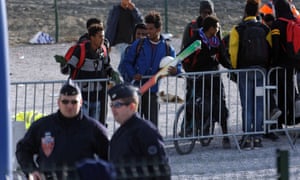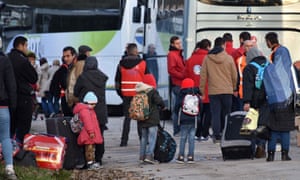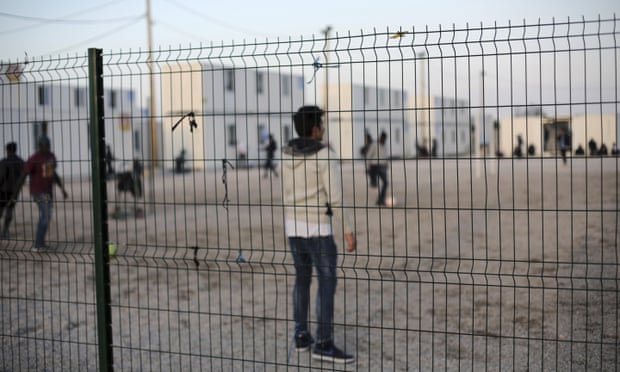
Group of 44 children run away from Le Havre reception centre over poor conditions and frustration at delays in processing their claims

Child asylum seekers in France have been left frustrated at the length of time it is taking to have their claims processed. Child asylum seekers in France have been left frustrated at the length of time it is taking to have their claims processed. Photograph: Thibault Camus/Associated Press
Child asylum seekers in France have been left frustrated at the length of time it is taking to have their claims processed. Photograph: Thibault Camus/Associated Press
Diane Taylor
Tuesday 29 November 2016 18.36 GMT 

Forty-four child asylum seekers from the demolished refugee camp in Calais have run away from a reception centre in Le Havre over poor conditions, saying they are returning to Calais to try to make their own way to the UK.

The children were among more than a thousand placed into centres around France to be looked after by the authorites after the camp was demolished.
The children left the centre on Tuesday morning after waiting weeks for the Home Office to process their cases and decide whether they were entitled to come to the UK.

One of the children, 16, told the Guardian: “We have very bad conditions in the centre. They don’t give us enough food or clothes. The manager came to speak to us with a Tigrinya interpreter earlier today. She was saying that only 10 children would be going to England and the rest would not be going.

Child refugees forced to work for nothing after leaving Calais
 Read more

“She said that if we didn’t like living at the centre we could leave. So that’s what we decided to do. There are some children here who are 12 or 13, others like me who are 16. All the children in the centre are Eritrean. The manager didn’t want to listen to our concerns.”

“We went to the station and hoped that we could get a train to Calais even though we don’t have any money to buy a ticket. But the station staff wouldn’t let us get on a train.”

After four hours at the station the children decided to return to the centre. One said: “We were too cold and hungry to continue. When we returned the staff said to us: ‘Welcome back.’”

Three of the boys are represented by Duncan Lewis solicitors and one of them texted his legal representative on Tuesday saying: “By now we are coming back to Calais.”

One of the boys’ caseworkers, Rebecca Carr, spoke to a member of the centre staff in Le Havre about the mass exodus of children and asked them what they were going to do about it. The staff said they could not prevent the children from leaving if they wanted to.

Carr said the member of staff had told her that they were trying to do their best but that it was difficult because the centre did not exist three weeks ago, and it had been difficult to source all the furniture and food for the children. The centre is only given €5 per child per day, she said.

The 16-year-old boy who spoke to the Guardian said that all the children were feeling very bad in the centre and losing hope, especially after they were told that only 10 would be allowed to go to the UK.

“Two of the children, one who is 12 and one is 13, already ran away and managed to get to Holland. We all want to go to the UK but we don’t know what will happen to us. I was interviewed by the Home Office last week and was told I would have to wait for a month before I could get papers to come to the UK to join my uncle who lives there,” he said.

Toufique Hossain, director of public law at Duncan Lewis, had urged the children to return to the centre.

Home Office block on Afghan and Eritrean teen refugees 'a disgrace'
 Read more

“They are all very fed up and they have had enough but if they leave they will be at risk of exploitation and serious harm. If they do make it to Calais there are no longer any services there to support them. We are representing 37 children who have been placed in different centres across France but this is the first time we have heard of a mass departure like this being staged. The Home Office seem to be dragging their feet. They say they are processing applications but they aren’t doing it quickly enough.”

A spokesman for the French embassy confirmed that the 44 children had left the centre earlier on Tuesday to try to get to Calais. “We checked with local officials who confirmed that conditions in the centre are good. Of course we could not force the children to return to the centre but we encouraged them to return, and they did so,” the spokesman said.

A Home Office spokesperson said: “We are continuing to work closely with the French government and other partners to identify unaccompanied asylum-seeking children who may be eligible to come to the UK.

“Our priority is transferring these children as soon as possible and ensuring their safe arrival. When transferred to the UK they are reunited with family members or put into the care of local authorities.

“We have made significant progress in improving and speeding up the existing processes since the beginning of the year, but the primary responsibility for unaccompanied children in France lies with the French authorities.”

Source=https://www.theguardian.com/uk-news/2016/nov/29/eritrean-child-asylum-seekers-abandon-french-centre-in-bid-to-reach-uk


The writer of this article calls for "national dialogue" before convening of ENCDC second congress that can polarize us in different groups.

Dialogue is the platform that encourages diversity of thoughts and opinions but not suppressing them. It leads to mutual understanding of problems and opportunities and search for common understanding. In practicing dialogue, there is an agreement that one person's concepts or beliefs should not take precedence over those of others, and common agreement should not be sought at the cost of the others. We believe dialogue is the main instrument to discuss the opportunities and problems for democratic transition and to develop strategies to address the issues of common interest. A dialogue to be effective must be built on certain principles that serve to guide and structure the discussions.

We , in the Eritrean opposition struggling from dictatorship to democracy need dialogue within ourselves and  listen each other for a deeper awareness and understanding of what is actually taking place nationally, regionally and globally. I think the conflict between the 15 political and 6 political organizations is not about the main issues but of personalities and individuals. Our focus has been on personalities instead of issues

The necessity of dialogue

 Since we are in process of democratization , the impact of political dialogue can generate momentum to reinforce the democratic process and enables to assess the pace of the transition. The value of dialogue is to help us the assess/ evaluate the experience of the past 15 years in the opposition camp. ( 1999-2016) Dialogue for reconciliation enables us to identify of issues of priority. It allows us evaluate the impact of external democracy assistance.

Dialogue and conflict

Conflict in itself is not necessarily negative. It is unmanaged conflict, where stakeholders attempt to resolve their disputes through unconstitutional or even violent means, that poses the most complex problems

If we all believe in democracy, democracy is all about managing conflict peacefully. In the Eritrean opposition case, dialogue can also act as a mechanism to help prevent, manage and resolve conflict.

- As a mechanism for the prevention of conflict. By bringing various actors together for structured, critical and constructive discussions on the state of the nation, dialogue can result in consensus on the reforms that are needed to avoid confrontation and conflict.

 I urge the leaders of the 15 political organizations avoid confrontations and come with the 6 political organizations round table discussion.

- As a mechanism for the management of conflict. Dialogue can help put in place democratic institutions and procedures that can structure and set the limits of political conflict. Democratic leaders provide mechanisms for political consultation and joint action that can peacefully manage  potential conflicts.

- As a mechanism for the resolution of conflict. Political dialogue can defuse potential crises by proposing appropriate peaceful solutions. Democratic institutions and procedures provide a framework to sustain peace settlements and prevent the recurrence of conflict.

What should be the guiding principles for the dialogue in national reconciliation between the opposition forces

 I hope all the opposition forces believe in these principles

 - Partnership and cooperation promoting democratization.

- Disseminating democratic principles in all areas of the cooperation

- Deepening the dialogue at both national and international level

- Assessing the democratic struggle

- Assisting the democratic development

Dialogue framework

- We in the Eritrean opposition the capacity and will of the dialogue to identify the challenges, analysing the participants, evaluating available resources.

- Participants: political society, civil society, national and international experts both at the national and inter Eritrean- Ethiopian dialogue.

- Objectives: Analysing the dynamics of the transition, seeking a national consensus on priorities and searching for effective cooperation

- Assessing results and monitoring the implementation.

Who are the actors and their functions at the inter Eritrean- Ethiopian Dialogue

Three key functions to be fulfilled in the dialogue for democratic change at the national level

- Analysis function. By providing a comprehensive analysis of the constraints and opportunities for further democratization, the dialogue contributes to diagnosing the flow of events and experiences at the national and regional level.

- Dialogue function. By providing a platform for change of experiences and lessons learned and a forum for building consensus on the challenges and opportunities for democratic change, the dialogue contributes in itself to the consolidation of democracy. It should ultimately lead articulation a democratic reform agenda with specific policy recommendations primarily defined by the national participants and thus owned by them.

- Brokering function. By providing international institutions and donor agencies involved in and committed to democratization with a reference framework, the dialogue contributes a mechanism to assist the international partners to identify concrete support measures, better target their interventions and co-ordinate their assistance.

The national dialogue for democratic change could be structured around three main groups with specific roles:

 1. The Dialogue Group: Composed of prominent national experts and key players in the process of democratic change in Eritrea and Ethiopia, the dialogue group should be sufficiently representative and have legitimacy and leverage to make the dialogue meaningful and sustainable. The members of the dialogue group should hence be carefully selected, based on their professionalism, reputation and willingness to enter into a genuine dialogue.

2. The Expert Group. Composed of international experts with undisputed credentials and reputation, the expert group provides the national participants with comparative experiences and lessons learned in other contexts which could be of assistance in the design of democratic change in Eritrea.

3. The Support Group: (For example the Eritrean Medrek) Composed of representatives of the international community involved in and committed to the democratic process in Eritrea represented as observers of the dialogue. The support group constitutes a structure assisting the democratization process in Eritrea. External partners or facilitators/ Medrek - Sana Forum should not dictate but can only support the process of democratic change.

What the opposition need is not convening ENCDC second congress that could result as the Bet Giorgis Wala  polarising the opposition in groups and benefits the dictatorship to get more legitimacy to perpetuate its repression against our people. It is a political maturity to create a political space for a national dialogue  that would lead us to reconciliation instead of confrontation.

Ending the conflicts in the opposition camp requires more political courage than simply neglecting each other in minor things.

I urge the 15 and 6 political organizations members of the ENCDC to come to their minds and take responsibility and show political courage postpone the second congress of ENCDC and come to national dialogue for reconciliation before running to a congress that can create more divisions and polarizations.

References and further readings

1. Lijphart, Arend. 1977. Democracy in plural societies. New Haven, CT: Yale University Press.

2. Horowitz, Donald L. 1985, Ethnic Groups in conflict. Berkeley. CA: University of California.

3. Dialogue for Democratic Development, by IDEA- International Institute  Electoral and Assistance

 By Fesseha Nair

Eritrea comes to Brussels

Wednesday, 30 November 2016 01:07 Written by


The Irish MEP, Brian Hayes, hosted a meeting in the European Parliament on Monday for an Eritrean delegation led by the country’s Information Minister Yemane Gebremeskel.
Their presence came despite protests from European and Eritrean human rights campaigners, who called for the meeting to be cancelled.

Mr Hayes, Fine Gael representative for Dublin, visited Eritrea in May, producing a distinctly upbeat report about the situation in the country.
“Over the past five years Ireland has committed over a million euro to projects in Eritrea. Over 20,000 Eritrean families have been directly helped.”

“It is great to get the opportunity to visit Eritrea and see first-hand these programmes in action. I believe that enabling sustainable livelihoods is a critical factor in determining Eritrea’s future,” he said.

Ahead of Monday’s meeting in Brussels he wrote: “I believe by bringing everyone together for this conference, positive outcomes can be achieved.”

The meeting was attended by a UNDP representative and the Irish aid agency VITA that has been working inside Eritrea for some time.
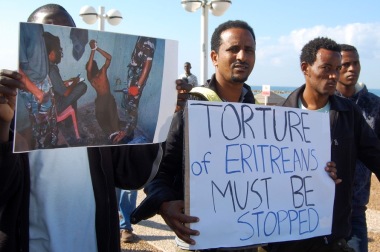
The tone of the gathtorture-eritreahttps://martinplaut.files.wordpress.com/2016/11/torture-eritrea.jpg?w=760&h=504 760w, https://martinplaut.files.wordpress.com/2016/11/torture-eritrea.jpg?w=150&h=99 150w, https://martinplaut.files.wordpress.com/2016/11/torture-eritrea.jpg?w=300&h=199 300w" sizes="(max-) 100vw, 380px">ering was perhaps best summed up in a tweet which Mr Hayes shared: “Engagement is the key”.
Eritrea’s notorious human rights record was glossed over, dismissing the findings of a United Nations Commission of Inquiry that the government was responsible for crimes against humanity.

As the UN put it: "Crimes of enslavement, imprisonment, enforced disappearances, torture, persecution, rape, murder and other inhumane acts – have been committed as part of a widespread and systematic campaign since 1991 aimed at maintaining control over the population and perpetuating the Eritrean leadership’s rule."

The exodus of young Eritreans fleeing the country was put down to a lack of appropriate employment.

Yemane Gebremeskel, speaking for the government described the opportunities for investment there existed for agricultural development and other areas, such as natural resources.

But the views of the panel did not go unchallenged.

Zara - an Eritrean human rights activist from the Stop Slavery in Eritrea Campaign - demanded to know why no mention had been made of the thousands of political prisoners, despite repeated attempts by Mr Hayes to cut her contribution off.
And Daniel, a recently arrived refugee, told the meeting that nothing had changed in Eritrea since he was forced into exile, and called for the situation not to be ignored.

Martin Plaut | 28/11/2016 at 8:54 pm | Tags: Eritrea, European Parliament, European Union, Torture, UN Commission of Inquiry | Categories: Africa, Eritrea, European Union, Uncategorized | URL: http://wp.me/p1OD48-2eM

Liberty English Magazine Issue No. 41

Monday, 28 November 2016 10:59 Written by


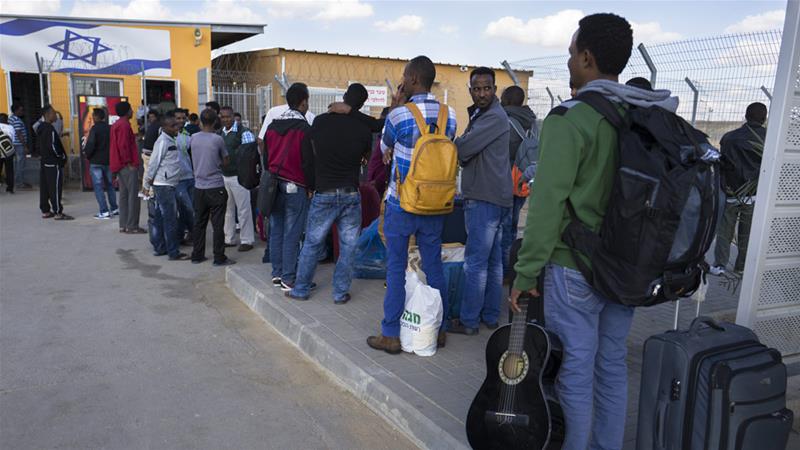
Eritrean refugees in Israel sent to Uganda and Rwanda

Wednesday, 23 November 2016 23:49 Written by


Do refugees have a choice in Israel's continued policy of transferring African arrivals to third countries?


Holot detention facility in the Negev Desert, in Israel housing some 2,500 asylum seekers mainly from Eritrea and Sudan [Jim Hollander/EPA]


Kampala, Uganda-The sky was still an inky black when the flight from Cairo touched down at Entebbe Airport near Kampala, the capital of Uganda, one morning in mid-January, the fluorescent glow spilling from the small terminal providing the only source of light.

It had been 15 hours since Musgun Gebar left Tel Aviv, and the journey staggered him in its brevity. Four years earlier, when he had travelled the other way - from Eritrea in East Africa to Israel - he had done so on foot, a punishing journey across the Sahara and the Sinai that took more than a month.

Kidnappers stalked the route, food was scarce, and half of the people with whom he had travelled didn't survive. But this time, he simply sat down in a small cushioned seat and waited, snapping selfies and eating salty meals from aluminum tins until, suddenly, he had arrived.  

Gebar had no visa to enter Uganda. He wasn't carrying an invitation letter or an application form. In fact, he didn't even have a passport. Though he had crossed many borders in his life, he had never done it through the official channel of queues and customs officials and dated stamps.

He only carried $3,500 in clean, hundred dollar bills in his wallet, a temporary travel document called a "laissez passer", and a creased letter from the Israeli government. "Passengers are asked to follow instructions and regulations to ensure a safe and pleasant departure from Israel," it read, with a signature from the Voluntary Departures Unit.

From friends who had come before him, Gebar already knew what would happen next. The man emerged as he stepped inside the terminal, wordlessly ushering him and the nine other Eritreans on the flight away from the passport control line.

Without a glance from the border patrol officers, he led them around the queue, to the baggage claim where their luggage awaited, and then out of the airport's sliding-glass doors. In the car park, a van waited to drive them to a hotel.

After that, they were on their own. 

No choice

Human rights organisations havereportedthat over the past three years this scene has played out hundreds of times in Uganda and neighbouring Rwanda, where more than 3,000 Sudanese and Eritrean asylum seekers fromIsrael have been "voluntarily" resettled as of 2015.

Often, those who were resettled dispute whether they truly had a choice.

Gebar, for instance, says that he was being held in an immigration detention camp in the Negev Desert called Holot, when, he claims, officials there informed him that he had threeoptions. If he liked, he could stay indefinitely in the camp. A second option was to go back to Eritrea, the country he had fled five years before. Or, he could agree to take $3,500 and depart for a third country of the Israeli government's choosing.

Gebar didn't hesitate. He took the third option.

Andie Lambe, executive director of the International Refugee Rights Initiative (IRRI), an NGO that has conducted extensive research into the departure of East African refugees from Israel, also questions just how much choice these refugees have.

"What does it mean when an unknown third country is someone's best option?" he asks. "To me that says they never really had a choice at all."

Mediareportssuggest that the three countries have cut a secret, high-level deal in which the African states accept refugees in return for arms, military training and other aid from Israel. 

The countries involved have given conflicting responses, however, on their involvement.

Sabine Haddad, Israeli population and immigration authority spokeswoman, told Al Jazeera that Israel does have an agreement with two African countries - which she did not name - for the relocation of unwanted asylum seekers. She did not offer a response regarding the weapons exchange part of the agreement. 

OPINION: Uganda: Doing Israel's dirty work

BothUgandaandRwanda, on the other hand, deny they have signed any agreement with Israel. Furthermore, neither country has affordedrefugee status to any refugees arriving from Israel. 

Ugandan government spokesman Ofwono Opondo told Al Jazeera earlier this year that the reports of a deal were "a rumour circulated by Israeli intelligence".

"I have disputed that we have received these individuals," he said.

No rights

Like others around the world, refugees leaving Israel for Rwanda and Uganda find themselves in a precarious position. Their lives straddle two countries, and movement either forwards or backward is nearly impossible.

READ MORE: Desperate Journeys

Tedros Abrahe, an Eritrean midwife who also left Israel under the "voluntary departures" programme earlier this year, says he is "justwaiting to be a legal refugee somewhere".

Like most of the estimated 5,000Eritreans who flee their country each month,Abrahe first left home in 2011 to escape the country's mandatory and indefinite national service programme. After a brief stay in Sudan, he paid smugglers $3,000 to take him to Israel, where he figured opportunities would be better and life easier.

But when he arrived, he found that his Eritrean midwifery qualifications were not recognised in Israel, and that the only work available to him as an asylum seeker was an under-the-table job cleaning the kitchen of a Tel Aviv shawarma restaurant.

Israel did not consider him a refugee. Rather, like nearly all of the approximately42,000Eritrean and Sudanese refugees in Israel, he was labelled an "infiltrator" - alabelpreviously used to categorise Palestinians entering Israel. The only status Abrahe was allowed was a permit granting him temporary reprieve from being deported, which, he says, he had to renew in person every 60 days.

This system,says Anat Ovadia-Rosner, a spokeswoman for Israeli NGO Hotline for Refugees and Migrants,"puts people in a perpetual limbo, without the right to healthcare, to welfare services, to anything that might help them build a permanent life here".

She thinks that "the whole structure is meant to make people's lives miserable, so eventually, perhaps, they won't want to stay any more".

Between 2009 and 2016, Israelgrantedofficial refugee status to 0.07 percent of all its Sudanese and Eritrean asylum seekers - a total of four people.

When, in late 2015, Abrahe went to refresh his Israeli permit, he was informed that it would not be renewed. Instead, he says, he was told that he had 30 days to either report to an immigration detention centre or leave the country for Eritrea or a location of the government's choosing.

Believing that he would not be safe in Eritrea, Abrahe chose the latter option.

By the time he boarded a flight for East Africa in January 2016, thousands of Eritrean and Sudanese refugees had already followed the same path.

According to Interior Minister Gilad Erdan, the voluntary resettlement plan had "encourage[d] infiltrators to leave the borders of the state of Israel honourably and safely".

But just how safe is it really?

According to research by Hotline and IRRI in Rwanda, most of the refugees who arrive in Rwanda are immediately smuggled over the border to Uganda.

Abrahe says that he spent just two days in the country - waiting in a house near Kigali under an armed guard - before being forcibly taken to Kampala.

Those arriving in Uganda are not afforded any further rights. Uganda's Department of Refugees says there is no deal to accept refugees coming from Israel. Douglas Asiimwe, the department's principal protection officer, told Al Jazeera that any refugees arriving from Israel were assessed on the individual merits of their cases.

They shouldn't need Uganda's protection, he explained, because they weren't coming from a war zone, but from a "safe" country that had promised under international law to uphold the rights of refugees.

Haddad, the Israeli population and immigration spokeswoman, insists that Israel "ensures that the process of relocation is conducted according to the agreements and in line with international law".

In her statement to Al Jazeera, she wrote: "Israel makes certain that the refugees are accorded all relevant rights in accordance with the agreements, including receiving the appropriate permits and papers."

But NGOs and human rights lawyers who have reviewed the refugees' cases in both Israel and Uganda say that Israel's official line on the subject is nottrue. 

In late 2015, a coalition of NGOs and human rights lawyers challenged the legality of Israel's third-country deportations before the Israeli Supreme Court. But a decision is still pending and Israel's "voluntary departures" continue.

READ MORE: Eritreans escape to torturous Sinai

No jobs

Even without legal status, life in Kampala was initially a marked improvement over Israel for both Gebar and Abrahe.

Ugandans were more welcoming than Israelis, they said, and the two melted easily into the city's large Eritrean population.

Abrahe had spent some of the money the Israeli government gave him on an iPhone, which he used to send smiling selfies to family and friends in Eritrea, Israel, and Europe.  

But the $3,500 wouldn't last forever, and there were few jobs to be had in Uganda, even for someone with medical training like Abrahe. By September, both men had run out of money and were living on handouts from friends and family.

"Time just passes itself," Gebar said. "You just sit home all day waiting, doing nothing."

In late October, however, Abrahe decided that he couldn't wait any longer. He borrowed a passport from a Ugandan friend and flew to Turkey. From there, he made the dangerous journey by boat to Greece, where he is now living in a refugee camp.

"It's better to take a risk than to live this way for my whole life," he says. "This year, I want to be a legal person somewhere."

Ryan Lenora Brown was a fellow of the International Women's Media Foundation in Uganda.

Source: Al Jazeera

Source:http://www.aljazeera.com/indepth/features/2016/10/eritrean-refugees-israel-uganda-rwanda-161024130201856.html

martinplaut

Journalist specialising in the Horn of Africa and Southern Africa

Menu

It is one of the tragedies of the plight of Eritrean refugees that even when they have escaped from the repression that has engulfed their own country they are not free.

A network of spies and informers has been carefully nurtured by the Eritrean regime to spy on their own citizens abroad.

The Eritrean diaspora is under constant surveillance – and they know it.

Go to almost any Eritrean opposition gathering and you will see them: young men and women who gather information and intelligence on anyone who steps out of line.

A meeting I held with the renowned Eritrean scholar, Dan Connell, was subjected to harrassment and was filmed by government supporters.

The image above is an example of their work.

Sometimes they go further.

Meetings are broken up and anyone who speaks out against the repression of President Isaias Afwerki is heckled and shouted down.

The youth wing of the ruling party – the YPFDJ – are among the most actively involved in these attempts at intimidation.

I have experienced this myself at first hand on several occasions, but Eritreans are treated much more harshly.

Openly violent

Eri Blood

In a previous article I have dealt with the violence that is sometimes meted out against anyone who attempts to protest against Eritrean government events.

During last year’s Bologna festival two members of the official security staff allegedly attacked demonstrators, injuring two of them.

One needed stitches in his head, the other to his head and back.

The Festival security staff were identified by the distinctive T-shirts they wear, with a read heart logo called “Eri blood” with a picture of a red heart.

During a demonstration outside the festival, Eritrean government supporters tried to provoke the opposition by driving their car into the demonstrators.

One person was injured.

Surveillance in Scandinavia

This is what Tewlede Ghirma told Radio Assena on 9 July this year.

He explained that an Eritrean he shared a house with in Norway – Michael – threatened him as a member of the opposition.

His computer was hacked and although Tewelde reported this to the police nothing was done. Meanwhile his family in Asmara was arrested and detained for three weeks until they managed to escape.

Tewdle says Michael travels to Eritrea frequently and is involved in smuggling. Twelde says he believes Michael is behind the hacking of his computer and the arrest of his family.

Tewelde is convinced that he is targeted because of his opposition to the regime. And his case is not an isolated one.

Eritreans in Norway and Sweden have complained that they hare systematically harassed, their computers and mobile phones hacked and pressure exerted on them because of their politics.

The UN Commission of Inquiry

Considerable international attention has been given to the UN Commission’s findings on the human rights abuses conducted by the regime which – they concluded – are so severe they might constitute ‘crimes against humanity.’

Little attention was paid to what the commissioners had to say about the Eritrean spy network around the world. Below I have incorporated what was said. It is worrying.

Clearly the regime has constructed a sophisticated system of keeping its disapora under surveillance.

This is something governments around the world need to halt.

From the Commission Report

(ii)     Eritrean diaspora

  1. The spying web has its outposts outside Eritrea, used to control the Eritrean population in the various countries where they reside. Eritrean resentations in foreign countries recruit spies to conduct surveillance of Eritreans in the diaspora. Allegedly, Government operatives are active in almost every other place Eritreans live.[1] Information obtained by the Commission indicates that, to conduct spying activities on their behalf, embassies often approach individuals from within the Eritrean communities abroad, in particular those who pay the 2 per cent Rehabilitation Tax as this is perceived as a form of support to the Government.[2]

One witness who reported having been a spy for an Eritrean embassy told the Commission that “In 1997, Mr. [A], the consul in [a foreign country]… called me for a meeting joined by other spies. They told us we should continue our struggle in [a foreign country]. He introduced us to each other and started meeting us individually. There was an organisation … We were assigned to this organisation, not to work but to ensure the PFDJ was represented in every organisation. They wanted me to join the board. I refused, arguing I was too young and inexperienced. Later, Mr. A told me he had a job for me. He told me I should work for them as a security agent in [city Z]. He said this would only be between him and me. Later, he gave me appointments and said I would always be able to enter the consulate, without needing permission and without having to wait for an appointment. Even the people at the consulate were not allowed to ask us any questions. I received a schedule for the entire week. I was asked to go every day to different hotels or restaurants. There were three shifts per day. We were asked to chat with people who came to those places and report on what we heard. Every day, I had to report back to the consul in person. I believed this was the right thing to do … We had to observe every religious group. Those working in the religious groups are church members and PFDJ members at the same time … We did not know who was an agent and who was not. The work was organised by the consul alone, not with others. Now they have people who don’t trust each other. At the time, it was different … I decided to discontinue my work with them.”

  1. The Commission heard accounts of how spies track individuals who are considered to be political dissidents or engaging in religious activities that are not authorised in Eritrea.[3]

A person told the Commission that: “My brother and my father cannot go back to Eritrea because they belong to the opposition party. There are spies in [a foreign country] who spy on what Eritreans do there.”

Another person told the Commission that: “People cannot speak freely. Even here in [a foreign country], Eritreans cannot speak freely because the Government of Eritrea sends people to spy on those who have fled Eritrea.”

  1. The focus of this espionage also includes political organizations and religious entities. However, more generally the purpose of the surveillance by embassy operatives is for the Government to detect any suspicious and undesirable conduct, namely conduct that is perceived to be against the policies or needs of the Government.[4]
  2. Eritreans in the diaspora, for fear of reprisals, have felt the negative impact of the spying and surveillance on their lives. Many people spoke about the fear of returning to Eritrea to visit because they might have been backlisted due to their political and other activities. Other people told the Commission about how they felt constrained to join organisations in the diaspora or express free opinions regarding the situation in the country. Most importantly, the Commission found that there are legitimate fears among Eritreans in the diaspora that the Eritrean Government engages in phone tapping and email surveillance in Eritrea such that they cannot freely communicate with their relatives in the country.[5]

(c)     Other means to conduct spying and surveillance

(i)     Intimidation and harassment

  1. The Commission gathered information indicating that the spy web of the Government of Eritrea uses intimidation – specifically in the form of threats and retaliation against family members – and harassment to collect information. This is done to put pressure on people within and outside Eritrea.[6]

A witness told the Commission that: “When I left the country, the security forces kept on asking my wife if I was coming back or not. They made frequent visits to the house. They tried to make her their informant so that they could extract information about my activities. They thought that I was involved in political activities. In 2008, due to the visits and harassment, she packed and left the country with the children.

In a submission received by the Commission, a man who was harassed by security agents reported: “The darkest night for me was actually after I was released from jail. Every morning and every evening the national security forces were coming to my family and asking, ‘What did you do? Did your daughter recant? What did you do?’ This happened almost every day. My family kept telling me, ‘If you do not recant, if you do not leave this religion, you are going to send us to prison’.

Another person whose mother was detained for asking questions told the Commission that: “In Asmara, there were always people watching our family. I first began to notice it in 2009. They were always in the same cars, the same people. They just sat outside our apartment when we were home and followed us when we went out. They never said anything to us or touched us. However, on one occasion my mother was stopped on her way home from work. She was asked where she was coming from and she asked who they were. They told her that they were from the security agency. She asked to see their badges. She was not satisfied and told them that she would not respond. She was arrested and detained for a day.

During the conduct of interviews with Eritreans in the diaspora, one witness told the Commission that “A colleague and I have received death threats for the past three weeks from someone in Asmara. My colleague … called back and recorded the conversation. We are told the number is an intelligence number.

A son whose father was arrested and detained for the former’s alleged political activities in the diaspora told the Commission that: “My father was imprisoned for 20 months when he returned from [a foreign country]… We do not know why he was arrested and he was not told the reasons either. But when he returned to Eritrea, before he was arrested, intelligence people asked him about my political activities. He was told to ask me to leave the political organisation I was affiliated to.

Another witness told the Commission that while he was living abroad, his mother was approached by national security officers: “One day when going to work she spoke to a woman in the intelligence unit who said to her ‘Your son is very active in the opposition, why don’t you tell him to just concentrate on his studies?’ to which my mother replied ‘You know today’s children, they don’t listen to their mothers’.”

                             [1]        TAM066, TAM001.

                             [2]        TBA038, TCDP067, TBA094. Also known as “Diaspora Tax”, this tax is levied of Eritrean citizens abroad by the Government of Eritrea, through its local embassies.

                             [3]        S020, TAM065, TBA094, TSH023, TAM001.

                             [4]        TNR046, TCDP067.

                             [5]        TNR023, TNR046, TNR011, TAM065, TBA038, TAM066, TSH037, TBA016, TCDP078-082, TNR10, TRDV003, TSH103, TSH143, TBA040, TSH005, TBA034.

                             [6]        TSH098, TAM072, TAM053, TSH032, S133, TSH023.

Source=https://martinplaut.wordpress.com/2015/09/02/eritreas-sinister-international-network-of-spies-and-thugs/


migrants

About 27,500, mostly Nigerians and Eritreans, arrived Italy in October, the European Union’s border agency, Frontex, said.

The agency said nearly 27,500 migrants arrived in Italy in October, an all-time monthly record fuelled by favourable weather conditions.

It said on Wednesday in Rome that the figure was the highest monthly number ever recorded in the Central Mediterranean and more than twice as many as in the previous month.

The agency said that the arrivals surged because, after “relatively poor weather conditions in September, people smugglers loaded more people than usual on unseaworthy vessels before winter makes crossings impossible’’.

It said that it led to a very high number of deaths, reporting that 127 bodies were recovered on the sea stretch between Italy and North Africa and that it was likely that many more persons drowned.

“Tragedies were continuing in November as the Italian coastguard recovered one body and 580 migrants were rescued in Wednesday sea operations.

“This added to seven bodies recovered and almost 900 saved Monday and Tuesday,’’ it said.

Frontex said that most migrants who landed in Italy in October came from Nigeria and Eritrea.


It said that the year’s provisional tally of arrivals was nearly 159,500, up 13 per cent compared to the same period in 2015.

The agency noted that Italy became the main entry point for EU-bound migrants in the first half of 2016, after the so-called Balkan route via Greece was closed by an EU-Turkey repatriation deal and tighter border controls.

“Greece recorded 1,700 landings last month, compared to more than 170,000 in October, 2015.

“Migrants mostly came from Afghanistan, Pakistan and Iraq,’’ it said.

The thousands of Nigerians who seek to enter Europe through Italy via the Mediterranean has been a source of concern to both the Nigerian and European governments.

The Nigerians often travel the rough and risky road route via Niger to arrive in war-torn Libya where they join others to try to cross the Mediterranean.

On Tuesday, the Nigerian anti-trafficking agency, NAPTIP, said it intercepted 50 Nigerians who had embarked on the route.

“There are males and females as well as three minors in the group and they all fall within the ages of three and 45 years,” a NAPTIP official said.

Source=http://www.premiumtimesng.com/author/webmaster


Campaigners condemn Home Office guidelines on 12- to 15-year-olds issued after demolition of Calais camp

 
Some young migrants wait to leave the Calais camp
Migrants were transferred from the demolished Calais migrant camp all over France. Photograph: Sylvain Lefevre/Getty Images

Unaccompanied teenagers from Afghanistan, Yemen and Eritrea who had reached the Calais refugee camp will be barred from entering the UK according toHome Office guidelines.

In a decision that was condemned by refugee charities and campaigners, the move will limit the intake of teenagers who do not have family in the UK to those from Syria and Sudan except in exceptional circumstances.

The Home Office’s guidance said it would take children 12 or under of all nationalities, those deemed at high risk of sexual exploitation, and those who “are aged 15 or under and are of Sudanese or Syrian nationality” because people from those countries are already granted asylum in the UK in 75% of cases.

Lady Sheehan, the Liberal Democrat peer, said the new rules, details of which emerged on Tuesday night, were “unacceptable”. Sheehan said they would come as a “horrible shock” to refugees from other countries who had been led to believe they might be able to come to Britain. “It is quite arbitrary. We had no idea they were going to apply this sort of criteria,” she said.

Migrants wait to board buses to leave the Calais camp
Migrants wait to board buses to leave the Calais camp. Photograph: Philippe Huguen/AFP/Getty Images

Sheehan said she feared that teenagers awaiting asylum decisions in reception centres acrossFrancewould now escape and return to Calais to risk their lives jumping on lorries. “People will be just devastated,” she said in relation to some of the refugees she has campaigned for in Calais.

Rabbi Janet Darley, the leader of Citizens UK, accused the government of back-tracking on its promises. “The UK is unforgivably backtracking on its commitment to vulnerable refugee children inEurope. Citizens UK’s safe passage team estimates that around 40% of the children who were in Calais at the time of the demolition are Eritrean or Afghan,” said Darley.

“By ruling out children from these countries, the home secretary is arbitrarily preventing many vulnerable children from being helped by the Dubs amendment, and will make it impossible for her to keep her promise that the UK would take half of the unaccompanied children inCalais.”

Thenew guidelines were issued to Home Office staffon 8 November and have been seen by the Guardian after they were shared on Tuesday with charities which have worked in the Calais migrant camp. They follow claims by some tabloid newspapers that some of the youngsters coming to the UK were over 18.


The Calais camp was demolished two weeks ago, with an estimated 2,000 children and young adults of 16, 17 and 18 years old now scattered across France in reception centres while their cases are examined by French and Home Office officials. The UK has so far taken about 330 children from the Calais camp.

Unaccompanied children who have a family member in the UK are currently allowed in as part of a “fast transfer” family reunification programme, mandated by EU lawe.

The remainder have no family in the UK, but qualify for entry under an amendment to immigration laws pushed through parliament by Lord Dubs earlier this year.

Citizens UK also said that the Home Office process of transferring children to the UK has virtually ground to a halt. A group of girls aged between 15 and 17 arrived in Scotland under the Dubs amendment at the weekend, but the charity has not been made aware of any others in the past week.

Of the unaccompanied minors who have been brought to the UK from France so far this year, about 250 are part of the “fast transfer” family reunification programme.

Thechaotic clearance of the Calais migrant campcaused bitter tensions between the French and British governments, with France’spresident telling the UK it had to do its “moral duty”and take 1,000 children from the camp.

The Home Office said that “all children who have close family in the UK will be considered for transfer” and those that do not have family ties would be assessed according to the new guidance.

Source=https://www.theguardian.com/uk-news/2016/nov/15/migrant-teenagers-without-family-in-uk-barred-except-syrians-and-sudanese

Jeremy Binnie, London- IHS Jane's Defence Weekly

14 November 2016
 
The UAE has deployed Mirage 2000-9 jets to Assab in Eritrea. Source: IHS/Patrick Allen

The United Arab Emirates has deployed a combat air group to Eritrea's Assab airport to support its military operation in southern Yemen, Airbus Defence and Space satellite imagery shows.

There were nine Dassault Mirage 2000 multirole jet fighters at the airport on 20 October, as well as two Sikorsky UH-60 Black Hawk helicopters, two Bell 407 helicopters, one Lockheed Martin C-130 Hercules transport aircraft, and two Bombardier Dash 8 turboprop airliners. This combination of aircraft is only in service with the UAE air force, which has about 40 Mirage 2000-9EAD jets and operates the Northstar Aviation 407MHR armed version of the Bell helicopter.

The construction of 12 hangars at the airbase indicates that the UAE has deployed or intends to deploy more than nine Mirage 2000-9 jets.

The hangars and fighters were not present at the base on 8 May.

Satellite imagery also shows UAE Navy vessels have been using Assab's commercial port since at least September 2015. The 20 October image shows one of the UAE Navy's six Baynunah-class corvettes docked on that day as well as two 64 m landing ships.

The high-speed catamaranSwiftwas also present, proving it was not sunk as claimed by Yemen's rebels when it was hit by an anti-ship missile near the Bab al-Mandab strait on 1 October. Previously operated as a high-speed logistics ship by the US Navy, the UAE saysSwiftis a civilian vessel that was carrying out a humanitarian mission when it was attacked.

Vessels from the UAE National Marine Dredging Company are also building a new port facility next to the airport that is likely to be used as a dedicated naval base once completed. The 20 October image shows the dock's retaining wall under construction.

Want to read more? For analysis on this article and access to all our insight content, please enquire about our subscription options ihs.com/contact

Source=http://www.janes.com/article/65455/uae-deploys-fast-jets-to-eritrea

Listening is perhaps the most important of all interpersonal skills. It is the combination of intelligently giving undivided attention, hearing and understanding what is being communicated, not just what is being said. We need to remember that hearing is not the same as listening. People may hear the words, but if they do no pay attention, then they will not be able to understand the message correctly. Sometimes, it is easy to hear the words without truly listening in order to grasp the real message. We think that we know what is being said, but we need to clarify and double check the accuracy and our certainty of the situation before jumping to unnecessary and irrational conclusions. At times we are deeply preoccupied in our own thought or affair that we fail to pay attention to what other people say. One time, Aboy Manna, a crop farmer, was planting seeds in his field. Adey Fanna was passing by and said, “Aboy Manna, Good Morning to you.” Aboy Manna replied, “I am planting wheat.” Adey Fanna said again, “I just said Good Morning.” He replied again, “Though we do not have rain, we hope that the wheat will germinate.” In this conversation, Aboy Manna did not at all pay attention nor properly responded to what Adey Fanna was saying. The same thing frequently happens with so many of us because we do not give our full attention to listen and understand to what is said by other people. It is so important that we have interpersonal relationship and communicate properly and appropriately with other people who live around us, if we desire to avoid misunderstandings and confusion. It often happens that we take a certain term, or phrase, or even statement out of its real context from what was said and we make our own interpretation or conclusion which can create misunderstanding and confusion. The story below is a typical example that exhibits confusion due to lack of proper listening to what has been said by another person.

A group of ladies in one Eritrean Orthodox Christian church complained about the sermon given by the priest. The complaint started when the priest preached for two consecutive Sundays about the teachings of Prophet Isaiah (Esayas). The ladies collectively selected three from their group to represent them and confront the priest. They made an appointment to talk to the priest after the church service. At the meeting, the three ladies indicated to the priest that they come to church to learn the gospel and to receive spiritual blessings, not necessarily to learn or to listen to any kind of politics. The priest listened to them with full attention and interest. After they finished expressing their complaints, he asked them if they have a Bible and if they read it. They indicated to him that they have the Bible and they read it sometimes. He asked them to turn to the appropriate chapters and verses on prophet Isaiah. He explained to them that he was actually preaching about Prophet Isaiah from the Bible, not politics. The confusion was created because the ladies took the name ‘Esayas’ out of its context and made the wrong interpretation. 

Most people, most of the time, take listening for granted; it is something that just happens. It is only when we stop to think about listening and what it entails that we begin to realize that listening is in fact an important interpersonal skill that needs to be nurtured and developed. However, it is commonly observed in our Diasporas society that when another person voices an idea that is different than our own, we usually fail to listen with interest to what is said by the other person, or we often fail to acknowledge that the other person may have some truth in what they are saying. Such situation happens because “Most people do not listen with the intent to understand; they listen with the intent to reply” (Stephen Covey). Too often, we forget to listen. Many people in a conversation are not really listening. We are already preparing to respond while somebody is still talking. Listening is requisite for an exchange of ideas. We never learn anything while we are talking. People listen more attentively to those who listen to them. Most people do not seek first to understand because we do not listen with the intent to understand; we usually listen with the intent to reply. We are either speaking or preparing to speak. Consequently, the necessary information will not be conveyed properly in the process of our interpersonal communication. Lack of information will then create misunderstanding and misunderstanding will create conflict. Much of the negative discourse in our conventional interpersonal communication is caused and orchestrated by those people who do not listen and understand what is said by another person. When listening to people with different viewpoints and outlook, we need to put ourselves in their own shoes. Although we may not agree with them, it might help us to better understand their perspective. We have to try to find a common ground; areas in which we all agree, and seek the decency to respect each other’s perspective.

            The funny story narrated below shows how misunderstanding and confusion can happen, if we do not communicate our message properly to another person verbally or in writing.  The story is about a husband Gurja and a wife Gimja, on a shopping trip that went wrong.  Gimja needed some grocery items to make a birthday cake for their ten year-old daughter. Gimja decided to send Gurja to the grocery store to buy them.  By coincidence Gurja was on his way to a sports event, but he agreed to do it on one condition. There would be only a few items to buy so that he could go through the express checkout to save time, so he could still be on time for the game. Gimja told him verbally what she wanted him to buy, but, instead he asked her to list the items for him on a piece of paper. Gurja left and Gimja expected him to return home soon.  However, time passed by and he was not home, so she began to worry.  She picked up her phone and as she was about to call, but she heard him coming in the driveway.  He came into the house with three bags, put them down on the kitchen floor and told her that he would be back in with the rest of the bags. Gimja wondered what he was talking about and she started unpacking the bags.  She was surprised to see so many bags of grocery items. In the first bag there was one pound of butter, 2 bags of icing sugar and 3 bottles of vanilla.  In the second bag there were 4 dozen eggs.  In the third bag there were 5 packages of lard and her grocery list.  She looked at the list and suddenly realized what had happened. When Gurja asked her to make sure he could go through the express checkout, she made a list by numbering the items one through seven. She quickly put the list away before Gurja came in with the rest of the bags and decided not to say anything at all about the confusion between the numbers and the quantities of items bought.   Instead she planned on thanking him for being such a great husband. He brought in several more bags that contained 6 large bags of flour and 7 large cartons of milk.  Then he looked at his wife and said, “I obviously didn’t go through the express checkout because there were too much stuff.  However, when the cashier was ringing up the last item, I realized what I had done wrong and I just wanted to get out of the store as fast as I can because the people in line behind me were laughing.” Originally, the numbers in the list were meant to identify the list of items, not necessarily to indicate the quantities of items to be bought. Apparently, it was Gurja, not Gimja, who was very much confused in this adventurous episode of miscommunication.   

The story clearly indicates that men and women communicate very differently.  When women talk they are also listening carefully to what has been said.  When men talk, they do not listen very well and will miss a lot of details in the process.  In general, women have much better listening skills than men. Most men, unlike women, like to talk, especially about themselves. However, most people, men and women, never listen. That is why many people talk to themselves. One good advantage of talking to themselves is that they know at least somebody is listening. Whether it is a casual interpersonal conversation with friends, or attending a seminar, or talking to somebody on the telephone, there is an underlying trend that we have stopped listening to people who have a different perspective. We are so sure of our rightness that we no longer listen to others. Instead, we are smugly content in our own assumed correctness thinking and believing the same perspective. This intellectual bullying or mere arrogance, especially in men, erodes the sense of connectedness and cooperation in our own Diasporas society. Luckily, it is a blessing that God created women to look after men and harmonize our situations.


 Listening is the first rule and initial step of effective interpersonal communication. We usually listen with our ears for meaning, but we also listen with our eyes for behavior and we listen with our hearts for feelings. Learning to listen is a special skill of interpersonal communication. However, it is important to note that listening is not a skill with which we are born. We have to learn how to develop good listening skills, and practice what we learn. There are two choices when it comes to listening. We can listen with positive expectations or we can listen with judgment. How we listen shapes how we think and speak. Listening with judgment is an irrational behavior. Once a judgment is in place, we listen for what we want to hear. If we have judged a person as stupid, we listen for everything about the person that supports this perception. If we have also judged a person as clever, we listen for everything about the person that supports this perception. Thus, learning to listen is a powerful art used to build alliance.


 To listen well, we also need to stop talking. It will take patience to let other people talk without interruption or finishing what they have to say. However, listening is well worth the effort. By being genuinely interested in what others have to say, we show them that they are important in the relationship. Listening gives others due respect and validation. To this effect, “One of the most sincere forms of respect is actually listening to what another person has to say” (Bryant McGill). The quality of our relationship with other people depends on our ability to listen well. In reflecting the importance of listening, we are created with two ears and one mouth for a good reason. If we were supposed to talk more than we listen, we would have been created with two mouths and one ear. To become better and more skilled listeners we are expected to listen twice before we speak once. In doing so, we can improve our relationships with each other, we can have a better understanding of each other, and we can reduce any undesirable misunderstanding and confusion among ourselves. For this reason, effective listening is very often the foundation of strong relationships with other people. Without the ability to listen effectively, communication with other people, particularly with our own children, can easily breaks down. Though our children never listen to us, we need to make efforts to inspire them to stop, listen and build a more positive attitude and develop a better perspective. Listening is one of the greatest gifts we can give to our family members and others with whom we interact. By improving our listening skills, we can be a better parent, spouse, pastor, teacher, friend, leader or follower. People naturally gravitate towards us, and appreciate us, if we listen to them with respect, empathy, and positive attitude. It is our responsibility to work on improving our listening skills. It may take time and effort, but the rewards will be worth it. As Winston Churchill said, “Courage is what it takes to stand up and speak. Courage is also what it takes to sit down and listen. In general, effective listening is one of the most important skills a strong leader can have, and it is the one that our young generation need to develop. Most of the successful people are the ones who do more listening than talking. It is evident that the less we speak, the more we listen and understand each other. Our mouths can put us in trouble for talking rubbish, but our ears will never get us in trouble even for listening to gibberish. As the Turkish proverb says, If speaking is silver, listening is gold.” Clearly, listening is an important skill that we can all benefit from improving. By becoming a better listener, we can improve the quality of our interpersonal relationships and develop the ability to avoid any unnecessary conflict among ourselves. 

 Dr. Tesfa G. Gebremedhin, West Virginia University

EPDP Magazines