by Martin Plaut

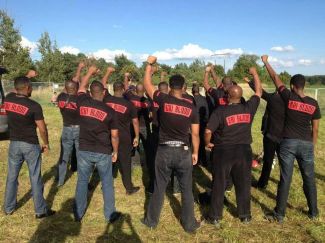
Eri bloodThe YPFDJ - the youth wing of Eritrea's ruling party - is planning to hold a European wide conference in the Netherlands from the 13th to 17th of April.

The local Eritrean community is worried - previous YPFDJ rallies have been marked by violence and intimidation.

The regime has deployed thugs from 'Eri-blood' to attack dissenters in the past.

An appeal has been launched to appeal for the Dutch authorities to halt the gathering [see below]

Martin

An Appeal to The Dutch-Eritrean Community

Action to Foil the YPFDJ European Conference in Holland

Source:Facebook

From next Thu, 13/4 to Sun 17/.4/17, the Isaias regime has organized a European wide conference for Youth-Pfdj, its daughter organization. The Dutch authorities, including the media, are wary of this conference because it has elements inviting antagonism, that pose danger to peace and order of the Dutch public.


This is a call to all Dutch-Eritreans, whether or not, we are citizens, residents, and refugees, to use our rights, to formally register, with the police, a declaration (‘aangifte’) that the Ypfdj, poses danger to our personal safety. Because what should worry us, also worries Dutch authorities, including several parliament members (2de Kamer), and the security. Issues about the Ypfdj may cause harm to Eritreans and the Dutch.

1. That Ypfdj thugs are going door-to-door, forcing Eritreans to pay money for this conference and for 2%.

2. That they are issuing false “receipts” without legal details, means they are hiding their actions from public.

3. That they are putting on a black list and intimidating those Eritreans that refuse to pay;

4. That the infamous “Eri-Blood” gang, which is feared to be armed, is capable of physically harming anyone;

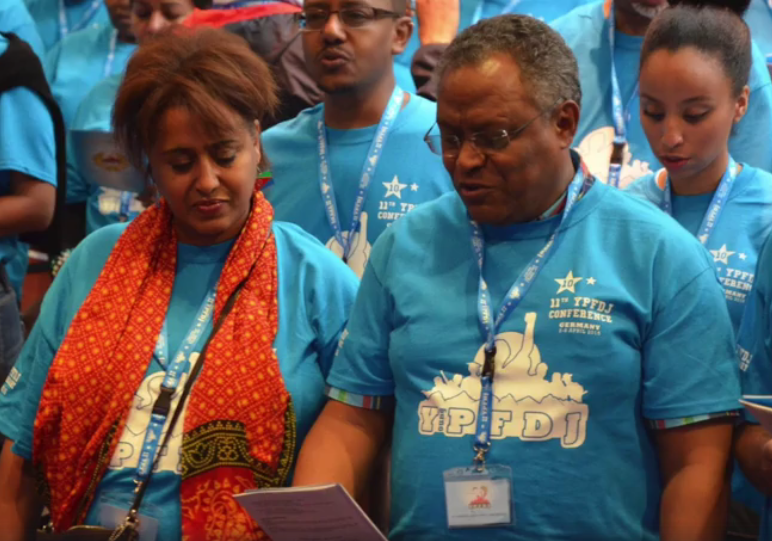
5. That a Dutch court, established last year, that Ypfdj, as a possible ‘intelligence arm” of Isaias; the public speech of Yemane G/Ab, at Ypfdj conference in Germany, being the major evidence of it.

6. That all of this has been organized, in December 2016, by high ranking officials of the regime.

Etc., etc., because of all the above, is this Ypfdj conference, is a threat to, us, Dutch-Eritreans.

That is why, we should, go and declare this facts to the police. We are being threatened by phone and in person as “traitors”. The reasons are laid down above. Let us exercise this right of ours immediately, but in any case, before the conference commences. Let us support the effort of the Dutch authorities by coming out to register officially our fear of the situation.

Your brother, Kubrom Dafla Hosabay,

Nb. if for any reason, the police refuse to receive your declaration (“aangifte”), please let us know as we have, legal help by our side. Contact: +31-6-8534-1768, email: This email address is being protected from spambots. You need JavaScript enabled to view it.

Best Regards

Paulos Michael

This email is confidential and intended solely for the use of the individual to whom it is addressed. Any views or opinions presented are solely those of the author and do not necessarily represent those of Acolom Networks. If you are not the intended recipient, be advised that you have received this email in error and that any use, dissemination, forwarding, printing, or copying of this email is strictly prohibited. If you have received this email in error please notify the Acolom Networks Helpdesk on This email address is being protected from spambots. You need JavaScript enabled to view it.

By Janene Pieters

on April 11, 2017 - 10:15

Eritrean Flag

Eritrean flag. Photo: Achim Raschka / Wikimedia Commons


A number of politicians in The Hague are concerned about a conference for supporters of the Eritrean dictatorial regime that is planned for the Netherlands, NOS reports based on information from OneWorld.

The gathering will be the annual European conference for youth wing of the only party allowed in Eritrea. It is not yet clear when and where the conference will be held. But according to the broadcaster, it will be in the Netherlands and in the next couple of days. Around 650 people are expected to attend. 

OneWorld has "strong indications" that one of the attendees will be the right hand man of Eritrean president Isaias Afwerki. He often attends this type of gathering, during which he informs people about how they can serve their country. 

Some 20 thousand Eritreans live in the Netherlands. Last year people from Eritrea formed the second largest group of asylum seekers in our country. According to the UN, the Eritrean government violates human rights on a large scale.

A number of parliamentarians are concerned about this conference, wondering whether the presence of Afwerki's right hand man will constitute a treat to public order in the Netherlands, NOS reports. A number compared this situation to Turkish ministers who wanted to campaign in the Netherlands for a Turkish referendum a few weeks ago. The Dutch government denied them access to the country, resulting in a diplomatic fallout between the Netherlands and Turkey. 

Eritrese vluchtelingen op vakantie in land van herkomst

ኤርትራውያን ስደተኛታት ንዕርፍቲ ናብታ ዝመጹላ ሃገር ይኸዱ

Veel vluchtelingen uit Eritrea gaan nog altijd op vakantie naar het land waaruit ze gevlucht zijn. Het kabinet wil de verblijfsvergunning van deze vakantiegangers afpakken, maar dat gebeurt nog nauwelijks bij Eritreeërs.

Bij tientallen andere asielzoekers die tijdelijk terugreisden naar het land van herkomst heeft het kabinet wel hun verblijfsvergunning ingetrokken, schrijft de Telegraaf vanmorgen. Staatssecretaris Klaas Dijkhoff sprak eerder schande over het terugreizen naar het land van herkomst, omdat deze landen volgens de vluchtelingen extreem gevaarlijk zijn, waardoor ze moesten vluchten.

ቡዙሓት ኤርትራውያን ስደተኛታት ሕጂ ( እንትኾነ’ውን) ንዕረፍቲ ኢሎም ናብታ ሃዲሞም ዝወጹላ ሃገር ገና ይመላለሱ ኣለዉ። ካቢነ መንግስቲ ሆላንድ ነቲ መንበሪ ፍቓድ ናይ ዞም ናይ መንበር ፍቓድ ድሕሪ ምቕባል ንሃሮም ንዕረፍቲ ዝገሹ ከሕድጎም ድሌት ኣለዎ። እንተ ኾነ ኣብዞም፣ ካብ ኤርትራ ሃዲሞም ንኽንሶም፡ ተመሊሶም ናብ ኤርትራ ዘመላለሱ ዘለዉ ኤርትራውያን፣ ጌና ኣይፈጾምን ዘሎ።   'እንትኾነ ግና መንግስቲ ሆላንድ ኣብ ካልኦት፣ ናብ ሃገሮም ዝመላለሱ ብዓሰርተታት ዝቑጸሩ ሓተቲ ዑቑባ፣ ናይ መምበሪ ፍቓድ ናይ ምስሓብ ስጉምቲ ከም ዝወሰደን ከም ዘወስድን እፍለ' ክትብለ ጋዜጣ ተለግራፍ ኣብ ናይ 7 ሚያዝያ 2017 ሕታማ ኣፍሊጣ። ሚኒስተር ክላስ ዳይክሆፍ ኣቐዲሙ ከም ተዛረቦ ''ከም ስደተኛታት ናብታ ናይ ትውልዲ ሃገር ተመሊስካ  ክትከይድ ብጣዕሚ ዘሕፍር እዩ፥ ምኽንያቱ ከም እቶም ስደተኛታት ዝብልዎ እዘን ሃገራት እዚአን ብጣዕሚ ሓደገኛታት እየን ሃገሮም ጠንጢኖም ንኽሃድሙ ምኽንያት ዝኾና ድማ ንሰን ኢየን።

Eritreeërs nauwelijks gecontroleerd

Uit, door de Telegraaf, opgevraagde documenten bij het ministerie van Justitie zou blijken dat sinds half 2015 geen enkele Eritreeër een verblijfsvergunning is onthouden vanwege een vakantie in het land van herkomst. Het kabinet beweert dat dit soort terugreizen niet spelen bij Eritreeërs, maar afgelopen zomer gingen er bijvoorbeeld al zo’n 1.000 Eritreeërs terug naar het land waar ze uit ‘gevlucht’ waren.

ኣብ ልዕሊ ናብ ህገሮም ዝኸዱ ኤርትራውያን ጌና ቁሉዕ ቁጽጽር ኣይተኻየደን ዘሎ

ካብ ሚሪ ናይ ፍርዲ ብብቴለግራፍ ትሓቲቱ ዝተረኽበ ጽበጻብ ከም ዝሕብሮ፣ ካብ ክፍላ 2015 ክሳብ ዝሓለፈ ሓጋይ ዋላ ሓደ ስደተኛ ኤርትራዊ ብምኽንያት ዕርፍቲ ንሃገሩ ብምምላሱ ናይ መምበሪኡ ፍቓድ ዝተወስዶ የለን። እቲ ካቢነት ከም ዝብሎ ድሕሪ ናይ ምምባር ፍቓድ ምውሳድ ንሃገርካ ምምልላስ ብስደተኛታት ኤርትራውያን ኣይተራእየን። ይኹን’ምበር ኣብ ዝሓለፈ ሓጋይ ንምሳሌ 1000 ዝኾኑ ስደተኛታት ኤርትራውያን ናብታ ብምህዳም ዝገደፉዋ ሃገር ንዕርፍቲ ከም ዝኸዱ ይፍለ

Goudmijn voor Eritrees regime

De Eritrese overheid zou de ‘vluchtelingen’ met open armen ontvangen omdat ze veel geld uitgeven in het land van herkomst.

Journaliste Nikki Sterkenburg van Elsevier begrijpt niet zo goed waarom het kabinet deze Eritreeërs zo makkelijk laat lopen. “Als je kijkt naar het vliegverkeer daarnaartoe en de passagierslijsten bestudeert zou het niet zo moeilijk moeten zijn om erachter te komen wie dat zijn”, vertelt ze in de uitzending van Goedemorgen Nederland.

መዐደኒ ወርቂ ንስርዓት ኤርትራ

መንግስቲ ኤርትራ ንስደተኛታት መርሓባ ኢላ ትቕበለም። ምኽንያቱ እዞም ስደተኛታት እዚቶም ካብታ ዕቑባ ዝረኸቡላ ሃገር ናብታ ዝመጹላ ሃገር  ብምኻድ ብዙሕ ገንዘብ ስለ ዘጥፍኡ። ጋዜጠኛ ኒኪስተርከንበርኽ ናይ ኤልሰቪር ዝተባህለ ሰሙናዊ መጺሔት ኣዳላዊት ዝኾነትስለምንታይ እቲ ካቢነ ናይ ሆላንድ ዚ ፍጻመ’ዚ ዓይኑ ብምጽቃጥ ሸለል ኢሉ ክርእዮ መሪጹ ክርድኣ ኣይከኣለን።

እንተ ድኣ ብዛዕባ ናብካብን ኤርትራ ዝግበር ናይ ነፈርቲ ጉዕዞን፣ ብዛዕባ ቁጽሪ ናብ ኤርትራ ዝኸዱ ተሳፈርትን መጽናዕቲ ተጌሩ፣ ክሳብ ክንድ’ዚ ኣሸጋሬ ኣይኾነንእቶም ድሕሪ ናይ መንበሪ ፍቓደ ምርካብ ንኤርትራ ዘመላለሱ ስደትኛታት ምፍላጥ፣ ክትብል ኣብ ናይ ጉድሞርኒንግ ነዘርላንድስ ፈነወ ዜና እቕሪባ።

Source=http://wnl.tv/2017/03/30/eritrese-vluchtelingen-massaal-op-vakantie-land-herkomst/


 April 11, 2017


The Eritrean government is organising a conference in the Netherlands which should be seen as a clear signal to dissidents that the regime is in charge, broadcaster NOS said on Tuesday.

The People’s Front for Democracy and Justice, the only political party permitted in Eritrea, is organising its annual youth European conference in the Netherlands this weekend.

Some 650 supporters of the dictatorship will attend the meeting and there are indications that the right-hand man of president Isaias Afewerki will also be there, NOS said.

Many Eritrean refugees in the Netherlands regard the conference as an act of provocation, Tilburg University professor Mirjam van Reisen told NOS. ‘Over the past few years, the PFDJ has lost several law suits against critics of the regime,’ she said. ‘The government wants to show the Eritrean community that it still rules in the Netherlands.’

 
Eritrea has been condemned by the UN for crimes against humanity and the UN estimates hundreds of thousands of Eritreans have fled the country in recent years.

Intimidation

Recent Tilburg University research shows a large percentage of the 20,000 or so Eritrean nationals who live in the Netherlands feel under pressure or intimidated by the regime, which has been in power since 1993.

A spy network operates in the Netherlands and there are concerns that the conference will be used to identify more spies.  ‘The youth wing of the PFDJ has a lot of influence in the Netherlands,’ 25-year-old refugee Fikadu Hagos told NOS. ‘They are everywhere.’

According to radio programme OneWorld, several Dutch government ministries are concerned about the meeting, which will take place this weekend. The location has not yet been made public.

Source=http://www.dutchnews.nl/news/archives/2017/04/eritrean-political-meeting-in-the-netherlands-is-provocation-experts-say/

DPA/The Local

Share this article

Refugees not so welcome: most Germans say country has reached its limit
Volunteers await refugees in Frankfurt in 2015. Photo: DPA
11:14 CEST+02:00
 
A new study shows how Germans are still for welcoming in refugees in principle, but at the same time feel like their country can't cope with more arrivals.

A large majority of Germans still say that immigrants and refugees are “welcome or very welcome” in their country after the country took in over a million asylum seekers in two years, the report by the Bertelsmann Foundation found.

While 70 percent of respondents said that immigrants are welcome, 59 percent said the same of refugees.

The response to immigration has been positive over the last five years, the study showed. In 2012, 49 percent of Germans said that immigrants are welcome in Germany. In 2015, 59 percent of people gave the same reply.

This year was the first time that the study asked for people’s opinions on how welcome refugees are.

But, despite the fact that a majority of Germans said refugees are welcome in their country, a majority also felt the country had reached its limit in terms of taking in more asylum seekers.

While in 2015, 40 percent of respondents told the study that Germany had reached the point where it could take in no more refugees, in 2017 this proportion had risen to 54 percent.

“The willingness of Germans to take in more refugees has dropped significantly,” the report observed.

The study also found a clear cleft between the east and west of Germany in attitudes towards refugees.

While 33 percent of residents of former East Germany said that Germans should welcome refugees “with open arms,” almost double that proportion (65 percent) said so in the west.

Source=https://www.thelocal.de/20170407/over-half-of-germans-say-the-country-has-reached-its-limit-on-refugees

Addis Ababa, Ethiopia – 08 April 2017: The Chairperson of the African Union (AU) Commission, H.E. Mr. Moussa Faki Mahamat, strongly condemns the terrorist attack at a restaurant in Mogadishu, Somalia, which occurred on 5 April 2017, in which several people were killed and others injured.

The Chairperson is also dismayed by the terrorist attack that took place in Stockholm, Sweden, on 7 April 2017, which resulted in deaths and injury of innocent people.

The Chairperson is saddened by the loss of life and injuries resulting from these barbaric attacks, and  extends his heartfelt condolences to the bereaved families and wishes speedy recovery to all the injured. He also expresses the AU’s solidarity with the Governments and peoples of Somalia and Sweden.

The Chairperson stresses that, whereas terrorist attacks may vary in form, the resolve of the AU in rejecting terrorism remains steadfast. He stresses that the continued international terrorism calls for enhanced global cooperation in preventing and combating terrorism. He reiterates the AU’s commitment to continue to work with the larger international community   in the fight against terrorism.

Source=http://www.peaceau.org/en/article/the-african-union-strongly-condemns-the-terrorist-attacks-in-somalia-and-sweden


I have been reading and following the process of building of alliances and partnership inside the opposition camp since 20 years in the past period. All the alliances and partnership failed to succeed and succumbed to factionalism and internal disagreements.

The root causes of this factionalism and internal disagreements depends on that these organizations have no ownership and freedom of their own but stirred by foreign interest  nations neighbouring Eritrea.

It is also an inherited political legacy from the very beginning of Eritrean nationhood and spread inside all political and civic organizations.  Today,  the Eritrean opposition either political or civil society is contaminated by prejudices and hate politics based on ethnic and religious identities. Such cleavages can risk the Eritrean nationality and Eritrean identity.

As I see the opposition in the past 20 years couldn't built a united common platform that can gain the trust of the people in Eritrea and the draw the attention of the international  can be community.

What is ownership?  Much has been written about the importance of ownership and leadership in the Eritrean Opposition.

Ownership is the main factor to develop or change in your way of life and have self -confidence that you can change your position by your own self.  Ownership can be described as the ability to decide without exterior control. Looking with perspective , the Eritrean Opposition in Ethiopia do not own their struggle from dictatorship to democracy. Organizations with exterior control cannot have their  own initiatives and cannot be proactive and dynamic.

The past 20 years of the Eritrean Opposition meetings with different names and occasions in Ethiopia has never produced  a healthy and strong united opposition but instead splittring and confusion. This must be studied and find out the causes why all are failed.

I have been informed that the Eritrean Opposition Political organizations are going to meet in Addis these days. What is required from them  is first to assess and reassess if they own the struggle from dictatorship to democracy, be clear, what the Eritrean people wish and desire, establish a genuine national alliance accommodating all forces for democratic change regardless of their affiliations.

The writer of this notice is just involved in searching  a model that can provide skills and knowledge for the moderates who can accommodate these diversities to own the struggle and have their free and independent decision.

More on this will soon follow.......................... 

Washington imposed sanctions on the Eritrean navy after Asmara was found to have purchased military equipment from the North Korean regime – and not for the first time.

Eritrea’s dealings were revealed in a UN Security Council Sanctions Committee report dated 17 February 2017.

This described the “interdiction” of a cargo from North Korea via China to Eritrea.

The cargo was supposed to be for Eritech Computer Assembly & Communications Technology PLC, which operates from Asmara.

But when the UN experts examined the cargo it contained 45 boxes of military radio equipment. This purchase violated UN Sanctions. [See extract from the report below]

The UN report concluded that “The 2016 interdiction is the second documented interception of military-related items exported from the Democratic People’s Republic of Korea to Eritrea and confirms ongoing arms-related cooperation between the two countries.”

The United States has now  banned any dealings with the Eritrean navy.

When asked why this was the case on Thursday 30 March, the State Department spokesman would not throw further light on the story.

This was the interchange with a reporter: “I noticed the Eritrean navy is on the list. Can you give a bit more detail as to how exactly they’re involved with this illicit trade? And is that notable for the navy of a country to be sanctioned like this?”

Senior State Department Official One: “I really can’t get into the specifics of why entities were sanctioned.”


Shipment of military communications materiel to Eritrea

  1. The Panel investigated the July 2016 interdiction reported by a Member State of an air shipment suspected to be in violation of the resolutions. The shipment originated in China and was destined for a company in Eritrea, Eritech Computer Assembly & Communications Technology PLC (see annex 8-1), according to airway bills.[1] Given the involvement of the Democratic People’s Republic of Korea in the cargo’s manufacture and logistics, the Panel concluded that it had violated the arms embargo (paragraph 9 of resolution 1874 (2009)).

    Inspection

  1. The Panel inspected the consignment of 45 boxes and determined that the contents were military radio communications products and related accessories, including high-frequency software-defined radios, crypto-speaker microphones, GPS antennas, high-frequency whip antennas, clone cables, camouflaged rucksacks and carry-pouch (see figure 23 and annex 8-2). Certain boxes and articles were labelled “Glocom”, and almost all of the items had been advertised by the company Global Communications Co (Glocom) on its website[2] (see annex 8-2).

Figure 23

Crypto-speaker microphone (top right) with box (top left) and software-defined radio (bottom)

Eritrea N Korea 1

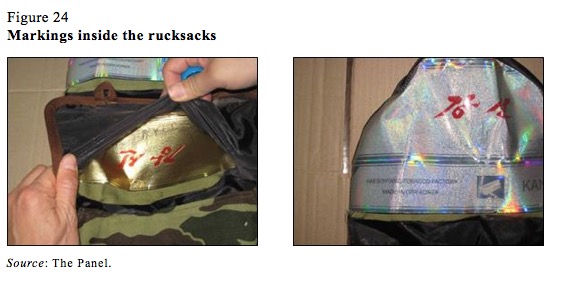
  1. Inside the rucksacks, the Panel discovered reinforcement material consisting of cigarette packaging with Korean script and “made in DPR Korea” labels (see figure 24).

Eritrea North Korea 2

Shipper

  1. The air waybills listed the shipper as Beijing Chengxing Trading Co. Ltd.[3] According to the Chinese business registry, the company is still active, mainly trading in electronics, mining equipment and machinery (see annex 8-3). Mr. Pei Minhao (裴民浩) was listed as a legal representative until 26 February 2016 and still owns most shares in the company (see para. 164).
  2. The same individual has been listed in several online commercial databases as director of at least two other Beijing-based entities, including Guangcaiweixing Trading Co., Ltd.[4] (see annex 8-3). Guangcaiweixing was listed as the shipper of a suspect shipment interdicted en route to Eritrea aboard the Kota Karim and reported to the Committee in August 2012. The container cargo manifest listed mostly dual-use items (see annex 8-4), including “numerical control” machine tools and related equipment, which had been inspected and detained by a Member State. The 2016 interdiction is the second documented interception of military-related items exported from the Democratic People’s Republic of Korea to Eritrea and confirms ongoing arms-related cooperation between the two countries.[5]

        [1] Based on information from the Panel, Chinese authorities thoroughly searched cargo manifest, air transport and customs clearance data for June and July 2016 and could not find any corresponding cargo from the Chinese mainland. The consignee is yet to reply to the Panel.

        [2] The Glocom website was shut down shortly after the Panel sent letters to Glocom front companies in Malaysia.

        [3] In Chinese: 北京成兴贸易有限公司.

        [4] In Chinese: 光彩伟兴贸易(北京)有限公司.

        [5] See S/2016/157, paras. 94-95.

In an Appendix to the report the waybill is reproduced

Eritrea computers

Source=https://martinplaut.wordpress.com/2017/04/01/us-places-eritrea-under-fresh-sanctions-for-military-deal-with-north-korea/

Three Eritrean Catholic Church schools for Eritrean refugees in Eastern Sudan held double ceremonies on 16 March 2017 in Kassala marking end of academic year 2016-2017 and celebrating the 40th anniversary of the establishment of the schools. Also celebrated was the graduation of 12th graders from the school for the 17th time since the UNHCR-run high school was phased out in year 2000.

CatholicSchool 1

Held at the compound of the Catholic Church's elementary school inside Kassala, the colourful ceremony was attended by Church leaders of various Eritrean denominations; Ustaz Babikir Kelay, director of non-governmental schools in the Sudanese education ministry; head of Sudanese teachers' union, as well as invited representatives of Eritrean, Ethiopian and Indian communities.

CatholicSchool 2


Opened by welcoming remarks of head-teacher Weldehiwet Kelete in Arabic and Tigrigna, the ceremonies lasted for five hours of entertainment that consisted of educative dramas, satire, folkloric songs and poetry - all  presented in Eritrean languages - Arabic, Bilen, Tigre and Tigrigna. Amharic and English were also used in certain parts of the ceremony. Even Indian traditional folklore was put on the stage. The preparations reflected the life of Eritreans in exile and their determination to stick to their culture and identity.


CatholicSchool 3


Speakers included representatives of the teaching staff and students as well as Father Ghebrai and Ustaz Babikir Kelay. The student represetnative expressed profound gratitude to the initiators of the school and paid special tribute to the late Father Milano Haile and his brothers in the Cappuchin mission for their big efforts to keep the schools going. Father Ghebrai Bedemariam, the current director of the schools, was also thanked profusely for his continued follow up of the schools and his vital day-to-day support to refugee students.


CatholicSchool 4


In his speech, Father/Aba Ghebrai stated that the Catholic Church schools in Kassala taught in the past 40 years a grand total of 24,000 young children of denominations and regions of Eritrea. Of the total, 40% of the children who attended the schools were girls and 60% boys.

The Church's first elementary school in Kassala was opened in 1977 by the efforts of Cappuchin brothers, among them the late Father Marino, who welcomed any young refugee looking for education. The refugee students at the start were both from Eritrea and Ethiopia. For the first 20 years, the school was limited to elementary education. When the UNHCR-supported [and ELF-run] refugee high school in Kassala commenced to be phased out in 1997, the two schools worked together for three years till 2000. But as of that year, the Catholic Church took the full responsibility of continuing high school education for Eritreans in Kassala. That is why, he said, the school is graduating its 17th batch of 12th graders this year.

CatholicSchool 5The Sudanese official, Ustaz Babikir Kelay, appreciated the work of the mission school and pledged the support of the Sudan for this worthy education project.

CatholicSchool 6

The ceremonies closed after distributing prizes for outstanding performers among the students and certificates for teachers who served the school for up to 40 years since its founding.

0 Comments

‘One day, I hope, I will go’: How Trump’s ban hit an Eritrean refugee camp in Ethiopia

Natalia Paszkiewicz's picture

I saw the impact of Trump’s travel ban from an Eritrean refugee camp in Ethiopia where some people have been waiting for resettlement for years.

Migration policies may seem abstract, and when combined with representing migrants and refugees as merely numbers, they blur the human dimension of displacement.

 When I saw him a few weeks after Trump’s executive order on refugees was introduced, he looked as if he had been crying for days

One of Donald Trump’s first executive order as the 45th president of the United States of America issued on 27 January 2017 limits the annual number of refugees to be resettled in the United States to 50,000 a year, as opposed to Barack Obama’s pledge last September to increase the US’s annual resettlement targets to 110,000.

I worked in an Eritrean refugee camp in Ethiopia where I met people who were directly affected by this decision – people who have been waiting for resettlement for three years and who were due to leave for the US in February 2017.

In the last few days of January, they were told they would have to wait longer, as the programme got suspended for 120 days. And nobody really knows for how much longer.

Steady escape

In October 2016, a United Nations inquiry into human rights abuses in Eritrea reported that crimes against humanity have been committed in the country since 1991. The number of people fleeing Eritrea, which according to Amnesty International is of the most repressive, secretive and inaccessible countries in the world, has been steady, but with a recent sharp increase in child and youth refugees escaping into neighbouring Ethiopia.

On average, around 3,000 refugees cross from Eritrea to Ethiopia every month; in February 2017, according to the Adminstration for Refugee and Returnee Affairs (ARRA), 3,367 Eritreans arrived in Ethiopia. More than 1,000 people arrive each month in Hitsats, the newest camp established by the Ethiopian government nearly four years ago in the Tigray region bordering Eritrea.

The camp hosts approximately 11,000 refugees, and four in five of them are under the age of 35.

I worked in Hitsats for six months, and I witnessed the refugees’ trajectories of waiting for resettlement  (ie the selection and transfer of refugees from a state in which they have sought protection to a third state which has agreed to admit them) as refugees with permanent residence status. The countries that accept most refugees on resettlement programmes include the US, Canada and Australia.

The very long waiting game

Waiting is a fundamental aspect of every refugee’s life. Men and women, some with children, queue outside UN High Commissioner for Refugees (UNHCR) office in the camp, clinging to their ration cards and other paperwork while sheltering from the morning sun. The emotions swing from a sense of hope to resignation and despair.

Resettlement is a privilege rather than a right – It is available to less than 1 percent of the most vulnerable refugees worldwide

First, it’s waiting for an interview. Then it’s waiting for the interview’s result. The determination process involves many factors, including the resettlement country’s capacity as well as nationality preferences.

So far, there are no known resettlements in Hitsats because young, able-bodied men – the overwhelming demographics of the camp – do not generally fall within the priority category for resettlement of “Survivors of Violence and Torture” even though everyone that I spoke to was imprisoned in Eritrea.

Eritreans eat a meal they received at the Milan train station on 11 June 2015, among 100,000 asylum seekers who crossed the Mediterranean to Europe so far that year (AFP)

Merely leaving Eritrea without the regime’s authorisation carries the punishment of a prison sentence of up to five years, so every unsuccessful attempt – and I met people who tried to escape the country three to five times – leads to detention in conditions that amount to degrading and inhuman treatment, such as underground cells and shipping containers in temperatures as high as 50 degree Celsius.

Resettlement lies within the core mandates of UNHCR, specifically, providing persons under its competence with international protection, humanitarian protection, as well as permanent (also called durable) solutions. However, resettlement is a privilege rather than a right: it is available to less than 1 percent of the most vulnerable refugees worldwide.

The boat that sank in the Mediterranean in mid-January had 70 refugees from Hitsats camp on board

This leaves millions of refugees at risk of remaining in a protracted situation of exile, without an opportunity to rebuild their lives.

In Ethiopia, there was a target of 5,965 refugees to be referred for resettlement in 2015. Of this targeted number of referrals, only 2,120 cases had been resettled by August 2015. In 2016, access to resettlement for refugees in Ethiopia was limited to a target of 6,465, which constituted the largest resettlement plan in Africa.

Those refugees who are lucky enough to be accepted for resettlement – in Ethiopia, this rate is as low as 0.09 percent of the overall registered refugee population – may wait even several years to leave a refugee camp as a result of the lengthy vetting process that involves the Departments of State, Defense and Homeland Security screening together with other US intelligence, security and law enforcement agencies, including the National Counterterrorism Center and the Federal Bureau of Investigation, as well as Interpol.

The conditions if you stay

Refugees who are not selected for resettlement face harsh conditions in the camp, such as endemic malaria, and very few livelihood and integration opportunities in Ethiopia. There are restrictions on those seeking to leave the camp, and limitations on their rights and freedoms, including lack of work permit.

Unable to envisage their future in Ethiopia, on average 1,000 Eritreans leave Hitsats every month – that is equal to the number of those who arrive

UNHCR acknowledges that extended residence in a refugee camp can have a serious negative impact on people who live there. Unable to envisage their future in Ethiopia, on average 1,000 Eritreans leave Hitsats every month – that is equal to the number of those who arrive. Those young men just cannot wait anymore. They are leaving Ethiopia irregularly, making dangerous journeys through Sudan and Libya, hoping to finally reach Europe by boat.

The boat that sank in the Mediterranean in mid-January had 70 refugees from Hitsats on board. There was mourning marked by deafening silence in the camp that is usually full of music as it hosts a remarkable number of talented young musicians.

Since the resettlement programme was established in 1980 by the UNHCR, more than three million refugees have been resettled in the US.

The executive order announced by Trump on 27 January 2017 suspended the programme for 120 days and cut the number of refugee admissions by about 37 percent compared to the post-1975 average number of annual refugees admitted – from 79,329 per year to just 50,000. This may mean that there will never be successful resettlements from Hitsats refugee camp to the US.

Stuck in the pipeline

Less than a month after assuming his role as the UN High Commissioner for Refugees at the beginning of this year, Filippo Grandi visited Ethiopia. He spoke to refugees in Hitsats camp, warning them against risking their lives by embarking on dangerous journeys to Europe: “We will do our best to create opportunities here and to improve resettlement placements and other legal ways of migration so that refugees will not expose themselves to danger.”

On 30 January, Grandi wrote that he was “deeply worried by the uncertainty facing thousands of refugees around the world who are in the process of being resettled to the United States”. Given that the US provides about 40 percent of the refugee agency’s funding, the commissioner had to tread carefully.

I spoke to one of the young refugees in Hitsats who was meant to leave for the US in February after years of being stuck in the resettlement pipeline. Over the period of six months when I saw him regularly, he seemed to gradually deteriorate. When I saw him a few weeks after Trump’s executive order on refugees was introduced, he looked as if he had been crying for days. I asked if he had any news regarding his departure. He replied, “One day, I hope, I will go.”

The new redrafted executive order was issued by Trump in March 2017, clarifying that the ban “shall not apply to refugees who, before the effective date of this order, have been formally scheduled for transit by the Department of State”. I hope that my friend from Hitsats will now be able to leave.

– Dr Natalia Paszkiewicz is an anthropologist with a particular interest in migration and refugee studies. She has been working with refugees for over ten years in the UK, Malta, Ethiopia and Djibouti. 

Source=https://martinplaut.wordpress.com/2017/03/28/how-trumps-ban-hit-an-eritrean-refugee-camp-in-ethiopia/


EPDP Magazines