January 26, 2020 Ethiopia, News

Source: Ethiopia Insight

The time is ripe for Egypt, Ethiopia and Sudan to set aside narrow national interests and address climate change by building flexibility into the forthcoming GERD treaty

Ethiopia, Sudan, and Egypt have laid the framework for resolving their disputes over the filling and operation of the Grand Ethiopian Renaissance Dam (GERD).Earlier in August 2019, Ethiopia rejected Egypt’s proposal on the filling and operation of the GERD. In a growing diplomatic spat, Egypt warned Ethiopia not to move forward with filling and operation, saying that it “will have negative consequences for the stability in the region.”

In November, the GERD negotiations reached another deadlock, and Egypt called for international interventions to overcome the impasse. The U.S. invited Ethiopia, Egypt, and Sudan to Washington, DC, and on November 6, delegates of the three countries met with the US Secretary of the Treasury and the World Bank president. They also agreed to resume talks that would be supported and attended by the U.S. and the World Bank as observers.

Since then, they have held four technical meetings in Africa and two more meetings in Washington DC. Last week, after three days of rigorous discussions in Washington DC, the countries issued a joint statement that laid the framework for the final agreement on the filling and operation of the GERD. The joint statement, which seems to have been followed by productive technical discussions nailing down some key details, underscores the need for an adaptive agreement, thus it is expected that the three countries will consider climate change while developing the final terms. 

Climate change impact

Climate change is projected to have catastrophic impacts on the hydrological cycle. Water availability, quantity, and demand will be affected. Existing studies and climate change models commonly predict increases in average annual temperature in the Nile Basin, leading to greater water loss due to evaporation. There is much less certainty in projections concerning future rainfall, river flows, and water availability in the Nile Basin. Studies concerning the latter find contradictory results; one predicts floods and increased runoff, and the other predicts water scarcity and possible droughts.

It seems evident that proper governance of the filling and operation of the GERD in the face of these uncertainties demands a response to two contradictory scenarios: either an increase in water availability and flooding, or water scarcity and drought; each of which requires opposite adaptation strategies.

Building flexible and resilient legal and institutional arrangements in the forthcoming GERD treaty will no doubt be at the heart of such adaptation strategies. If climate change reduces the available water in the Nile Basin, competition for water between Ethiopia, Sudan and Egypt will intensify, possibly leading to conflict. If the available water resources increase due to climate change, this will create a need for new legal response to flooding. In either case, flexibility is crucial in adapting to climate change.

Accordingly, while developing the GERD treaty, Ethiopia, Sudan, and Egypt should use the following five mechanisms: (1) Drought provisions (2) flexible allocation strategies; (3) amendment and review procedures; (4) termination clauses; and (5) River Basin Organizations (RBOs).

Drought provisions

Drought provisions are the most common mechanism for enhancing treaty flexibility. Ethiopia, Sudan, and Egypt can allocate fixed quantities of waters and build flexibility into the GERD treaty by including special provisions that govern exceptional circumstances, like droughts.

The 1944 agreement between the U.S and Mexico on the Rio Grande and Colorado Rivers have provisions governing possible problems resulting from drought. The agreement allows Mexico to deliver less than the minimum quantity of water to the U.S during an “extraordinary drought” of up to five years. If deficiencies occur during this period, Mexico is to repay by increasing flows during the next five-year cycle. In the case of the Colorado River, the agreement guarantees that Mexico receives a certain annual quantity of the Colorado River’s water from the U.S. “In the event of extraordinary drought” though, the water allotted to Mexico is to “be reduced in the same proportion as consumptive uses in the United States are reduced.”

Both in the Rio Grande and Colorado Rivers, the upstream countries can deliver below the minimum quantity of the water during severe drought seasons and repay the water during the normal seasons. But, given Egypt’s dependency on the Nile, it is unreasonable to allow upstream Ethiopia to deliver below the minimum quantity of water during drought seasons.

Therefore, unlike these international experiences, Ethiopia seems set to promise to release 37 billion cubic meters (BCM) during the drought period, and more waters from its reservoir when the flow of the Nile is below 31 BCM.  This approach is a fixed quantitative allocation strategy that does not offer the flexibility needed to address the anticipated impact of climate change. Therefore, it is must be supplemented in the treaty by clauses that provide sufficient opportunity to modify releases depending on changing hydrological circumstances.

Flexible water allocation

Instead of allocating the Nile waters based on the assumption of a fixed, and often too optimistic, perpetual water supply, or fixed volumetric allocation strategy, Ethiopia, Sudan, and Egypt should allocate the Nile water resources in accordance with the social, economic, or climatic changing conditions existing in the Nile Basin.

There are a couple of ways this can be achieved. According to a 2015 UNESCO paper titled ‘Transboundary water governance and climate change adaptation: international law, policy guidelines and best practice application’, a rather simple method is to include a provision that requires Ethiopia to deliver a minimum flow to Sudan and Egypt in order “to maintain human health and basic ecological functions.” The other, and perhaps the best option is to include a percentage allocation strategy in the draft and share the possible water deficiencies, and surplus, proportionally among the three countries. The latter option is advisable as it “allows flow regimes to respond to both wet and dry conditions,” the paper suggests.

Amendment and review

Ethiopia, Sudan, and Egypt can also build flexibility into the GERD treaty by including amendment and periodic review processes provisions. These provisions are very important as they give the three countries the ability to address unforeseen circumstances, while “resynchroniz[ing] national and basin-wide strategies with new knowledge and changing circumstance,” according to an article in the International Journal of Water Resources Development. They are crucial for the sustainability of the GERD treaty because, through time, the hydrological and climatic conditions on which the treaty is based will change significantly. This is particularly true in the era of climate change.

Based on the current hydrological and climatic conditions, Ethiopia promised to fill the GERD “during the wet season, generally from July to August and will continue in September.” The wet and dry seasons could change because of climate change. Thus, unless the final agreement incorporates this, Ethiopia will not have the flexibility to fill the dam if the wet season happens in months other than those stated in the agreement.

Several mechanisms can be used to amend the GERD treaty. In the Colorado River Basin, for instance, modifications of the 1944 Colorado Treaty are made through the “minutes” of meetings of the International Boundary and Water Commission (IBWC), a joint commission charged with the application of the Treaty and composed of an Engineer Commissioner from both parties (U.S. and Mexico,). The Mekong River Basin Agreement between Cambodia, Laos, Thailand, and Vietnam also allows the alteration of the Agreement through amendment proposals agreed to by all the parties.

Ethiopia, Sudan, and Egypt may currently consider the 37 BCM drought threshold as equitable. However, with the anticipated impact of climate change, this threshold could very well be inequitable in the future. So, unless the agreement acknowledges this, the three countries’ ability to adapt to climate change will be seriously undermined.

Besides amendment, periodic review is also important to ensure equitability in the face of climate uncertainty. The GERD treaty needs to include explicit provisions concerning the adjustment and review of the agreement in general, and in particular, regarding the fairness of the filling and operation the GERD, High Aswan Dam (HAD), and Sudan’s reservoirs to adapt to the ramifications of climate change. Moreover, it should define what constitutes climate change and specify when adjustments would be necessary.

The latter can be done by setting down “triggers” (magnitude of climate change) that would activate treaty adjustments or by merely providing specific periods when the agreement should be reviewed.  In the Syr Darya River Basin, for instance, Stephen McCaffrey writes that the Framework Agreement requires periodic review of Agreements “on water releases, production and transit of electricity, and compensations for energy losses” and calls for the conclusion of new Agreements annually. Another example is the Treaty between India and Nepal governing Mahakali River, which requires a review every ten years or “earlier as required by either party.”

Termination clauses

The fourth mechanism for enhancing treaty flexibility is to simply include a termination clause in the treaty allowing any riparian state to terminate it upon a given period of notice. In the Syr Darya Basin, for instance, the Framework Agreement restricts its validity to five years, allowing automatic renewal for another five years provided that no termination notice is submitted “six months in advance from any party.” In so doing, the Framework Agreement provides sufficient flexibility for parties adversely affected by changed circumstances, permitting them to withdraw from what could otherwise be an oppressive treaty.

It is, however, to be noted that a termination clause that has such an abbreviated period of notice would not always be appropriate for all types of treaties. As pointed out by professor and water laurate Stephen McCaffrey, it would best fit only treaties that do “not involve permanent structures but provide for allocations of water…”  The coming GERD treaty involves permanent structures, dams, and reservoirs, and is therefore unsuitable for termination within a short period of time.

Although allowing either of the three countries to withdraw from the GERD treaty upon a one-year period of notice is important for treaty flexibility, it will be in strict contrast with the predictability and certainty required for the effective management of the Nile watercourse, especially where infrastructure is involved. The flexibility required for adapting to climate change and the certainty required for smooth operations of dams would be reconciled if a long period of notice, say 10-15 years, is required to withdraw from the treaty, while at the same time empowering the Nile Basin Commission (NBC) to review the equitable allocation of the Nile waters periodically.

River Basin Organizations

Sustainable transboundary water management is inextricably linked with River Basin Organizations. RBOs play a significant role in building flexibility into watercourse treaties. RBOs’ ability to adapt, amend, and extend the institutional arrangement between riparian states is at the center of developing greater resilience and adaptability to the changing environment.

Of the 260 transboundary river basins, about 119 of them have water institutions. While the roles and authorities of such institutions vary significantly, institutions capable of adapting to the challenges of climate change should “have a broad scope, include all riparian nations, and have management and enforcement authority,” according to Pacific Institute and UN Environment Programme research in 2009.

In relation to RBOs, Ethiopia, Sudan, and Egypt have two options. The first is to establish a joint body in the GERD treaty that will manage the operations of dams in their respective countries. The problem of this option is that other eight Nile Basin States are not part of the GERD negotiations, and thus will be excluded from the joint body. Other Nile Basin States are not integrated into the GERD treaty means that their actions as to the utilization of the Nile waters and climate change adaptation will be outside the joint body. This will impede effective adaptation.

The other, and arguably the best, option is to manage all dams, including the GERD, through the NBC, a joint body be envisaged in the Cooperative Framework Agreement (CFA). The CFA is a result of an attempt by riparian states to prepare a basin-wide framework to regulate the inter-state use and management of the Nile River. All the Nile basin states except Egypt and Sudan agreed to it.

The CFA gives the NBC a wide range of powers, which include the ability to examine and determine how water is best used in and distributed among the Nile Basin countries. The NBC has a broad scope, is entrusted with rule-making authority and involve all upstream countries. Egypt and Sudan should accede to the framework agreement. And the forthcoming treaty should empower this body to manage the filling and operation of the dams and reservoirs in the three countries.

For many years, Ethiopia, Sudan and Egypt have been trying to protect their narrow national interests. But now, with the ever-increasing threats of climate change, the time seems ripe to set aside such egoistic national interests, negotiate in good faith, and address the ramifications of climate change by building flexibility into the forthcoming GERD treaty.

Source=https://eritreahub.org/sharing-the-nile-flexibility-must-be-foremost-in-gerd-treaty

January 25, 2020 News

Source: FAO

The UN’s Food and Agriculture Organisation [FAO] has issued a warning that the whole of the Horn of Africa is threatened by “unprecedented”  locust swarms.

“We must act immediately and at scale to combat and contain this invasion,” David Phiri, the FAO‘s sub-regional coordinator for eastern Africa, said Friday. “

The insects are breeding across the Horn, including Eritrea, but in the next few months – says the FAO – the threat to Eritrea will only escalate. Full report below.

Desert Locust MovementsDetail of FAO Desert Locust Movements, Aug 2019 – Feb 2020

Source: FAO

Large and numerous swarms continue to threaten the Horn of Africa

The current Desert Locust situation is extremely alarming and represents an unprecedented threat to food security and livelihoods in the Horn of Africa. In addition, important locust situations continue to develop along both sides of the Red Sea, in Oman and in southern Iran.

Kenya. Immature and maturing swarms continue to arrive in the northeast from Ethiopia and Somalia and are moving throughout northern areas in Mandera, Wajir and Marsabit counties and have reached central areas of Isiolo, Meru North and northern Laikipia. Some swarms in the north have moved back into southern Ethiopia while others are now mature and laying eggs that will hatch after about two weeks, giving rise to hopper bands in February and March. Today, a swarm reached the southern Rift Valley near Kapedo on the border of Baringo and Turkana counties. Aerial and ground control operations are in progress in some areas. Further movements are expected, especially in Turkana and Marsabit counties.

Ethiopia. Ground and aerial control operations continue against immature swarms in Somali and South Oromiya regions. Some swarms are maturing while others are moving south and west into the southern parts of the country with at least one swarm reaching the edge of the Rift Valley in Southern Nations Nationalities and People Region (SNNPR). Some 6 000 ha were treated by air so far this month.

Somalia. Control operations are in progress in the northeast (Puntland) while maturing swarms continued to move southwards in central and southern areas. Some swarms were seen laying eggs in the south adjacent to northeast Kenya. Survey and control operations are limited by insecurity.

South Sudan. There remains a high risk of a few swarms appearing at any time in the southeast (Kapoeta East and Ilemi Triangle) coming from adjacent areas of NW Kenya, flying north through the Rift Valley or northwest from Marsabit county. They may transit through the area to the Rift Valley in southwest Ethiopia.

Uganda. There remains a moderate risk of a few swarms appearing at any time in the northeast from adjacent areas of NW Kenya until about the end of January.

Red Sea. Breeding is in progress and hopper groups and bands are present on the northern coast in Sudan, southern coast in Saudi Arabia, and on the coast of Eritrea and Yemen. Mature swarms are laying eggs on the Sudan/Eritrea border while adult groups have formed in Yemen and Saudi Arabia, some of which are laying eggs. So far this month, ground and aerial control operations treated nearly 23 000 ha in Saudi Arabia and almost 7 000 ha in Sudan.

Locusts 20 Jan 20

Oman. Breeding is in progress on the northeast coast where hopper bands have formed. Ground teams treated more than 1 300 ha so far this month. Several immature and maturing swarms are moving south along the coast and reached Salalah. These may continue to Yemen and perhaps reach the Horn of Africa.

Southwest Asia. A few residual immature swarms persist along both sides of the Indo-Pakistan border where control operations are in progress. Adults and swarms were reported to be breeding along parts of the southern coast where heavy rains and flooding occurred earlier this month.

Desert Locust Movements

Bloomberg adds:

The worst desert-locust plague in Kenya in 70 years is threatening to spread further into East Africa, jeopardizing food security.

Swarms of the insects are already devouring crops and pasture in Ethiopia and Somalia, and they’re breeding in Djibouti, Eritrea and Sudan — all areas that are prone to drought and food shortages. There’s a high risk they may soon enter northeast Uganda and southeast South Sudan, the United Nations’ Food and Agriculture Organization said Friday.

“We must act immediately and at scale to combat and contain this invasion,” David Phiri, the FAO‘s sub-regional coordinator for eastern Africa, said Friday. “As the rains start in March there will be a new wave of locust breeding. Now is therefore the best time to control the swarms and safeguard people’s livelihoods and food security.”

Locust swarms threaten East Africa's food security

Saturday, 25 January 2020 00:20 Written by
 

The most serious outbreak of locusts in 25 years is spreading across East Africa and posing an unprecedented threat to food security in some of the world's most vulnerable countries, authorities say.

Unusual climate conditions are partly to blame.

Farmers in Kenya are asking the government to act fast to get rid of the locusts which "will destroy everything".

Roughly the length of a finger, the insects fly together by the millions and are devouring crops and forcing people in some areas to bodily wade through them.

The outbreak of desert locusts, considered the most dangerous locust species, has also affected parts of Somalia, Ethiopia, Sudan, Djibouti and Eritrea.

The Intergovernmental Authority on Development warns that parts of South Sudan and Uganda could be next.

Source=https://www.euronews.com/2020/01/23/locust-swarms-threaten-east-africa-s-food-security

British politicians plan visit to Eritrea

Friday, 24 January 2020 07:59 Written by

January 23, 2020 News

Source: All Party Parliamentary Group for Eritrea

Kate OsamorYesterday afternoon Kate Osamor MP was announced as the newly elected Chair of the APPG for Eritrea. Kate brings her experience as Shadow Secretary of State for International Development and as long time Chair of the APPG for Nigeria.

The reformed All-Party Parliamentary Group for Eritrea has a total of 18 members, including first time MPs and one who started first as an MP in 1979.

The group benefits from the experience of three former Foreign Office Ministers, including Harriett Baldwin who was Minister for Africa until late 2019, as well as members of the International Relations Committee and other regional and topical APPGs.

With members from Labour, Conservative, Scottish National Party, Liberal Democrats and Green Party the APPG for Eritrea covers every political persuasion in Westminster in both Commons and Lords.

The APPG has already spoken to the UK Ambassador to Eritrea and has invited the Eritrean Ambassador to Parliament for a frank private discussion on areas of concern and potential cooperation.

Since reforming after the election members have met to discuss the possibility of a delegation to Asmara and have started to formally review the benefits of diplomatic engagement with the Eritrean regime. The APPG is looking at taking a comprehensive look at the UK’s relationship with Eritrea, including the possibility of increased cooperation on international development and the actions of the Eritrean embassy in the UK. The APPG has also invited Human Rights Watch and academic experts on Eritrea to give evidence in Parliament on indefinite military conscription in the next few weeks. The officers hope to begin formal hearings in an enquiry on UK/Eritrean relations in the near future.

Officers 

Chair Kate Osamor, Formerly Shadow Secretary of State for International Development

co-Chair Thangam Debbonaire

co-Chair Baroness Goudie, Advisor to the Georgetown Institute for Women, Peace and Security

Vice-chair Baroness Anelay, Chair of the international Relations Committee

Vice-chair Harriett Baldwin, Minister for Africa 2018-2019

Vice-chair Lord Alton, Member of the International Relations Committee

Vice-chair Stephen Doughty, Chair of the Somaliland APPG

Vice-chair Flick Drummond, Chair of the Women, Peace and Security APPG

Vice-chair Philip Hollobone

Vice-chair Lord Chidgey

Vice-chair Fleur Anderson

Vice-chair Mark Pritchard

Vice-chair Bishop of Salisbury

Vice-chair Theo Clarke

Members


Caroline Lucas, Leader of the Green Party

Lord Luce, Former Foreign Office Minister

Laurence Robertson, Chair of the APPG for Ethiopia and Djibouti

Patrick Grady, Former SNP International Development Spokesperson

Source=https://eritreahub.org/british-politicians-plan-visit-to-eritrea

22/01/2020

Trump's new travel ban 'targets' Eritrea, Nigeria, Sudan, Tanzania

Four African nations are targets of a new travel ban by United States president Donald Trump, multiple news sources have reported. An official announcement is expected by next week.

Incidentally, only one of the quartet is a Muslim-majority nation i.e. Sudan. The others are Eritrea, Nigeria and Tanzania.

During an engagement on the sidelines of the ongoing 2020 World Economic Forum in Davos, Switzerland, Trump, told the Wall Street Journal that plans were afoot to upgrade the controversial list. He however remained mute on the affected countries.

The measure will largely affected specific types of visas as and when the list is finalized, sources close to the issue added. Analysts have averred that business or visitor visas could likely be impacted.

Barely a year after coming into office, Trump issued his first controversial travel ban which barred people from Muslim-majority countries from entering the United States. Libya and Somalia were African reps along with Iran, Syria and Yemen.

A court challenge of the measure was upheld by the Supreme Court in June 2018. The court ruled that it was within Trump’s executive powers to issue such an order. The fightback against it however continues by some politicians and activists.

The United States’ recently published blacklist of religious freedom violations report kept Eritrea listed whiles it removed Sudan. Nigeria along with Comoros were classed on a watchlist by the State Department. Nigeria hit back at the U.S. for self appointing itself police of the world.

“In international relations, you respect the internal affairs of other countries. The U.S. itself has enough to chew solving its own problems not to talk of poke-nosing into that of another country.”

“No man, no country, nobody has appointed them the policeman of the world, let them face their own issues”, Mr Adesina, a media aide to President Buhari said in December 2019.

April 2019: US considers new travel ban that affects 7 African countries


Related Stories

Source=https://www.africanews.com/amp/2020/01/22/trump-s-new-travel-ban-eritrea-nigeria-sudan-tanzania-targets/

January 23, 2020 Eritrea, EU, News

Michele RIVASI - 8th Parliamentary termThe EU Parliament’s Rapporteur to the Committee on Budgetary Control, Michele Rivasi has released a report in which she asks critical questions about the use of Eritrean conscripts in EU funded road projects.

Ms Rivasi asks the EU Commission to avoid financing Eritrean schemes which use “forced labour via National Service.”

As  Michèle Rivasi puts it in the somewhat dry language of EU reports, she:

[Paragraph 68] “Calls on the Commission to include clear and transparent human rights clauses in its Contribution Agreements concluded with Implementing partners (UN agencies, Member State development agencies) in order to avoid situations where the EU could indirectly finance projects that violate human rights; points out in this regard the project “Reconnecting Eritrea and Ethiopia through rehabilitation of the main arterial roads in Eritrea”, funded by the EUTF and managed by the UNOPS, financing Eritrean national construction companies using forced labour via the National Service;”

The UN Commission of Inquiry on Human Rights in Eritrea found in its reports that National Service is indeed a form of slave labour and that it carries a real risk of rape for women.

The UN Commission concluded that:

[Paragraph 234] “…there are reasonable grounds to believe that within the context of military and national service programmes, Eritrean officials exercise powers attaching to the right of ownership over Eritrean citizens. It further determines that despite the justifications for a military/national service programme advanced in 1995, the military/national service programmes today serve primarily to boost the economic development of the nation, profit state-endorsed enterprises, and maintain control over the Eritrean population in a manner inconsistent with international law. Thus there are reasonable grounds to believe that Eritrean officials have committed the crime of enslavement, a crime against humanity, in a persistent, widespread and systematic manner since no later than 2002.”

The UN Commission went further:

[Paragraph 301] “Women are at a disproportionate risk of discrimination and violence within the military/national service and in the army and are targeted for sexual abuse on account of their gender. As described above in the section on enslavement as a crime against humanity, many women in military training centres, as well as to a lesser extent in the army, are raped by military officials and trainers.”

This is all well known and well understood by the European Union, yet its officials have approved funding for projects which, they accept, involve the use of National Service conscripts – some of whom have been held in this form of slavery for more than 20 years.

The full EU report can be found here: EU Eritrea Road rehabilitation

Africa, Britain

When I watched the Remembrance Day Service on BBC television on Sunday 10 November it was, as ever, very moving.

But at about 52 minutes into the programme I sat up, startled to listen to David Dimbleby telling the audience in hushed tones that 55,000 African troops served during the Second World War.

Dimbleby went on to say that: “…10,000 died, but that they have not given proper graves, with their names and rank, because when they died, their names were not recorded and no burial places  reserved for them.”

This is – of course – entirely incorrect, as I pointed out in a complaint to the BBC.

“It is a great pity that in his commentary for the Remembrance Day service David Dimbleby was so wildly inaccurate about the contribution of the African troops in World War Two. He said that they contributed 55,000 troops, of whom 10,000 died. The figure for the East African King’s African Rifles alone was 323,480, with West Africa’s Frontier Force contributing 121,650.

“South Africa provided 333,000 (of whom some 123,000 were black) and to this total must be added the troops of the High Commission Territories, Mauritius, Seychelles and Northern and Southern Rhodesia, as well as 100,000 Egyptians. His statement that they were not given proper burials with named memorials is also only partially true.

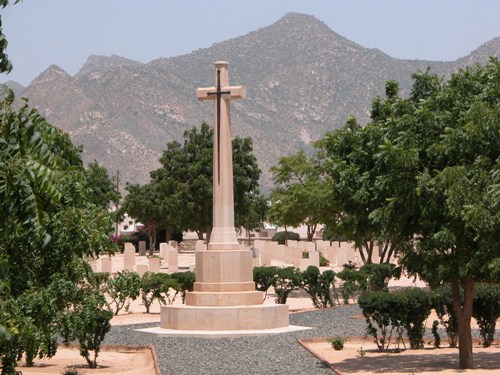
“I have visited the Commonwealth War Graves Cemetery in Keren in Eritrea. It is not only immaculately maintained, but commemorates named individuals, whether they came from India, Sudan or Britain.”

I gave the source for this information: Table 2, page 44 of David Killingray, “Fighting for Britain: African Soldiers in Second World War.”

Now, finally, the BBC has admitted the broadcast was incorrect.

“Thank you for getting in touch with us about Remembrance Sunday broadcast on 10 November and for sharing your views about our coverage.

“We are sorry to learn of your disappointment about this, I have reviewed the broadcast and located the figures you have referred to. Unfortunately due to the live nature of broadcasts such as this, mistakes of this nature regrettably can happen on occasion. Please be assured, there is no intention to cause any offence. I have forwarded your concerns to the production team who welcome all forms of feedback as it can help inform our future broadcasts.

“We do value your feedback about this. All complaints are sent to senior management and I’ve included your points in our overnight report. These reports are among the most widely read sources of feedback in the BBC and ensures that your concerns have been seen by the right people quickly. This helps inform their decisions about current and future content.

“Thank you once again for getting in touch.

“Kind regards,

“Donal Rainey”

These are graves in Keren, Eritrea, containing troops of many nations

Commonwealth Graves Keren Eritrea

Eritrea’s growing military ties with Russia

Tuesday, 21 January 2020 15:26 Written by

January 21, 2020 News

On Monday it was announced that the Eritrean government had been promised two new Russian helicopters. [See announcement below].

Antas helicopter

This comes as the relationship between Asmara and Moscow has been gradually strengthening.

In 2018 Russia said it would build a logistics center at a port in Eritrea.

Then, late last year, the Eritreans said they were interested in acquiring a range of military material, including helicopters, missile vessels and small arms.


Russia To Deliver 2 Ansat Helicopters To Eritrea In 2020 – Source

Source: Sputnik via UrduPoint

OSCOW (UrduPoint News / Sputnik – 20th January, 2020)

Russia has signed the first defense cooperation deal with Eritrea since international sanctions were lifted off the African country and will deliver two Ansat helicopters to Eritrea in 2020, a source in the defense cooperation sector told Sputnik.

“This country is no longer under sanctions. In 2019, a contract was signed with Eritrea on the delivery of two Ansat helicopters in a military modification to transport personnel. The deal is to be fulfilled in 2020,” the source said.

Eritrea was under UN sanctions between 2009 and 2018.

Five killed in grenade blast in Khartoum suburb

Tuesday, 21 January 2020 10:24 Written by

January 20, 2019 (KHARTOUM) - At least five people were killed and 40 injured on Monday in a Khartoum’s suburb when a grenade exploded at a wedding party.

The grenade exploded in Shegla neighbourhood of al-Haj Youssef suburb after an altercation between the military and another person.

Witness close to the family said the military was angered by the relatives of the bride before to throw the grenade.

In a brief statement, the police said that they had launched an investigation into the incident without further details.

While the ministry of health announced the death of five people and that 40 others were wounded by the blast.

The victims were transferred to several hospitals for treatment.

(ST)

Source=https://www.sudantribune.com/spip.php?article68876


Infographic

Heavy rainfall continued in December 2019 and January 2020 in several locations across East Africa, bringing the number of people affected by flooding since July 2019 to nearly 3.4 million. In Uganda, torrential rains in December affected at least 312,000 people, displacing around 65,000, and leaving a trail of destruction, including damaged homes, infrastructure, agriculture and livelihoods. In Burundi, heavy rains in the last week of December in the Buterere area damaged more than 470 houses and displaced over 3,700 people, increasing the number of people affected to over 12,000.

The unusually heavy rains that have impacted Eastern Africa since October 2019—driven by the strongest positive Indian Ocean Dipole since 2016—have contributed to a serious and widespread desert locust outbreak, according to FAO and IGAD. Eritrea, Ethiopia, Kenya, Somalia and Sudan have been affected, with the outbreaks in Ethiopia and Somalia the worst in 25 years, and in Kenya the worst in 75 years. There remains a risk that locusts could appear in south-east South Sudan and north-east Uganda.

The locust invasion could exacerbate hunger and malnutrition in a region where nearly 25.5 million people are already severely food insecure in Burundi, Ethiopia, Kenya, Somalia, South Sudan, Sudan and Uganda. The desert locust is among the most dangerous migratory pests in the world: a 1km2 swarm can consume the equivalent of food for 35,000 people in one day. In Ethiopia, where floods had already impacted the harvest, the locust infestation destroyed hundreds of km2 of vegetation in the Amhara and Tigray regions alone. In Kenya, which was impacted by back-to-back droughts then floods in 2019, the past week saw a significant and extremely dangerous increase in swarm activity, and eight counties are now affected. One immature swarm was 60 km long by 40 km wide in the north-east. In Somalia, tens of thousands hectares of land have been affected in Somaliland, Puntland and Galmudug (Mudug), and mature swarms are present in the Garbahare area, near the Kenyan border.

A further increase in locust swarms is likely to continue until about June, due to the continuation of favourable ecological conditions for breeding.

UN Office for the Coordination of Humanitarian Affairs:
To learn more about OCHA's activities, please visit https://www.unocha.org/.
 
Source=https://reliefweb.int/report/south-sudan/eastern-africa-region-regional-floods-and-locust-outbreak-snapshot-january-2020

EPDP Magazines