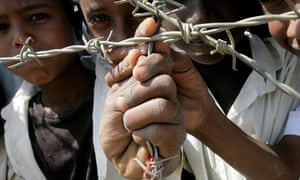
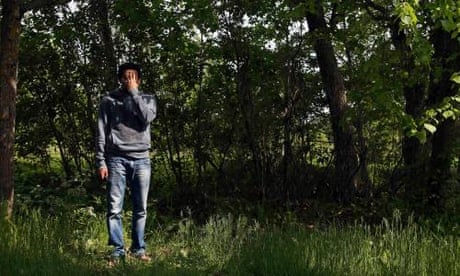
39_hands_on_face_dark_and_desperate_article_detail_small

27Aug2015

The UK Government is paving the way to begin returning asylum seekers to Eritrea, despite the UN recently condemning the country’s government for ‘gross human rights violations’ which could be tantamount to ‘crimes against humanity’.

New statistics published today show there has been a dramatic rise in the number of Eritrean asylum applicants being refused refugee status in Britain. Between April and June this year, just 34% of decisions on Eritrean asylum claims were grants of protection, compared to 73% in the first quarter of 2015.

The drop has been attributed to new, flawed guidelines on Eritrea introduced by the Home Office. Since March 2015 these have been relied upon by civil servants when making decisions on asylum claims.

The Home Office’s updated Country Guidance Information is largely based on the findings of a report commissioned for the Danish Government in late 2014, which had suggested that the Eritrean government may be carrying out reforms that would allow Eritrean asylum seekers fleeing Eritrea’s abusive, indefinite national conscription program to be safely returned to the country.

However, the Danish government has subsequently distanced itself from the report following widespread condemnation including from the report’s only named source and human rights groups. The Danish government has since acknowledged that most Eritreans would still receive protection in Denmark.

The UK Government has also apparently failed to acknowledge the damning findings of a UN report released in June, which accused the Eritrean government of what could be tantamount to crimes against humanity.

The UN report strongly urges continued international protection for Eritrean refugees fleeing human rights violations, and warns against sending them back to danger in a country that punishes anyone who tries to leave without permission.

Despite the UN’s findings and the U-turn from the Danish government, the UK’s new guidelines remain unchanged and have led to a significant rise in the number of Eritreans in Britain faced with possible return to the tyrannical regime.

Refugee Council Chief Executive Maurice Wren said: "The cynicism of the Home Office in denying protection to Eritreans fleeing a regime accused by the UN only two months ago of systematic, widespread and gross human rights violations is truly shameful.

"The number seeking safety in Britain is small and entirely manageable, yet we slam the door in their faces by basing life and death decisions on dodgy, discredited reports which fly in the face of all credible evidence.

"If the Government is serious about protecting refugees, it must urgently change its guidelines to reflect the UN’s findings, and review immediately the cases of Eritreans who have been refused asylum since March on the basis of deeply flawed guidelines."

Eritreans are the only other group apart from Syrians eligible for relocation from the EU’s bordering states across the rest of Europe as they are deemed ‘persons in clear need of international protection’.

The UN estimates that thousands of Eritreans are fleeing the country every month, driven by the prospect of indefinite national service. Everyone from the age of 17 can be conscripted into the military, and UN investigators say "slavery-like practices" are widespread in Eritrea, with conscripts subjected to hard labour, with poor food, bad hygiene and wretched pay.

Most Eritreans are unable to get the visas they need to leave the country legally. Once they have fled, those who return risk being arrested as ‘traitors’. The UN documented some Eritrean returnees suffering detention years and being mistreated “to the point of torture”.

Eritreans form the third largest group of migrants risking their lives to reach safety crossing the Mediterranean after Syrians and Afghans. Eritreans are currently the top nationality of people seeking safety in Britain.

source=

http://www.refugeecouncil.org.uk/latest/news/4410_uk_paves_way_to_return_asylum_seekers_to_eritrea

Fedpol ermittelt gegen eritreische Botschaft

Thursday, 27 August 2015 23:39 Written by


Aktualisiert um 09:15

  •  

    Eritrea sei ein sicheres Land, so der Befund eines dänischen Berichts, auf den sich Europas Politiker oft stützen. Doch jetzt ermittelt sogar das Fedpol gegen die Botschaft in der Schweiz.

  • Basler Zeitung
  • Flucht vor dem Regime: Eritreische Asylsuchende in einer Zivilschutzanlage im Tessin.
    Bild: GABRIELE PUTZU/Keystone

  •  

    Das eritreische Regime versucht offenbar, von im Ausland lebenden Landsleuten eine sogenannte «Diaspora-Steuer» einzutreiben. Entsprechende Hinweise von Eritreern in der Schweiz führten nun dazu, dass das Bundesamt für Polizei (Fedpol) gegen die eritreische Botschaft in der Schweiz ermittelt. Eine Sprecherin des Bundesamts bestätigte das gestern in der SRF-Sendung «Rundschau». Die Steuer betrage zwei Prozent des Einkommens, sagen Betroffene. Oppositionelle mutmassen, dass das Geld in die Taschen der Funktionäre fliesst.

    Die «Diaspora-Steuer» wurde von den Schweizer Behörden bisher lediglich zur Kenntnis genommen. 2013 hatte SP-Nationalrätin Jacqueline Fehr eine Interpellation eingereicht, die unter anderem danach fragte, wie die Schweiz gegen «die Schutzgelderpressungen durch die Regierung Eritreas vorzugehen» gedenke.

    Der Bundesrat antwortete daraufhin: «Wenn sich herausstellen sollte, dass Eritrea ohne Bewilligung der Schweiz aktive Massnahmen zur Eintreibung von Steuergeldern vornimmt (...)», könnte die Schweiz strafrechtlich dagegen vorgehen. Dieser Fall ist jetzt offenbar eingetroffen. Das Fedpol sammelt nun «harte Fakten».

    Bericht ist «komplette Fehlleistung»

    Die eingeleiteten Ermittlungen des Fedpol rütteln auch an der Aussage, Eritrea sei ein sicheres Land, seine Staatsbürger würden nicht verfolgt und könnten ohne Weiteres zurückkehren, wie es als Fazit eines Berichts der dänischen Immigrationsbehörde heisst. Geht es um die Verschärfung der Asylpolitik gegen Eritreer, bedienen sich Politiker in ganz Europa, auch in der Schweiz, gern des Dokuments als Beleg für eine problemlose Rückführung.

    An dem Papier übt nun ausgerechnet der ehemalige Chef-Berichterstatter der dänischen Immigrationsbehörde und Leiter der jüngsten Fact-Finding-Misson nach Eritrea massiv Kritik. Der Bericht sei «eine komplette Fehlleistung», sagt Jens Olesen in der «Rundschau». So seien etwa Zitate aus dem Kontext gerissen worden. Kritische Quellen wie die Uno-Berichterstatterin habe man ignoriert.

    «Unsere Arbeit wurde politisch missbraucht»

    «Ich kann nicht hinter diesem Bericht und der Mission nach Eritrea stehen. Unsere Arbeit wurde politisch missbraucht, um die Asyl-Politik gegenüber Eritreern zu verschärfen», sagt der 63-Jährige, der 20 Jahre lang Fact-Finding-Missionen und Länder-Berichterstattungen für die Behörde durchgeführt hat. In der SRF-Sendung beschreibt er das Zustandekommen des Dokuments als höchst ungewöhnlich.

    So sei sein Vorgesetzter entgegen der Gewohnheiten mitgereist und habe von den befragten Quellen nur hören wollen, dass Eritrea für Rückkehrer sicher sei. «Er war so davon besessen, dass er uns sogar eine Lohnerhöhung versprach, falls die Gerichte in Dänemark die neue Asylpolitik stützen würden», sagt Olesen. Früher als geplant wurde der Experte dann abgezogen.

    Als er und ein Kollege sich schliesslich weigerten, den Bericht zum Schluss zu bringen, Eritrea sei ein sicheres Land und diese Kritik immer wieder öffentlich äusserten, waren sie ihren Job los. Die Verantwortlichen weisen die Vorwürfe ihres langjährigen Mitarbeiters zurück.(kko)

    Erstellt: 27.08.2015, 08:50 Uhr

  • Source=http://bazonline.ch/schweiz/standard/Fedpol-ermittelt-gegen-eritreische-Botschaft-/story/11931232

Migrant destitution in Europe

Tuesday, 25 August 2015 10:39 Written by

Advocate

Throughout Europe, thousands of migrants are deprived of their basic needs and denied their fundamental human rights. They have little or no access to education, social welfare, housing, healthcare and employment. They are left destitute as a consequence of state laws and policies. Their exclusion from society leads to new, invisible, borders that divide local communities, regions and countries.

For the last six years JRS has investigated the lives of destitute migrants in Europe, and the state policies that heave led to their situation. Its 2010 report, Living in Limbo, presents the reality of destitution in 13 countries.

Destitution affects many groups of migrants living in Europe, particularly individuals who have had their refugee application refused, or persons with an irregular legal status, but for valid reasons are unable to return to their country of origin. But destitution also affects those who already have a right to stay: persons in the process of applying for asylum, and person show have been officially recognised as refugees.

Who is affected by destitution?

Recognised refugees
Individuals and families who are granted international protection in an EU member state are not always as well taken care of as law requires. Throughout Europe there are refugees living in sub-standard conditions, and who are unable to receive treatment for injuries and trauma that have resulted from persecution.
 
In Italy, for example, there are no programmes to assist recognised refugees with housing, employment, or their social welfare needs. Many live in dilapidated shacks in Rome, unable to live a dignified life.

Asylum seekers
Many persons who apply for asylum protection in Europe do not have access to basic reception conditions during their determination procedure, or while they are in the appeals phase. Left without secure housing, medical care and employment, they are placed at a fundamental disadvantage at a time when they are extremely vulnerable.
 
Undocumented migrants
Many become undocumented due to serious livelihood pressures. They may have been refused asylum protection, or may have overstayed their visa, being unable to return home due to economic, social and political instability. They live in Europe without the most basic and fundamental rights.
 
Persons with a tolerated status
Throughout Europe there are persons who cannot return home for valid reasons. Their embassies may not come forward with necessary documentation, or the authorities may be unable to undertake removal. Many times these persons are given a ‘tolerated’ status. They can stay in the territory, but can do little else. In Germany, holders of ‘toleration’ hardly receive any social support. They remain stuck in a downward spiral of destitution, excluded from society.

Source=http://jrseurope.org/advocacy?LID=731&L=EN

This despotic state in the Horn of Africa crushes its citizens’ freedom, causing many to risk everything on a perilous journey across the Mediterranean. By listening to Eritreans who have got away, the Guardian sheds new light on Europe’s immigration crisis
Eritrean children at Sudan's Shagarab refugee camp in Kassala in 2012

Eritrean children at Sudan's Shagarab refugee camp in Kassala in 2012. 'Eritrea is bleeding parts of its population not because it is the scene of a war – the war with Ethiopia ended over two decades ago – but because a regime of terror does not hesitate to trap many of its citizens in something that resembles slavery.' Photograph: Ashraf Shazly/AFP/Getty Images

Dictatorial regimes barricade themselves from scrutiny. Journalists are denied visas, territories closed off, and rare authorised visits take place under strict control, with access limited to selected places, people and themes that won’t embarrass the autocrat. It is, then, no surprise that Eritrea, a country that has been compared to North Korea, is one of the world’s most reclusive countries. Over its 25 years of independence, it has steadily become a one-president, one-party system, rife with human rights abuses. There is no constitution, no functioning judiciary, and no space for a meaningful opposition or a free media.

Breaking through the protective walls of the regime is especially urgent because, small as it is, this state of 6 million in the Horn of Africa has become a major source of refugees trying to reach Europe. Understanding the reasons for the Eritrean exodus – up to 5,000 leave each month according to the UNHCR – can help make sense of Europe’s wider migration crisis, and also shed light on why so many individuals are prepared to risk death in perilous sea crossings.

So the Guardian is this week breaking the regime-imposed silence about how Eritrea treats its own people, through a series of articles, pictures and videos. Because journalistic visas are virtually impossible to come by, we have spoken to refugees and exiles, to opposition networks, and to people who have visited Eritrea in recent years. The human stories escape the shadow of the censors, and reveal how a population is subjected to unrelenting surveillance, with the constant threat of arbitrary arrest, torture, and the modern-day press gangs that force young men into indefinite military service, which often involves forced labour. There is the smuggled letter of an Eritrean father shocked to have discovered that his 19-year-old son had joined the flow of young people fleeing the country without telling his family. There is the Eritrean man who found asylum in the UK, and then chose to join an NGO helping refugees rescued in the Mediterranean. There are descriptions, by those who have managed to reach Italian shores, of what it means to live in fear in their native country, and accounts of how the decision is taken to gamble everything on making it to a better life overseas in the hull of a overcrowded boat. By putting faces and voices on the migration statistics, the human costs of dictatorship are revealed.

Side-stepping a media blackout by tapping sources outside the country has its limits. Reporting directly, and freely, from Eritrea would certainly be better, but it is impossible. Yet the testimony of those who have fled captures more complexity than might be imagined. Exiled Eritreans don’t want their life experience to be described solely through the lens of repression and suffering: a passion for cycling, for instance, also emerges as part of a culture. The many sides of day-to-day Eritrean life, must be recognised, just as the nightmarish nature of the regime must be relentlessly denounced – as it was in a damning and timely UN human rights report.

Eritrea is bleeding parts of its population not because it is the scene of a war – the war with Ethiopia ended over two decades ago – but because a regime of terror does not hesitate to trap many of its citizens in something that resembles slavery. It’s not that elections are flawed: Eritrea has had no national elections whatsoever since independence in the early 1990s. The rule of president Issaias Afeworki, which has been unbroken ever since, may cloak its brutality in convenient anti-colonial rhetoric. It may resort to intimidation, death threats, online trolls and other propaganda tools to try to defuse criticism. And it may equally continue to refuse access to UN human rights investigators under the pretext that this would infringe on its sovereignty. But such subterfuges do little to hide a crude reality that Eritreans who have fled are desperate to describe. Their voices, a clear cry for change and relief, must be heard.

Source=http://www.theguardian.com/commentisfree/2015/aug/19/guardian-view-on-eritrea-listen-to-voices-mediterranean-europe?CMP=share_btn_link

Guardian Africa series: Inside Eritrea

Monday, 17 August 2015 11:45 Written by

Follow three days of coverage devoted to getting a deeper look at the country making the headlines for all the wrong reasons. Here are some highlights:

Asmara, Eritrea

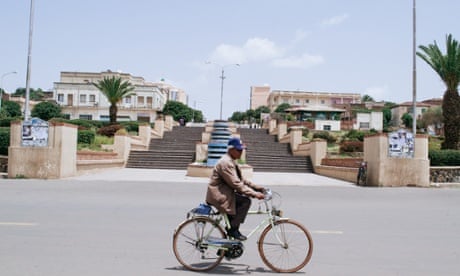
A cyclist in Eritrea’s capital city, Asmara. Photograph: Natasha Stallard/Brownbook

Contribute with

In 1991 Eritrea emerged from a 30-year war with neighbouring Ethiopia. For decades the small east African country had fought for its independence, and when it was finally won its 6 million people were full of hope for a bright, free future.

Refugees speak of their home as an “open prison” in a paranoid political climate where the government allows no elections, where torture is routine, and all media beyond the state sanctioned newspapers and TV has been wiped out.

In response to the worsening crisis, in June the United Nations released its first comprehensive investigation into the country, collecting the testimonies of 550 people. It reported “systematic, widespread and gross human rights violations have been and are being committed”, and found a country “in a permanent state of anxiety”.

With international journalists routinely refused access and little reliable news emerging from the country, the Guardian Africa network is devoting three days of coverage to better understand what is happening inside Eritrea.

We start with a report by the Guardian’s Monica Mark, who has investigated the contrasting experiences of those living inside the secretive state – and the differing reasons behind the mass exodus of recent years.

We’ll also publish the Guardian’s first article in Tigrinya, Eritrea’s most spoken language, examining why so many people are fleeing the country and risking the journey across northern Africa to the Libyan coast and beyond.

We’ll hear from a father in Asmara about the pain of discovering his 19-year-old son had escaped, in a note smuggled out of the country via the underground Freedom Friday activist network.

Advertisement

This year, Eritrea was ranked by the Committee to Protect Journalists as the worst in the world for press repression, and we’ve partnered with the newly established PEN Eritrea to profile the journalists and editors who have been imprisoned for more than 14 years, many of whom are thought to have died in secret jails.

Beyond politics, we’re also looking at the country’s love of cycling, introduced by Italian colonisers in the 1890s and now thrown into the spotlight thanks to Daniel Teklehaimanot’s success at this year’s Tour de France, and its music history, from revolutionary funk to the YouTube hits of today.

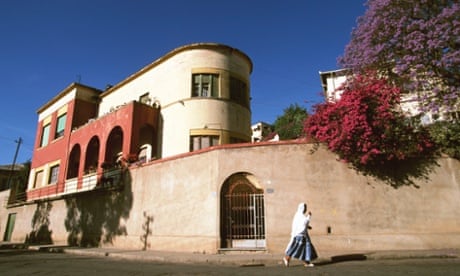
In collaboration with our partner site Brownbook, we’re profiling the adventurous colonial-era buildings that populate Asmara’s skyline, built by Italian architects in the 1930s who were encouraged to think of this Horn of Africa country as their own creative playground.

With a growing diaspora community abroad, we’re also looking at the furious online debate about Eritrea, and how internet users take to social media to both defend and criticise the regime. We’ll hear from activists and campaigners who say trolling and death threats are now commonplace for them, as pro-regime accounts attempt to silence dissent.

If you have any suggestions for stories we’d love to hear from you – either in the comments or by emailing This email address is being protected from spambots. You need JavaScript enabled to view it.


The Democratic transition from dictatorship to Democracy in the 80th, 90th and the recent of the Arab spring where some were successful, and some were failures and resulted in civil wars and destabilisation. The South African model of dialogue was a good example illustrating how an open dialogue can play in unifying all the forces for democratic change. The South African transition was not without conflicts but they have had a strong commitment to discuss the issues of conflict and listen to all stakeholders it was this character of inclusiveness and it was this culture of inclusiveness that led them to reconciliation , peace and democracy in their country.

Today , most of the actors in the struggle from dictatorship to democracy in Eritrea call for dialogue but the Eritrean dialogue definition has taken different meanings. The Eritrean political elites has been using dialogue since time immemorial but since their method of dialogue was not strategically based on mutual interest and respect but tactical to gain temporary achievements. Such dialogues were been practiced during the Eritrean political struggle and armed struggle and now in the post -independence period by the Eritrean opposition political and civic organization.

The aim of this article is to highlight the difficulties in the Eritrean Dialogue process and learn from other countries  experiences. Such learning can help us to improve the dialogue process in the Eritrean Diaspora Opposition struggling the dictatorship and lay foundations for peaceful transition to democracy in Eritrea. Dialogue cannot occur between one who imposes his /her own ideas upon another who does not wish this imposition.( Suzuki) Dialogue means to bring about an exchange of views but not to inform about views with the aim of increasing understanding, learning and exchanging ideas through communication. The purpose of dialogue is not to reach common viewpoint but to try to understand the different perspectives of the dialogue partner.

The Eritrean Dialogue of this time and the past are not based on principled dialogues and never come to win-win solutions but zero-sum games.

A principled dialogue is based on four key points. These key points are:

1. Separating issues from the people

2. Dealing with interests not positions or titles

3.Searching for mutual Gains

4. Putting objective Criteria

The Eritrean dialogue partners must first be prepared and establish conditions for dialogue as a continuous process. They can start with enhanced cooperation between them. This continuous process of cooperation makes the dialogue more informed leads to conflict prevention and conflict resolution. The dialogue becomes well informed and frank building trust that is the prerequisite for a successful dialogue. There are different kinds of dialogue but what we need now in the Eritrean Opposition case is dialogue in pursuit of democratic transition in Eritrea.

At this time many Eritreans call their collection under the name, " Mederk" meaning facilitating national dialogue among Eritreans in the struggle against the dictatorship.

In my resident city, there are some groups called , " Eri- dialogue" I used to attend their dialogue meetings but the process of dialogue I know and what they pursue are different. As I have seen and experienced this group's dialogue doesn't follow the principles of dialogue. Dialogue encourages diversity of thinking rather than suppressing. What I have seen in this group is mistrust and prejudices against others. But , the dialogue I know is a tool that leads towards a deeper awareness and understanding the different views to flow freely. Therefore, I have chosen to write on this issue today.

I want to highlight Eritrean National dialogue lacks clear principles based on cooperation of confident partners that enhances mutual respect. common objectives, and responsibilities, therefore, I preferred to deal with the four above mentioned points.

1. Separating issues from the people

Historically, the dialogue that has been in practice by Eritreans has never been based on mutual respect and cooperation. All the dialogues whether during the political or under the armed struggle or now at this time inside the opposition have been following the same culture and trend. When dialogue partners never separate people from issues of conflict, they miss the true meaning of dialogue and create misunderstanding and get off on the wrong direction instead of focusing on the issues of conflict to be resolved. They blame each other and scapegoat the failure on others. In dialogue, it is important to separate the people from the problem. It is beneficial to have a positive relationship and willingness to accommodate the views of other dialogue partners. The Eritrean political relationship was not based on give and take , in which dialogue partners demonstrate a willingness to accommodate the common interests but to win or lose perspective. In dialogue if one wants to reach an agreement that suits his individual interests, then both partners are losers. Therefore, the key we Eritreans must learn is to be able avoid personalizing the process of dialogue and gain the skills of dialogue that can help us solve our national problems.

2. Dealing with interests not positions or titles

"Eritrean Dialogues were focusing on positions instead of national and people's interests"

Looking all the dialogues and conferences of the Eritrean Opposition Forces were not focusing on the interest of the people but personalities. It is important to keep in mind that one of the habits of effective interpersonal communication is, "Seek first to understand, then to be understood." We Eritreans have the habit of seeking to be understood before we understand. We don't listen emphatically to understand another person's frame reference not only what one says but how he/ she feels. People have an inherent need to be understood ( Covey)

What motivates human beings is the need that is satisfied but the need to be satisfied. Do the Eritrean people in the opposition observed the need of their people? Not , at all.  The main point here is that listen to listened. We are expending our time and energy not to bring understanding but confusion and conflicts on personal identities and origins. We don't focus on the issues at hand. We don't seek first to identify the needs and interests. Seeking to understand the deficiency that has been obstacle of the Eritrean leadership. Look for example the Eritrean National Council For Democratic Change/ ENCDC what makes them not to cooperate is the lack of understanding to understood. Focusing on positions instead of focusing on the needs and interests of our people.

The ENCDC lacks discipline and compassion on their communication. The habits of communication was not focusing on the issues but on personalities and positions. How can we change this habit is the responsibility of all to learn how to apply interactive communication- listening, understand before to be understood.

3.Searching for mutual Gains

Do the ENCDC members identified their interests and explore options for mutual gain? Never , at all. The results of their activities show that they didn't. As I myself experienced their negotiations were not for mutual gains but individual gains. Their negotiations lacked collaborative brainstorming in which they can work together to solve the problem in a way that can lead to a win/win scenario but instead of conflicting and divisions.

Clarifying interests and exploring mutual options creates opportunities for solving conflict issues. What the ENCDC requires is the method of negotiations that can help them find out methods of resolving their internal conflicts by clarifying and exploring.

If the ENCDC members seize the opportunities of collaborative  methods of cooperations then the scenario of win/ win agreements can be reached and problems can be solved leading us to mutual gains.

4. Putting objective Criteria

Has the ENCDC developed standards and rules to help deal with common areas of dispute? Have they established rules of law and parameters of how each and one of the organs function ( Legislativ, Executive, Judicial......... and project groups)?  As I see they have it in name but not in action. The construction of the ENCDC was not understood by those who constructed it. ENCDC has no building codes and clear policies to resolve internal and external conflicts. For example, when a dispute arises between Legislative and Executive or between the Executive and the so called project group/ Preparatory Committee of the congress of ENCDC, are there any procedures and precedents? Who is the judge to adjudicate claims of wrongdoing?

ENCDC lacks objective criteria to settle its internal disputes whenever, wherever disputes arise any organisations must have developed standards and rules of law to help them solve their disputes. We Eritreans still need professional relationship do our entrusted work with objective criteria.

ENCDC is a project to build trust by working together. It is not for positions or power gripping. It was supposed a win/ win scenario but couldn't succeed because of professional leadership that precedes people's interests instead of personal positions.

Northern Africa faces brain drain

Saturday, 08 August 2015 07:08 Written by

ap

Click to enlarge

Determined: a migrant runs, after crossing a fence as he attempts to access the Channel
Tunnel, in Calais, on Monday

MANY of the migrants in Calais have come from Northern Africa. This week, the Area Bishop for the Horn of Africa, Dr Grant LeMarquand, said: “If refugees from anywhere need our sympathy, it would be people from Eritrea.”

The country “may have one of the most repressive governments in the world at the moment”, he said. “For Christians especially, the situation is bleak.” Many had been imprisoned, he said, under a legal system where very few churches have been permitted registration. The single Anglican Church was an illegal entity. Its building, rectory, and car had all been taken over by another denomination. Eritrea was also reported to be one of the worst sources of sex-trafficking in the world, he said.

The source of migration from Ethiopia, where he lives, was different, he said, and generally economic in nature. The increasing number of Ethiopians gaining an education could not find graduate jobs, and were leaving to seek better opportunities: “Many have been trying to travel to the West legitimately, often causing what is often called a brain-drain: our best and brightest leave the country. It does not help Africa for the West to say we will simply take anyone who applies. This will continue to rob Africa of its richest resource.”

A young girl from Eritrea is among the refugees that a church in Whitstable has welcomed to the UK.

The Team Vicar of Whitstable, the Revd Stephen Coneys, said on Tuesday: “When you meet the person behind the rhetoric, your perspective is changed.” The Church at parish level had a part to play, he suggested, in tackling fears about new arrivals. It could “stand in the gap between the asylum-seekers and those sections of the local community that are worried or fearful.”

He described how a young girl from Eritrea had become part of the congregation and befriended his daughter. Her father, a Christian pastor, had been imprisoned, and her mother sent her to the UK after they fled to Sudan. "It was just so humbling to meet such a person, so vulnerable and gentle and strong," he said.

While welcoming the bishops’ “prophetic” interventions, he suggested that local churches could help to tackle "myths", including the failure to distinguish between economic migrants and asylum-seekers. Some local people were afraid, he said, that asylum-seekers were “dangerous or, in some dark sense, predatory”.

Click to enlarge

Tackling fears: the Revd Stephen Coneys 

Tackling fears: the Revd Stephen Coneys 

Mr Coneys has organised a letter signed by churches in Whitstable pledging support to the unaccompanied 16 and 17-year-old boys who will be accommodated at a temporary reception centre in the town. The churches have offered to visit, befriend and support the children, who will stay at the centre while they wait to have their asylum applications processed. 

"Amidst the confusion and controversy surrounding this initiative, the fact is that young people will arrive at Ladesfield in various states of exhaustion and distress," the letter reads. "Our personal experience of young asylum seekers is that there is nothing to fear and much to learn from individuals who are both vulnerable and often have humbling stories to tell. . . We hope to be able to share a little love with them – so that when they leave they have a good story to tell about our town."

Source=http://www.churchtimes.co.uk/articles/2015/7-august/news/world/northern-africa-faces-brain-drain

Aug 6, 2015 - 15:05

Sommaruga:

Sommaruga: "Not a single European country sends people back there” 

(Keystone)

Justice Minister Simonetta Sommaruga has defended the government’s policy for processing asylum requests from Eritrean refugees, following a critical letter she received from the Lucerne cantonal government.

Sommaruga said on Thursday it was “unthinkable” that Switzerland would send people back to a “despotic state”.

A letter addressed to Sommaruga by Guido Graf, a member of the conservative right Swiss People’s Party in Lucerne’s cantonal government, on Tuesday stated that “the difficult economic situation and the threat of military service” for young Eritreans – even if they face “difficult prospects” – does not justify granting them refugee status and implementing an “overly generous” policy.

Sommaruga, who answered questions from journalists during an annual walk-about in Bern, said the letter was based on the false assumption that Eritrean asylum seeker are automatically recognised as refugees. 

Eritreans make up the largest national group of asylum seekers to Switzerland, with 6640 Eritreans having been granted refugee status in 2014. Only two other European countries had accepted more Eritreans: Germany, with 13,200 and Sweden, with 11,500.

‘Crimes against humanity’

Veronica Almedom of the Geneva-based group Stop Slavery in Eritrea told swissinfo.ch that Graf’s argument is “based on a few elements and it is certain that if he understood the situation in its entirety, his comments would be different”.

Almedom, who is Swiss of Eritrean origin, emphasised that “no one who would risk crossing the Mediterranean would do so for the sake of just making a little more money. We are looking at crimes against humanity, which are widespread and systematic”.

“It is not right to make this into a political game… and to use it for political reasons, to win votes, in order to appear popular,” she said.

Meanwhile Sommaruga said that while conflicting reports existed on Eritrea, it was generally agreed that Eritrea is a dictatorship, in which not even the Swiss-run International Committee of the Red Cross (ICRC) has access to prisoners.

“That is why not a single European country sends people back there,” she added.
 

swissinfo.ch

Source=http://www.swissinfo.ch/eng/asylum-politics_justice-minister-defends-eritrean-refugee-policy/41589274


Sesadu 1

The Swedish- Eritrean Partnership for Democracy and Development/ SESADU invites Dan Connel at the 54th Anniversary of the Eritrean Liberation Struggle that has started on First September 1961. Dan Connel will hold two seminars in Sweden one in the city of Uppsala and the second in the city of Stockholm. He will be the honorary guest of the historical event of the Eritrean people in Sweden from 10th September to 13th September 2015.

The Theme of the seminar is ,

"Eritrean Refugee Journeys: Why they flee & what they face"

Hundreds of thousands of Eritreans have fled a suffocating dictatorship over the past decade,Dan Conel making the once promising new nation one of the world’s largest per capita producers of refugees. To reach a safe haven they risk imprisonment in Eritrea’s medieval jails, kidnapping and torture by human traffickers, anonymous death on perilous desert and sea crossings, and more. Then comes the disheartening struggle to gain recognition as a refugee from countries looking for an excuse to lock them out. Yet still they come. This presentation draws on field research in North America, Europe, Israel, East and Southern Africa, South and Central America, and the Horn of Africa to put a human face on this crisis, map its main corridors, and explore options to deal with it.

Dan Connell is a visiting scholar at Boston University’s African Studies Center and a retired senior lecturer in journalism and African studies at Simmons College, who has researched and written about Eritrea for nearly 40 years. He is the author or editor of 10 books, includingAgainst All Odds: A Chronicle of the Eritrean Revolution(1997),Conversations with Eritrean Political Prisoners(2005), and a Historical Dictionary of Eritrea(2010). He is currently working on a book on the refugee crisis.

The schedule and place of the seminars will be announced later.

Swedish- Eritrean Community for Democratic Change/ SESADU

Sesadu 1

Thousands marched in Stockholm against the Eritrea's totalitarian regime's supporters festival in Sweden. Our youth for justice and democracy in Eritrea gathered from different cities of Sweden and converged in front of the PFDJ Festival with thundering and chanting slogans expressing the sad situation in our country and warning the festival goers that this festival under the name of the Eritrean people is not for the benefit of the Eritrean people but it is just serving the dictator and elongate our people's suffering.

Stockholm Rally 1

Protesters have poured into the place of the festival to denounce such festivals that are used as political propaganda and misleading our people by telling lies to the diaspora Eritrea. They demanded that the Swedish Municipality must stop such activities that have been save haven for dictators that have been accused crimes against humanity and being destabilizing factor in the region.

Stockholm Rally 2

Speakers at the rally were, Arhe Hamednaca, Member of the Swedish Parliament, Anders Östberg secretary of the Stockholm's workers chapter of the social democratic party in international relations and Mohammed Nur, chairperson of the association of social democratic party in the suburb of Stockholm/ Tensta expressed their worries on the human rights situation in Eritrea, demanding that all activities connected with the Eritrean dictator in Sweden must be stopped.

Stockholm Rally 3Another speaker was the well known journalist Martin Schibbye, he appreciated and welcomed such huge rally for freedom of speech and human rights in Eritrea and told the rally that he will be going to the festival and conduct interview with the leaders and participants of the festival. Martin was accompanied by his photograph, Johan Person.

Stockholm Rally 4

What was unique with rally 2015 in Sweden was 98% were the youngsters who were oppressed by this regime holding various slogans and placards telling the festival goers, " If there is democracy and justice in Eritrea" Go back to Eritrea, why are you here?

The rally started at 11.00 AM and stayed up to 20.00 PM without no stop chanting, singing and delivering different speeches. A joint speech was read by the Swedish - Eritrean Partnership for Democracy and Development/ SESADU chairman, Fesseha Nair in Tigrinya and the Arabic version by Abdulkarim Mustafa.

Stockholm Rally 5

The rally concluded peacefully and cordially at the place. When the rally was concluded all rally participants were told to go to the Hall of Husbygård to meet there and have their dinner , discuss and entertain. Thanks to our sister organization Eritrean Solidarity Movement National Salvation/ESMNS/ and our sister organisation Kebire Relief organization who has extended its support to this evening by giving us this opportunity after the rally.

Stockholm Rally 6

At the reception Hall, words of appreciation and thanks giving were presented by the elders and young recommending that now is the time to lay down strategic planning and implementation to reach the final blow to the dictator and save our people inside Eritrea

Stockholm Rally 7

Later in the evening, Young Musicians and Artists entertained the rally participants with sensational songs and readings reminding the brutal situation inside Eritrea

Thank you all Freedom and Justice Activists!

Rally Organizers/ SESADU