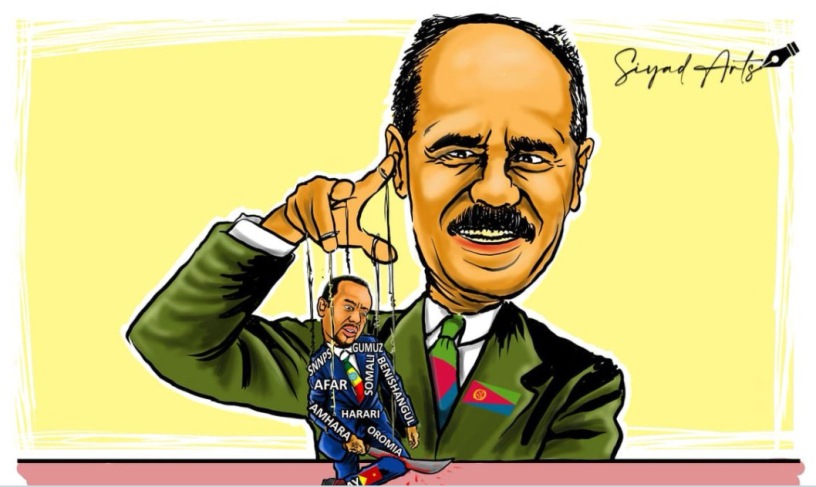
Responsibility for the tragic war in Tigray is being laid at the door of Ethiopia’s Prime Minister, Abiy Ahmed. But the real culprit is further north.

Eritrea’s President Isaias has plotted and schemed ever since his forces captured Asmara in 1991. Not satisfied with turning his own country into the most repressive state in Africa – without a functioning constitution, parliament, press or freedom of speech, assembly or religious expression – he has intervened in every one of his neighbours.

  • President Isaias has supported Sudanese rebels, fought with Djibouti, Yemen and Ethiopia (1998 – 2000),
  • When the Islamic Courts fled from Somalia, they found a haven in Asmara. President Isaias backed the Islamist group, al-Shabaab,
  • Ethiopian rebel movements were given training and logistical support by President Isaias. In July 2011 the UN Monitoring group on Somalia and Eritrea accused the Eritrean government of plotting to bomb the AU headquarters in Addis Ababa during the summit of African heads of state in January 2011.

US concerns about Eritrea’s role in the Tigray war

President Isaias considered military intervention in Tigray long before war broke out in November 2020.

As President Isaias stated when he gave his annual interview on Eritrean television, he began planning for the war after meeting the Tigrayan leader, Debretsion Gebremichael in Omhajer in January 2019.

When the war in Tigray erupted, Eritrean forces attacked from the north, joining offensives by Ethiopian troops and Amhara militia from the south and the east.

The involvement of the Eritrean forces in Tigray is now accepted by the United States, the European Union and Britain. Even the Ethiopian government now quietly admits their role in this war.

There has been wide condemnation of the role of Eritrean troops in atrocities in the town of Axum and beyond.

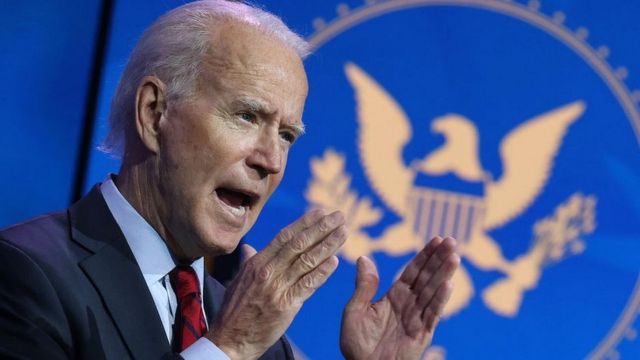
President Biden has drawn a line in the sand.

On 27 February Secretary of State Antony Blinken said that: “The immediate withdrawal of Eritrean forces and Amhara regional forces from Tigray are essential first steps.”

According to diplomatic sources, Secretary of State Blinken spoke to Ethiopian Prime Minister Abiy twice in early March, and told him that Eritrean and Amhara forces must be withdrawn from Tigray within 72 hours.

This has not taken place.

There is a great deal at stake

In November 2020, a day after the Tigray war broke out, a range of senior American former diplomats issued a statement.

They warned that the conflict could lead to the: “acceleration of polarization amid violent conflict [which] would also mark the death knell for the country’s nascent reform effort that began two years ago and the promise of a democratic transition that it heralded.” This could lead to “the fragmentation of Ethiopia [which] would be the largest state collapse in modern history.”

This fragmentation would not just threaten the Horn of Africa, it could be send ripples of instability across the Arab world and into the rest of Africa.

It would strengthen the hold of Islamist movements like al-Shabaab and their international Islamist allies.

It is a prospect that threatens Washington, Paris and London – as much as it does Addis Ababa.

But unless Eritrea can be forced to end its role in the Tigray war, and President Isaias shown that he cannot continue his perpetual practice of destabilizing his neighbours, it is difficult to see how this can be averted.

MARCH 13, 2021  ETHIOPIANEWSTIGRAY

Source: Reuters

State Department spokesman Ned Price said on Friday that while the United States has decided to resume certain types of assistance, including that related to global health and food security, assistance for other programs and most programs in the security sector would remain paused.

“Given the current environment in Ethiopia, we have decided not to lift the assistance pause for other programs, including most programs in the security sector,” Price said at a news briefing.

Blinken has pressed Ethiopia to end hostilities in Tigray and on Wednesday, testifying before Congress, he said he wanted to see forces in Tigray from Eritrea and Amhara be replaced by security forces “that will not abuse the human rights of the people of Tigray or commit acts of ethnic cleansing, which we’ve seen in western Tigray.”

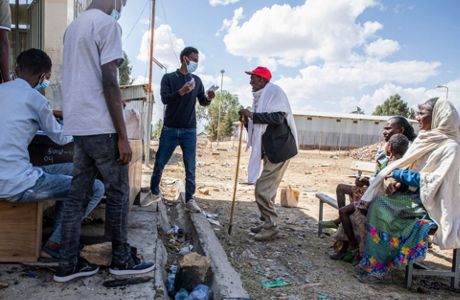
Thousands of people have died, hundreds of thousands have been forced from their homes, and there are shortages of food, water and medicine in the region of more than 5 million people.

The State Department last month said Washington will de-link its pause on some aid to Ethiopia from its policy on the giant Blue Nile hydropower dam that sparked a long-running dispute between Egypt, Ethiopia and Sudan.

But it cautioned that resumption of assistance would be assessed on a number of factors, including “whether each paused program remains appropriate and timely in light of developments in Ethiopia that occurred subsequent to the pause being put in place,” according to a State Department spokesperson.

Ethiopia’s military ousted the former local ruling party, the Tigray People’s Liberation Front (TPLF), from the regional capital Mekelle in November, after what it described as a surprise assault on its forces in Tigray.

The government has said that most fighting has stopped in Tigray but has acknowledged isolated incidents of shooting.

Both sides deny their forces have committed atrocities, and blame other forces for the killing of civilians. (Reporting by Daphne Psaledakis and Humeyra Pamuk; Editing by Daniel Wallis)

——————————————————————————————————————-
Source: Reuters

U.S. Secretary of State Antony Blinken, in a call with United Nations Secretary-General Antonio Guterres, discussed the importance of an international investigation into reported human rights abuses in Ethiopia’s Tigray region, the State Department said on Friday.

It said that in the call, which took place on Thursday, Blinken also called for “enhanced regional and international efforts to help resolve the humanitarian crisis, end atrocities, and restore peace in Ethiopia.”

The United Nations said last week that Eritrean troops were operating throughout Ethiopia’s northern Tigray region and reports suggested they were responsible for atrocities.

12 መጋቢት 2021

ፕረዚደንት ኣመሪካ ጆ ባይደን

በቲ ኣብ ትግራይ ኣጋጢሙ ዘሎ ቅልውላው፡ ፕረዚደንት ኣመሪካ ጆ ባይደን “ኣዝዩ ተሻቒሉ” ከምዘሎ፡ ውሃቢት ቃል ቤተ መንግስቲ ኣመሪካ (ዋይት ሃውስ)፡ ጄን ሳኪ ትማሊ ሓሙስ ንጋዜጠኛታት ተዛሪባ።

“እቲ ፕረዚደንት በዚ ጉዳይ እዚ ኣዝዩ ተሻቒሉ’ሎ፤ ብቐረባ ድማ ይከታተሎ ኣሎ” ኢላ እታ ወሃቢት ቃል።

ወሲኻ ድማ፡ ፕረዚደንት ጆ ባይደን ነቲ ኣብ ትግራይ ኣጋጢሙ ዘሎ ሰብኣዊ ቅልውላው ከምዝፈልጦን፡ ምምሕዳሩ ነቲ ኩነታት ንምምሕያሽ፡ ናብ’ታ ክልል ሰራሕተኛታት ረድኤት ክኣትዉ ኣብ ምግባር ሓዊሱ ይሰርሕ ምህላዉ ገሊጻ።

በቲ ኣብ ትግራይ ኣብ መንጎ ሓይልታት መንግስቲ ፌደራልን ክልላዊ ሓይልታት ትግራይን ዝተወለዐ ጎንጺ፡ ኣሸሓት ሰባት ከምዝሞቱን ብኣማኢት ኣሸሓት ዝቑጸሩ ድማ ኣብ’ታ ክልል ከምዝተመዛበሉን ይግለጽ።

ብሊንከን፡ ኣብ ትግራይ ግፍዒ ይፍጽሙ ኣለዉ ዝበሎም ሓይልታት ኣምሓራን ወተሃደራት ኤርትራን ካብቲ ክልል ክወጽኡ’ውን ጸዊዑ እዩ።

እቲ ጎንጺ ብኸመይ ናብዚ በጺሑ?

ኣብ መንጎ ብህወሓት ዝምራሕ ክልል ትግራይን ፌዴራል መንግስትን ንልዕሊ ክልተ ዓመታት ዝዘለቐ ፍሕፍሕ፡ ፌዴራል መንግስቲ ኣብ ዝሓለፈ ዓመት ክካየድ መደብ ተታሒዝሉ ዝነበረ ሃገራዊ መረጻ ብሰንኪ ኮሮናቫይረስ ምስ ኣናወሐ ተጋዲዱ።

መንግስቲ ክልል ትግራይ ነቲ ውሳነ ዘይተቐበሎ እንትኸውን፡ ትግራይ መንግስቲ ፌዴራል "ዘይሕጋዊ" ዝበሎ ክልላዊ መረጻ ኣብ መጀመርታ ወርሒ መስከረም ምስ ኣካየደት ድማ፡ እቲ ጎንጺ እናዓረገ ከይዱ።

ቀዳማይ ሚኒስተር ኣብዪ ኣሕመድ፡ ‘ህወሓት ኣብ ልዕሊ መዓስከር ወተሃደራት መጥቃዕቲ ፈጺሙ’ ኢሉ ምስ ከሰሰን፡ ብሕዳር 4 ወተሃደራዊ ስጉምቲ ክውሰድ ምስ ኣወጀን፡ እቲ ዝጸንሐ ወጥሪ ናብ ቅሉዕ ጎንጺ ኣምሪሑ።

ነዚ ስዒቡ ድማ፡ ኣብ መወዳእታ ሕዳር ፌዴራል መንግስቲ ንከተማ መቐለ ምስተቖጻጸረ፡ እቲ ኲናት ከምዘብቀዐ እንተገለጸ'ኳ፡ ውግእ ቀጺሉ ከምዘሎ ውድብ ሕቡራት ሃገራትን ካልኦትን ይገልጹ።

በዚ ምኽንያት ድማ፡ ኣብቲ ክልል ኣማኢት ኣሻሓት እንትመዛበሉ፡ ልዕሊ 60 ሽሕ ሰባት ድማ ናብ ሱዳን ከምዝተሰደዱን፣ ኣብቲ ክልል ከቢድ ጥሜትን ሰብኣዊ ቅልውላውን ኣንጸላልዩ ከምዘሎን ይዝረብ።

ኣብቲ ትግራይ፡ ጾታዊ ዓመጽ፣ ገበናት ኲናትን ግህሰት ሰብኣዊ መሰላትን ከምዝተፈጸሙን ውድብ ሕቡራት መንግስታት ከጻሪ ክፍቀደሉ ምሕታቱን ይዝከር።

March 10, 2021

The Rome Statute of the International Criminal Court affirms in its Preamble paragraph 4 that: “…the most serious crimes of concern to the international community as a whole must not go unpunished and that their effective prosecution must be ensured by taking measures at the national level and by enhancing international cooperation.”

Paragraph 5 of the Preamble asserts that State Parties are:

“Determined to put an end to impunity for the perpetrators of these crimes and thus to contribute to the prevention of such crimes”

Multiple, consistent and reliable reports of alleged crimes against humanity, crimes of genocide, war crimes committed by Ethiopian and Eritrean soldiers, and alleged crimes of aggression committed by the leaders of the state of Eritrea in Tigray, have reached the international community. The United Nations has, therefore, the moral obligation and legal responsibility to conduct an independent investigation and bring the perpetrators to a court of justice through mechanisms of national and international cooperation and in particular through The International Criminal Court ( ICC) established for this purpose and which has jurisdiction over war crimes under Article 8, crimes against humanity under Article 7, crime of genocide under Article 6 and crime of aggression under Article 5(2) of the Rome Statute of The International Criminal Court.

Both Ethiopia and Eritrea are non-State Parties of the Rome Statute. Nonetheless, a referral by the UN Security Council can authorize the ICC to exercise its jurisdiction over crimes listed in the Rome Statute. The court has the decisional precedent of repealing the immunity and indicting a sitting president when the State through its national courts and legislation is genuinely unable or unwilling to persecute one of its nationals when accused of alleged war crimes and crimes against humanity committed within the territory under its jurisdiction. There is also an alternative indictment process in which a prosecutor independently conducts a preliminary examination of the alleged crimes falling within the ICC jurisdiction and files an application to an ICC judge (motu propio) and requests authorization to initiate an investigation.

  1. The act of responsibility for crime against humanity

On 4 November 2020 the Ethiopian PM announced brusquely on social media that Ethiopian forces have started conducting airstrikes and sweeping military operations in the northern Tigray region.1 The army spokesman told reporters that the army plans to encircle the regional capital of Mekelle with tanks and attack it with artillery, and urged the civilian population to “save themselves, as there will be no mercy”.2 Tigray was shut down, and a total information blackout was imposed. There were cut-offs of electricity, telephone communications and the internet, and free humanitarian access to the people of Tigray and the four UNHCR dependent Eritrean refugee camps in the region was blocked.

A stream of evidence has since then leaked out of Tigray regarding heinous crimes, in particular crimes committed by the army of the pariah state of Eritrea. Wanton killings, pillaging, sexual violence, ethnic cleansing, destruction of heritage sites as well as the kidnapping of Eritrean refugees and their forced return to Eritrea have been repeatedly reported by refugees who succeeded to flee to the Sudan.3 The international community, including the AU, EU and the US, have repeatedly called for dialogue, transparency and independent investigation. The answer of a high government official Radwan Hussein is that Ethiopia “does not need a babysitter”.4

On January 15, 2021, the EU foreign affairs chief Josep Borrell stated that he had received consistent reports of ethnically targeted violence, killings, massive looting, rapes, forced return of refugees (to Eritrea) and possible war crimes.5 Likewise, on the same day, the UN High Commissioner for Refugees (UNHCR) Filippo Grandi acknowledged that he continues to receive reliable first-hand reports of gravely disturbing human rights abuses, including killings and forced return of refugees to Eritrea, and states that there is concrete indication of major violation of international law.6 On January 22, Pramila Patten, the UN special representative on sexual violation in conflict said she was greatly concerned by serious allegations including “a high number of alleged rapes” in the Tigrayan capital, Mekelle.7

Under Article 7 of the Statute, the ICC has the jurisdiction over crimes against humanity which include widespread and systematic attacks directed against any civilian population including murder, torture, rape and sexual violence and persecution against any identifiable group or collectively on political racial, national, ethnic, culture, religious, gender or other grounds that are universally recognized as impermissible under international law.8

  1. The act of responsibility for war crimes


On January 22nd 2021, Poland became the first EU country to acknowledge and officially express its deep concern regarding the alleged massacre of 800 persons, the majority of whom were Christian believers and Christian priests, in front of the Church of Our Lady Mary of Zion in Axum.9 On January 27th 2021, the US called for the immediate withdrawal of Eritrean troops “given credible reports of looting, sexual violence, assaults in refugees camps and other human rights abuses”.10 On February 11, 2021 Human Rights Watch issued an extensive report that shows that the Ethiopian federal forces carried out apparently incriminate shelling of urban areas in the Tigray region in November 2020 in violation of the law of war.11 On February 21st 2021, the Swedish Radio programme Ekot included first-hand testimony from a deacon at the church present during the massacre.12 On February 25th, Amnesty International issued an extensive report on the Massacre in Axum based on evidence given by 41 independent witnesses, and concluded that indiscriminate shelling of Axum by Ethiopian and Eritrean troops may amount to war crimes, and that the mass execution of Axum civilians by troops may amount to crimes against humanity.13

Under Article 8 of the Statute, the ICC has jurisdiction in respect to war crimes which include the serious violations of international humanitarian law mentioned in the Geneva convention of 1949 and the Additional Protocol I of 1977 including indiscriminate attacks affecting the civilian population or civilian objects as well as offences specifically identified as war crimes including rape and other forms of sexual violence. Included in the category of war crimes are the following: the destruction of property; pillaging; outrages upon personal dignity; violence to life and person; intentionally directing attacks against personnel, industrial installations, material, units or vehicles.

III. The act of responsibility for crime of genocide


On the February 26th 2021, based on an internal U.S. government report, The New York Times wrote that Ethiopia is conducting “a systematic campaign of ethnic cleansing” through the use of force and intimidation and that whole villages were severely damaged or completely erased in the Tigray region. On the February 27th, the US expressed its grave concern and “strongly condemned the killings, forced removals and displacement, sexual assaults, and other extremely serious human rights violations “. On March 1st 2021, the CNN aired an eyewitness report on the massacre committed by Eritrean soldiers of over 50 persons including 20 Sunday school students on Maryam Dengelat Orthodox Tewadhdo Church when the congregation was celebrating Mass.

All major media outlets including the BBC, CNN, Al Jazeera, the New York Times, Reuters, The Washington Post and The Economist have by now reported on grave violations of human rights including ethnic cleansing in Tigray.

Whether intentionally, or otherwise, the war was ignited days before the seasonal harvest period, in the midst of the COVID pandemic and a massive locust infestation in the region. Together with a total blockade of Tigray, including access to humanitarian assistance, the war was bound to cause maximal damage to the economy and to the wellbeing of the civilian population of Tigray, resulting in over 2 million internally displaced people and over 60 000 refugees who have fled to neighbouring Sudan and 25 000 unaccounted Eritrean refugees in Ethiopia.

Under Article 6 of the Statue, the ICC has jurisdiction over the crime of genocide, genocide by killing of a group; genocide by causing serious bodily or mental harm; and genocide by deliberately inflicting on each target group conditions of life calculated to bring about the group's physical destruction including using famine as an instrument of war.


  1. The act of responsibility for crimes of aggression


In an interview on February 8th 2020 on Eritrean National Media outlet the Eritrean president expressed his contempt for the Ethiopian Federal Constitution and all forms of electoral government and stated that “we will not fold our hands and sit still concerning matters that develop in Ethiopia” 14 and he added that Eritrea is “fulfilling its obligations” with respect to Ethiopia's Tigray crisis. On July 20th 2020, the Ethiopian PM become the first foreign dignitary to visit the infamous and secretive SAWA military training camps, a visit which was reciprocated on October 12th 2020 by a visit by the Eritrean president to the headquarters of the Ethiopian Air Forces and the military industrial complex of Ethio-Engineering Groups in what some observers noticed as an indication of a final preparation for a “knock-out” against their common enemy, the regional government of Tigray. 15


Both the governments of Eritrea and Ethiopia continue to deny the participation of Eritrean troops in war in Tigray. The presence of Eritrean troops is, however, openly acknowledged by local officials of the government regional administration and war generals.16 Today there is irrefutable evidence of their massive participation and culpability in grave human rights violations, including rape, looting, mass killings, kidnappings of Eritrean refugees, and the dismantling of industrial complexes with their transfer to Eritrea.

On March 4th 2021, the UN High Commissioner for Human Rights Michelle Bachelet stated that, given the persistent reports of serious human rights violations and abuses she continued to receive, she stressed on urgent need for a prompt, impartial and transparent investigation that will hold those responsible accountable.17 On the same day, the UN Under-Secretary-General for Humanitarian Affairs Mark Lowcock, informed a Security Council session that “countless well-corroborated reports suggest their culpability for atrocities,” and added “Eritrean defence forces must leave Ethiopia and they must not be enabled or permitted to continue their campaign of destruction before they do so.”18 U.N. Secretary-General António Guterres and U.S. Ambassador Linda Thomas-Greenfield made statements that urged Eritrean forces to leave Tigray.

Under Article 5 (2) of the Statute, the ICC has jurisdiction over the crime of aggression which according Article 8 bis means “the planning, preparation, initiation or execution, by a person in a position effectively to exercise control over or to direct the political or military action of a State, of an act of aggression which, by its character, gravity and scale, constitutes a manifest violation of the Charter of the United Nations."

The case for indictment of the president (non-elected) of Eritrea Isaias Afwerki, the minister of defence of Eritrea, and Eritrean military commanders in the Ethiopian Tigray region.


In 2016 the UN Commission of Inquiry submitted its conclusions to the UN Human Rights Council and to the Security Council of the UN recommending accountability on the gross and systematic violations of human rights and crimes against humanity committed by Eritrean authorities. No individual has been charged or punished for these grave violations of human rights in Eritrea. The recommendation of the Commission of Inquiry remains, pending action. Eritrean authorities have however, continued to commit crimes against humanity (Article 7) with impunity in Eritrea. Furthermore, in November 2021 the Eritrean president ordered the army to invade the Tigray region of Ethiopia and conduct a crime of aggression (Article 5), an army accused of committing alleged war crimes (Article 8), genocide (Article 6) and crimes against humanity (article 7).

On February 24, 2021 the current UN Special Rapporteur to Eritrea, Mohamed Abdelsalam Babiker, in his rapport to the Human Rights Council, underscored that nothing has changed in Eritrea and stated that he has “seen no concrete evidence of progress or actual improvement in the human rights situation in the country. Eritrea has not yet put in place an institutional and legal framework to uphold minimum human rights standards in a democratic society. The country lacks rule of law, a constitution and an independent judiciary to enforce the protection of and respect for human rights. Eritrea continues to have no national assembly to adopt laws, including those regulating fundamental rights and the right of the Eritrean people to participate freely in the public life of their country.” 19 He also expressed his concern about the fate of the Eritrean refugees abducted by the Eritrean army and taken back to Eritrea, and stressed the need for thorough investigation by an independent body.

The State of Eritrea has no national legislative mechanisms that enable it undertake an independent investigation into grave human rights violations. The Eritrean authorities remain unwilling to investigate or cooperate in the investigation of grave crimes against humanity committed in the territory within their jurisdiction or by Eritrean citizens in a neighbouring state.

The Office of the Prosecutor needs, therefore, to review and examine the documentation on the crimes against humanity (Article 7) between 2012-2016 submitted by the UN Commission of Inquiry on Eritrea, and to open an investigation after acquiring authorization from ICC judges, as in the case of Kenya, Ivory Coast, Georgia and Bangladesh/Myanmar.

The UN Security Council needs to take a decision to refer and authorize the ICC to investigate the alleged crimes against humanity (Article7), war crimes, (article 8) genocide committed (Article 6) in Tigray as in the case of the Sudan and crimes of aggression (Article 5) the is particular to the leaders of the Eritrean State.

The case for indictment of the Prime Minister of Ethiopia Abiy Ahmed, Birhanu Jula Gelalcha Chief of Staff and Ethiopian military commanders in Tigray.

The UN Security Council needs to authorize the ICC to investigate war crimes where command responsibility falls directly into the hands of the Ethiopian Prime Minister, the Ethiopian Minister of Defence, and the Chief of General Staff of Ethiopia Birhanu Jula Gelalcha (Article 8), crimes against humanity (Article 7), genocide (Article 6) committed by Ethiopian soldiers and militias from the Amhara region, as was the case in Darfur in Sudan.

Ethiopia has national legislature, a criminal justice system and a government agency – the Ethiopian Human Rights Commission, in charge of promoting human rights. An indictment process is therefore bound to meet resistance as it will impose certain restrictions and limitation on some state authority. Nevertheless, the Ethiopian government has refused or failed to use its national criminal justice system to investigate and to deal with perpetrators of war crimes and crimes against humanity - crimes which continue to accrue within its territory - or to allow a thorough investigation by an independent and neutral body,

The Ethiopian legal system remains genuinely unable or unwilling to persecute alleged war crimes, crimes against humanity and crimes of genocide committed by its nationals or nationals of other states, in the Tigray region of Ethiopia.

Uppsala 2021-03-10

Tedros Amanuel

Chairperson

Swedish-Eritrean Association of Human Rights and Democracy

Footnotes:

  1. BBC 4 November 2020 Ethiopia PM orders military response to `base attack´
  2. Aljazeera 22 November 2020 `Save yourselves´: Ethiopia warns Tigrayans of Mekelle
  3. UNHCR, 4 December 2020, CNN 8 December 2020 `They left us for dead´ Tigray refugees tell horrors after Ethiopian troops vowed, they´d be safe.
  4. Aljazeera 9 December Ethiopia says it ‘doesn’t need a babysitter’ as it dismisses calls for independent probes into the month-long conflict.
  5. BBC 15 January 2021, Ethiopia Tigray crisis: EU concern over war crime report
  6. Aljazeera 15 January 2021, `Major violations´ of international law ay Tigray refugee camps
  7. Aljazeera 22 January 2021, `Disturbing’ rape allegations in Ethiopia´s Tigray conflict: UN
  8. The Statute of the International Criminal Court (ICC) adopted in July 1998.
  9. Statement regarding the massacre in front of the Church of Our Lady Mary of Zion in Aksum in Tigray region. Ministry of Foreign Affairs of Republic of Poland 22 January 2021(www.gov.pl)
  10. BBC 27 January 2021. Tigray crisis: Biden administration calls for Eritrea troops to withdraw.
  11. Human Rights Watch February 11, 2021 Ethiopia: Unlawful Shelling of Tigray

urban Areas (www.hrw.org)

  1. sverigesradio.se 21 februari 2021: Vittnen talar om massaker i Tigray
  2. Amnesty International 26 February 2021Ethiopia: Eritrean troops’ massacre of hundreds of Axum civilians may amount to crime against humanity (www.amnesty.org)
  3. Eritrea 'doing its obligation' on Ethiopia's Tigray crisis BBC 18, February 2020
  4. Eritreahub.org Martin Plaut21 October 2020.
  5. abcNEWS 7 January 2021. Ethiopian army official confirms Eritrean troops in Tigray.
  6. Ethiopia: Persistent, credible reports of grave violations in Tigray underscore urgent need for human rights access – Bachelet Geneva March 4, 2021 (www.ohchr.org)
  7. CNN 3 mars 2021 UN Security Council to discuss Ethiopia conflict following CNN investigation into Tigray massacre.
  8. https://www.ohchr.org/EN/NewsEvents/Pages/DisplayNews.aspx?NewsID=26795&LangID=E

Ethiopian diplomat resigns over Tigray war

Wednesday, 10 March 2021 23:14 Written by

MARCH 10, 2021  ETHIOPIANEWSTIGRAY

My name is Berhane Kidanemariam. I have proudly served my country, Ethiopia, for decades at varying levels of public service. Prior to my current post, it was my great privilege to serve as Consul General of the Ethiopian Mission in Los Angeles. Currently, I am serving as the Deputy Chief of Mission to the United States at the Ethiopian Embassy in Washington, D.C.

Throughout my career, I have always been honest with government and party officials about concerns I have had with the direction of the country. I have suffered consequences, including being excluded from certain political affiliations, because of my differing views. Despite these challenges, I have always tried to put what I believe is best for my country above my political interests. I have long desired for Ethiopia to make the necessary reforms to ensure peace and prosperity for all its citizens.

With the emergence of Prime Minister Abiy Ahmed, I, like many other Ethiopians, had big hopes for genuine reforms that could transform our political environment. In the beginning, Prime Minister Abiy inspired millions of Ethiopians with talk of reconciliation and change.

However, instead of fulfilling his initial promise, he has led Ethiopia down a dark path toward destruction and disintegration. Like so many others who thought the Prime Minister had the potential to lead Ethiopia to a bright future, I am filled with despair and anguish at the direction he is taking our country.

Instead of solving conflicts through dialogue, the Prime Minister has chosen to solve ideological and political differences by abusing the judicial system and using the military to suppress opposition to his rule.

Instead of increasing press freedoms, journalists have been arrested, assaulted, and assassinated.

Instead of leading a promised transition to democracy, elections have been repeatedly postponed; political leaders have been arrested on false charges; and opposition parties have been debarred and deregistered from participating in the electoral process. Major parties like the Oromo Liberation Front and the Oromo Federal Congress have withdrawn from the upcoming sham elections because the government has jailed their leaders without cause and shut down their party offices.

Some of the most disturbing events of Abiy’s tenure have been the killings of major political and civic figures. These include the assassination of Simegnew Bekele, the passionate project manager of the Grand Ethiopian Renaissance Dam; the murder of the Ethiopian Army Chief of Staff, General Se’are Mekonnen and his friend, General Gezae Aberra; the assassination of Dr. Ambachew Mekonnen and other leaders of the Amhara region; and the killing of the popular Oromo singer Hachalu Hundessa, which was immediately followed by the arrests of political leaders like Jawar Mohamed, Bekele Gerba, Lidetu Ayalew, and Yilikal Getnet, among many others. These assassinations all remain troubling mysteries in Ethiopia, and the true perpetrators have never been brought to justice.

On top of these issues, the continuous repression and killings in Oromia, the breakdown of law and order in the Amhara region, the violence in Metekel, and military conflict with Sudan signal a perilous future for Ethiopia under current leadership.

The most urgent crisis in Ethiopia, however, is the ongoing war in Tigray. In November 2020, the Ethiopian government launched a war on Tigray for the supposed purpose of a “law enforcement operation”. The government used its full military power, including ground and air assaults, against the Tigray region. Moreover, the government invited foreign forces from Eritrea and the United Arab Emirates (with the use of drone warfare) to attack its own people.

Tigray’s infrastructure has been completely and intentionally destroyed. Soldiers are systematically raping women and young girls. Hundreds of thousands of people are being displaced, killed, and deliberately starved.

While all of this is happening, the Ethiopian government is intensifying its campaign of lies and deceit by denying the presence of foreign powers, denying atrocities being committed against the people of Tigray, denying all the crimes it is responsible for while the whole world bears witness.

In the rest of Ethiopia, thousands of ethnic Tigrayans have been fired from their jobs, harassed, assaulted, and arrested. I call on the Ethiopian government leadership and its followers to stop these attacks on Tigrayans based on their identity and to stop the witch-hunt that is taking place against Tigrayans in Ethiopia and in the diaspora.

One of the ironies of a prime minister who came to office promising unity is that he has deliberately exacerbated hatred between different groups. By using Amhara militias to attack Tigray, the government has tried to ensure further animosity between Amharas and Tigrayans. By involving Eritrea in this war and allowing its military to commit atrocities and wanton destruction of Tigray, the Prime Minister has deliberately tried to increase enmity between ordinary Tigrayans and Eritreans. I urge all peace-loving Ethiopians and Eritreans to completely reject this strategy.

In addition to the abuses and killings of Tigrayan civilians, another tragic aspect of this war is the pointless deaths of thousands of Ethiopian army recruits and Eritrean conscripts for a cause they do not even understand. This self-destructive war has severely damaged Ethiopia’s economy, its productive capacity, and the military’s ability to provide security for the rest of the country. The government’s recklessness has not only damaged peace and order for Ethiopia, but it risks destabilizing the entire Horn of Africa as well.

Now, more than ever, there is a need for national political dialogue in order to salvage the last vestiges of the imploding Ethiopian state. Therefore, the government must release all political prisoners and bring all Ethiopian political groups together for an inclusive national dialogue to solve the problems the country faces.

The government must allow an independent, U.N.-led investigation into all areas of Tigray. As the government is a party to this conflict, it is in no position to investigate itself through its so-called Ethiopian Human Rights Commission, which serves as nothing but a fig leaf to the international community while the government pursues its crimes with impunity.

Healing will only come to Tigray, and the rest of Ethiopia, when the government demands invading forces leave and ends this war, when there is a credible investigation into all the crimes committed, and when there is accountability for the perpetrators and justice for the victims.

I have loved serving as a diplomat for my country but I cannot do so at the expense of my values, and certainly not at the expense of my people. There is a cost to acting on one’s principles, but there is a bigger cost to abandoning them. I resign from my post in protest of the genocidal war in Tigray, and in protest of all the repression and destruction the government is inflicting on the rest of Ethiopia.

I hope all Ethiopians will join me in raising our voices to oppose the disastrous policies of this government. Despite all of its problems, I believe there is still hope for our country. We must stop viewing compromise as weakness. We must stop continuously seeking to dominate and annihilate our opponents. This will lead to nothing but our mutual destruction. We must learn to forgive each other so that we can live together. Ethiopia will only prevail if we choose the path of dialogue, understanding, and reconciliation.

Eritrea Hub | March 10, 2021 at 6:31 pm | Categories:  Ethiopia, News, Tigray | URL: https://wp.me/p9mKWT-20d

Eritrea Liberty Magazine Issue #67

Thursday, 04 March 2021 06:19 Written by

KAMPALA, Uganda (AP) — Ethiopia's government is rebuffing calls by the United States to withdraw troops from the embattled Tigray region.

In response to U.S Secretary of State Antony Blinken's call for Ethiopia to immediately withdraw troops from Tigray, Ethiopia's foreign ministry said that it is an issue to be decided by the Addis Ababa government, not a foreign power.

“It should be clear that such matters are the sole responsibility of the Ethiopian government,” Ethiopia's foreign ministry said in a statement issued Sunday. “The Ethiopian government, like any government of a sovereign nation, has in place various organizing principles in its federal and regional structures which are solely accountable only to the Ethiopian people.”

No foreign country should try to “dictate a sovereign nation’s internal affairs,” said the Ethiopian statement.

Alarm is growing over the fate of Tigray's 6 million people as fierce fighting reportedly continues between Ethiopian and allied forces and those supporting the now-fugitive Tigray leaders who once dominated Ethiopia’s government.

The United Nations in its latest humanitarian report on the situation in Tigray says the "humanitarian situation continues to deteriorate" as fighting intensifies across the northern region.

“Aid workers on the ground have reported hearing gunshots from the main cities, including in Mekelle and Shire,” the U.N. Office for the Coordination of Humanitarian Affairs reported on Sunday. “Residents and aid workers on the ground continue reporting incidents of house searches and indiscriminate looting, including of household items, farming equipment, ambulances and office vehicles, allegedly by various armed actors.”

No one knows how many thousands of civilians have been killed. Humanitarian officials have warned that a growing number of people might be starving to death in Tigray.

Accounts of atrocities by Ethiopian and allied forces against residents of Tigray were detailed in reports by The Associated Press and by Amnesty International. Ethiopia’s federal government and regional officials in Tigray both believe that each other’s governments are illegitimate after the pandemic disrupted elections.

Copyright 2021 The Associated Press. All rights reserved. This material may not be published, broadcast, rewritten or redistributed without permission.

Source=Ethiopia rebuffs US call to pull outside forces from Tigray (baynews9.com)

FEBRUARY 27, 2021  ETHIOPIANEWS

“A group of Eritrean soldiers opened fire on Maryam Dengelat church while hundreds of congregants were celebrating mass, eyewitnesses say. People tried to flee on foot, scrambling up cliff paths to neighboring villages. The troops followed, spraying the mountainside with bullets.”

Massacre in the mountains

They thought they’d be safe at a church. Then the soldiers arrived

Source: CNN

Updated 1141 GMT (1941 HKT) February 27, 2021

All of the witnesses to this massacre have been given pseudonyms at their request due to fears of retribution.

Abraham began burying the bodies in the morning and didn’t stop until nightfall.
The corpses, some dressed in white church robes drenched in blood, were scattered in arid fields, scrubby farmlands and a dry riverbed. Others had been shot on their doorsteps with their hands bound with belts. Among the dead were priests, old men, women, entire families and a group of more than 20 Sunday school children, some as young as 14, according to eyewitnesses, parents and their teacher.
Abraham recognized some of the children immediately. They were from his town in Ethiopia’s northern Tigray region, Edaga Hamus, and had also fled fighting there two weeks earlier. As clashes raged, Abraham and his family, along with hundreds of other displaced people, escaped to Dengelat, a nearby village in a craggy valley ringed by steep, rust-colored cliffs. They sought shelter at Maryam Dengelat, a historic monastery complex famed for a centuries-old, rock-hewn church.

How a religious festival turned into a massacre

How a religious festival turned into a massacre 

On November 30, they were joined by scores of religious pilgrims for the Orthodox festival of Tsion Maryam, an annual feast to mark the day Ethiopians believe the Ark of the Covenant was brought to the country from Jerusalem. The holy day was a welcome respite from weeks of violence, but it would not last.
A group of Eritrean soldiers opened fire on Maryam Dengelat church while hundreds of congregants were celebrating mass, eyewitnesses say. People tried to flee on foot, scrambling up cliff paths to neighboring villages. The troops followed, spraying the mountainside with bullets.
A CNN investigation drawing on interviews with 12 eyewitnesses, more than 20 relatives of the survivors and photographic evidence sheds light on what happened next.
The soldiers went door to door, dragging people from their homes. Mothers were forced to tie up their sons. A pregnant woman was shot, her husband killed. Some of the survivors hid under the bodies of the dead.
The mayhem continued for three days, with soldiers slaughtering local residents, displaced people and pilgrims. Finally, on December 2, the soldiers allowed informal burials to take place, but threatened to kill anyone they saw mourning. Abraham volunteered.
Under their watchful eyes, he held back tears as he sorted through the bodies of children and teenagers, collecting identity cards from pockets and making meticulous notes about their clothing or hairstyle. Some were completely unrecognizable, having been shot in the face, Abraham said.
Then he covered their bodies with earth and thorny tree branches, praying that they wouldn’t be washed away, or carried off by prowling hyenas and circling vultures. Finally he placed their shoes on top of the burial mounds, so he could return with their parents to identify them.
One was Yohannes Yosef, who was just 15.
“Their hands were tied … young children … we saw them everywhere. There was an elderly man who had been killed on the road, an 80-something-year-old man. And the young kids they killed on the street in the open. I’ve never seen a massacre like this and I don’t want to [again],” Abraham said.
“We only survived by the grace of God.”
Abraham said he buried more than 50 people that day, but estimates more than 100 died in the assault.

Yohannes Yosef, 15, was killed in the attack.

They’re among thousands of civilians believed to have been killed since November, when Ethiopian Prime Minister Abiy Ahmed, who was awarded the Nobel Peace Prize in 2019 for resolving a long-running conflict with neighboring Eritrea, launched a major military operation against the political party that governs the Tigray region. He accused the Tigray People’s Liberation Front (TPLF), which ruled Ethiopia for nearly three decades before Abiy took office in 2018, of attacking a government military base and trying to steal weapons. The TPLF denies the claim.
The conflict is the culmination of escalating tensions between the two sides, and the most dire of several recent ethno-nationalist clashes in Africa’s second-most populous country.
After seizing control of Tigray’s main cities in late November, Abiy declared victory and maintained that no civilians were harmed in the offensive. Abiy has also denied that soldiers from Eritrea crossed into Tigray to support Ethiopian forces.
But the fighting has raged on in rural and mountainous areas where the TPLF and its armed supporters are reportedly hiding out, resisting Abiy’s drive to consolidate power. The violence has spilled over into local communities, catching civilians in the crossfire and triggering what the United Nations refugee agency has called the worst flight of refugees from the region in two decades.
The UN special adviser on genocide prevention said in early February that the organization had received multiple reports of “extrajudicial killings, sexual violence, looting, mass executions and impeded humanitarian access.”
Many of those abuses have been blamed on Eritrean soldiers, whose presence on the ground suggests that Abiy’s much-lauded peace deal with Eritrean President Isaias Afwerki set the stage for the two sides to wage war against the TPLF — their mutual enemy.
The US State Department, in a statement to CNN, called for Eritrean forces to be “withdrawn from Tigray immediately,” citing credible reports of their involvement in “deeply troubling conduct.” In response to CNN’s findings, the spokesperson said “reports of a massacre at Maryam Dengelat are gravely concerning and demand an independent investigation.”
Ethiopia responded to CNN’s request for comment with a statement that did not directly address the attack in Dengelat. The government said it would “continue bringing all perpetrators to justice following thorough investigations into alleged crimes in the region,” but gave no details about those investigations.

“They were taking them barefoot and killing them in front of their mothers”

Rahwa

CNN has reached out for comment to Eritrea, which has yet to respond. On Friday, the government vehemently denied its soldiers had committed atrocities during another massacre in Tigray reported by Amnesty International.
The TPLF said in a statement to CNN that its forces were nowhere near Dengelat at the time of the massacre. It rejected that the victims could have been mistaken for being TPLF and called for a UN investigation to hold all sides accountable for atrocities committed during the conflict.
Still, the situation inside the country remains opaque. Ethiopia’s government has severely restricted access to journalists and prevented most aid from reaching areas beyond the government’s control, making it challenging to verify accounts from survivors. And an intermittent communications blackout during the fighting has effectively blocked the war from the world’s eyes.
Now that curtain is being pulled back, as witnesses fleeing parts of Tigray reach internet access and phone lines are restored. They detail a disastrous conflict that has given rise to ethnic violence, including attacks on churches and mosques.
For months, rumors spread of a grisly assault on an Orthodox church in Dengelat. A list of the dead began circulating on social media in early December, shared among the Tigrayan diaspora. Then photos of the deceased, including young children, started cropping up online.
Through a network of activists and relatives, CNN tracked down eyewitnesses to the attack. In countless phone calls — many disconnected and dropped — Abraham and others provided the most detailed account of the deadly massacre to date.
Eyewitnesses said that the festival started much as it had any other year. Footage of the celebrations from 2019 shows priests dressed in white ceremonial robes and crowns, carrying crosses aloft, leading hundreds of people in prayer at Maryam Dengelat church. The faithful sang, danced and ululated in unison.
As prayers concluded in the early hours of November 30, Abraham looked out from the hilltop where the church is perched to see troops arriving by foot, followed by more soldiers in trucks. At first, they were peaceful, he said. They were invited to eat, and rested under the shade of a tree grove.
But, as congregants were celebrating mass around midday, shelling and gunfire erupted, sending people fleeing up mountain paths and into nearby homes.
Desta, who helped with preparations for the festival, said he was at the church when troops arrived at the village entrance, blocking off the road and firing shots. He heard people screaming and fled, running up Ziqallay mountainside. From the rocky plateau he surveyed the chaos playing out below.
We could see people running here and there … [the soldiers] were killing everyone who was coming from the church,” Desta said.
Eight eyewitnesses said they could tell the troops were Eritrean, based on their uniforms and dialect. Some speculated that soldiers were meting out revenge by targeting young men, assuming they were members of the TPLF forces or allied local militias. But Abraham and others maintained there were no militia in Dengelat or the church.
Marta, who was visiting Dengelat for the holiday, says she left the church with her husband Biniam after morning prayers. As the newlyweds walked back to their relative’s home, a stream of people began sprinting up the hill, shouting that soldiers were rounding people up in the village.

Biniam, left, and Marta on their wedding day.

She recalled the horrifying moment soldiers arrived at their house, shooting into the compound and calling out: “Come out, come out you b*tches.” Marta said they went outside holding their identity cards aloft, saying “we’re civilians.” But the troops opened fire anyway, hitting Biniam, his sister and several others.
“I was holding Bini, he wasn’t dead … I thought he was going to survive, but he died [in my arms].
The couple had just been married in October. Marta found out after the massacre that she was pregnant.
After the soldiers left, Marta, who said she was shot in the hand, helped drag the seven bodies inside, so that the hyenas wouldn’t eat them. “We slept near the bodies … and we couldn’t bury them because they [the soldiers] were still there,” she said.

(Clockwise from left) Isayas Asgedom, Isaaq Isayas Asgedom, Arsema Yemane, Biniam Yemane and Alemtsahay Asgedom were all killed at the house where Marta was staying. 

Marta and other eyewitnesses described soldiers going house to house through Dengelat, dragging people outside, binding their hands or asking others to do so, and then shooting them.
Rahwa, who was part of the Sunday school group from Edaga Hamus and left Dengelat earlier than others, managing to escape being killed, said mothers were forced to tie up their sons.
“They were ordering their mothers to tie their sons’ hands. They were taking them barefoot and killing them in front of their mothers,” Rahwa said eyewitnesses told her.
Samuel, another eyewitness, said that he had eaten and drank with the soldiers before they came to his house, which is just behind the church, and killed his relatives. He said he survived by hiding underneath one of their bodies for hours.
“They started pushing the people out of their houses and they were killing all children, women and old men. After they killed them outside their houses, they were looting and taking all the property,” Samuel said.
As the violence raged, hundreds of people remained in the church hall. In a lull in the gunfire, priests advised those who could to go home, ushering them outside. Several of the priests were killed as they left the church, Abraham said.
With nowhere to run to, Abraham sheltered inside Maryam Dengelat, lying on the floor as artillery pounded the tin roof. “We lost hope and we decided to stay and die at the church. We didn’t try to run,” he said.
Two days later, the troops called parishioners down from the church to deal with the dead. Abraham said he and five other men spent the day burying bodies, including those from Marta’s household and the Sunday school children. But the troops forbid them from burying bodies at the church, in line with Orthodox tradition, and forced them to make mass graves instead — a practice that has been described elsewhere in Tigray.

“… most of them were eaten by vultures before they got buried, it was horrible”

Tedros

Abraham shared photos and videos of the grave sites, which CNN geolocated to Dengelat with the help of satellite image analysis from several experts. The analysis was unable to conclusively identify individual graves, which witnesses said were shallow, but one expert said there were signs that parts of the landscape had changed.
The initial bloodshed was followed by a period of two tense weeks, Abraham said. Soldiers stayed in the area in several encampments, stealing cars, burning crops and killing livestock before eventually moving on.
Tedros, who was born in Dengelat and traveled there after the soldiers had left, said that the village smelled of death and that vultures were circling over the mountains, a sign that there may be more bodies left uncounted there.
“Some of them were also killed in the far fields while they were trying to escape and most of them were eaten by vultures before they got buried, it was horrible. [The soldiers] tied them and killed them in front of their doors, and they shot them in the head just to save bullets,” he said.
Tedros visited the burial grounds described by eyewitnesses and said he saw cracks in the church walls where artillery hit. In interviews with villagers and family members, he compiled a death toll of more than 70 people.
The families hope that the names of their loved ones, which Tedros, Abraham and others risked their lives to record, will eventually be read out at a traditional funeral ceremony at the Maryam Dengelat church — rare closure in an ongoing conflict.
Three months after the massacre, the graves in Dengelat are a daily reminder of the bloodshed for the survivors who remain in the village. But it has not yet been safe enough to rebury the bodies of those who died, and that reality is weighing on them.
This story has been updated.

FEBRUARY 27, 2021  ETHIOPIANEWSTIGRAY

  • Published Feb. 26, 2021Updated Feb. 27, 2021

NAIROBI, Kenya — Ethiopian officials and allied militia fighters are leading a systematic campaign of ethnic cleansing in Tigray, the war-torn region in northern Ethiopia, according to an internal United States government report obtained by The New York Times.

The report, written earlier this month, documents in stark terms a land of looted houses and deserted villages where tens of thousands of people are unaccounted for.

Fighters and officials from the neighboring Amhara region of Ethiopia, who entered Tigray in support of Prime Minister Abiy Ahmed, are “deliberately and efficiently rendering Western Tigray ethnically homogeneous through the organized use of force and intimidation,” the report says.

“Whole villages were severely damaged or completely erased,” the report said.

In a second report, published Friday, Amnesty International said that soldiers from Eritrea had systematically killed hundreds of Tigrayan civilians in the ancient city of Axum over a 10-day period in November, shooting some of them in the streets.

The worsening situation in Tigray — where Mr. Abiy, winner of the 2019 Nobel Peace Prize, launched a surprise military offensive in November — is shaping up to be the Biden administration’s first major test in Africa. Former President Donald J. Trump paid little attention to the continent and never visited it, but President Joseph R. Biden has promised a more engaged approach.

Credit…Tyler Hicks/The New York Times

In a call with President Uhuru Kenyatta of Kenya on Thursday, Mr. Biden brought up the Tigray crisis. The two leaders discussed “the deteriorating humanitarian and human rights crises in Ethiopia’s Tigray region and the need to prevent further loss of life and ensure humanitarian access,” a White House statement said.

But thus far Mr. Biden and other American officials have been reluctant to openly criticize Mr. Abiy’s conduct of the war, while European leaders and United Nations officials, worried about reports of widespread atrocities, have been increasingly outspoken.

On Tuesday a European Union envoy, Finland’s foreign minister, Pekka Haavisto, told reporters the situation in Tigray was “very out of control,” after returning from a fact-finding trip to Ethiopia and Sudan. The bloc suspended $110 million in aid to Ethiopia at the start of the conflict, and last month the E.U.’s foreign policy chief, Josep Borrell, warned of possible war crimes in Tigray and said that the crisis was “unsettling” the entire region.

Mr. Abiy’s office also claimed that Ethiopia has given “unfettered” access to international aid groups in Tigray — in contrast with U.N. officials who estimate that just 20 percent of the region can be reached by aid groups because of government-imposed restrictions.

The new U.S. Secretary of State, Antony J. Blinken, spoke with Mr. Ahmed by phone on Feb. 4 and urged him to allow humanitarian access to Tigray, the State Department said.

Alex de Waal, an expert on the Horn of Africa at the Fletcher School of Law and Diplomacy at Tufts University, said it is time for the United States to urgently focus on the crisis in Tigray, before more atrocities are committed and the humanitarian crisis lurches toward a famine.

“What is needed is political leadership at the highest level, and that means the U.S.,” he said.

When the United States assumes the chair of the United Nations Security Council in March, Mr. de Waal said, it should use that position to bring international pressure to bear on the belligerents to step back from a ruinous conflict.

Mr. Abiy launched the Tigray campaign on Nov. 4 following months of tension with the regional ruling party, the Tigray People’s Liberation Front, which ruled Ethiopia with a tight grip for almost three decades until Mr. Abiy came to power in 2018.

Credit…Eduardo Soteras/Agence France-Presse — Getty Images

But many of the worst abuses of the war have been blamed not on the Ethiopian military or the T.P.L.F. — whose armed wing is now known as the Tigray Defense Forces — but on the irregular and undeclared forces that have rallied behind Mr. Abiy’s military campaign.

Within weeks of the start of the conflict came the first reports that soldiers from Eritrea —Ethiopia’s bitter rival until the two countries reached a peace deal in 2018 — had quietly crossed into Tigray to assist Mr. Abiy’s overstretched federal forces.

In western Tigray ethnic fighters from Amhara — a region with a long rivalry with Tigray — flooded in, quickly helping Mr. Abiy capture the area.

Now it is the Eritreans and Amhara fighters who face the most serious accusations including rape, plunder and massacres that, experts say, could constitute war crimes.

The American government report about the situation in western Tigray, an area now largely controlled by Amhara militias, documents in vivid terms what it describes as an apparent campaign to force out the ethnic Tigrayan population under the cover of war.

The report documents how in several towns ethnic Tigrayans had been attacked and had their homes pillaged and burned. Some had fled into the bush; others crossed illegally into Sudan and still others had been rounded up and forcibly relocated to other parts of Tigray, the report said.

Credit…Eduardo Soteras/Agence France-Presse — Getty Images

In contrast, towns with a majority Amharan population were thriving, with bustling shops, bars and restaurants, the report said.

The American report is not the first accusation of ethnic cleansing since the Tigray crisis erupted. But it does highlight how U.S. officials are quietly documenting those abuses, and reporting them to superiors in Washington.

The looming specter of mass hunger is also driving the sense of urgency over Tigray. At least 4.5 million people in the region urgently need food aid, according to the Tigray Emergency Coordination Center, which is run by Ethiopia’s federal government. Ethiopian officials say that some people have already died.

A document from Tigray’s regional government dated Feb. 2 and obtained by The Times notes that 21 people starved to death in the eastern Tigray district of Gulomokeda. Such numbers could be just the tip of the iceberg, aid officials warned.

“Today it could be one, two or three, but you know after a month it means thousands,” Abera Tola, the president of the Ethiopian Red Cross Society, told reporters earlier this month. “After two months it will be tens of thousands.”

The political outrage over Tigray, though, especially among European lawmakers, is being fueled by the growing tide of accounts of human rights abuses.

The Amnesty International report published Friday asserts that Eritrean soldiers conducted house-to-house searches in Axum in November, shooting civilians in the street and conducting extrajudicial executions of men and boys. When the shooting stopped, residents who tried to remove the bodies from the street were fired upon, the report says.

Amnesty said the massacre was likely a crime against humanity. Eritrea’s information minister, Yemane G. Meskel, rejected the report, calling it “transparently unprofessional.”

Axum, a city of ancient ruins and churches, holds great significance to followers of the Ethiopian Orthodox faith. When the Eritrean soldiers relented and allowed the bodies to be collected, hundreds were piled up in churches, including the Church of St. Mary of Zion, where many Ethiopians believe that the ark of the covenant — said to hold the tablets inscribed with the Ten Commandments — is housed.

FEBRUARY 26, 2021  ETHIOPIANEWSTIGRAY

Amnesty International has released a comprehensive, compelling report detailing the killing of hundreds of civilians in the Tigrayan city of Axum.

This story has been carried several times by Eritrea Hub, most recently on 20th February.  On 12 January this year the Axum massacre was raised in the British Parliament, by Lord David Alton.

Gradually the picture emerging has been clarified and is now unambiguous.

The Amnesty report makes grim reading: the details are horrifying.

Human Rights Watch are finalising their own report, which will be published next week. The Ethiopian Human Rights Commission is also publishing a report on the Axum massacre.

The Ethiopian government appointed interim administration of Tigray is attempting to distance itself from the actions of Eritrean troops. Alula Habteab, who heads the interim administration’s construction, road and transport department, appeared to openly criticise soldiers from Eritrea, as well as the neighbouring Amhara region, for their actions during the conflict.

“There were armies from a neighbouring country and a neighbouring region who wanted to take advantage of the war’s objective of law enforcement,” he told state media. “These forces have inflicted more damage than the war itself.”

The full report can be found here: The Massacre in Axum – AFR 25.3730.2021. Below is the summary.

AMNESTY INTERNATIONAL
PRESS RELEASE

Embargoed for release until 00:01 GMT on 26 February 2021

Ethiopia: Eritrean troops’ massacre of hundreds of Axum civilians may amount to crime against humanity 

  • Amnesty International interviewed 41 survivors and witnesses to mass killings in November
  • Troops carried out extrajudicial executions, indiscriminate shelling and widespread looting
  • Satellite imagery analysis shows evidence consistent with new burial sites

Eritrean troops fighting in Ethiopia’s Tigray state systematically killed hundreds of unarmed civilians in the northern city of Axum on 28-29 November 2020, opening fire in the streets and conducting house-to-house raids in a massacre that may amount to a crime against humanity, Amnesty International said today in a new report.

Amnesty International spoke to 41 survivors and witnesses – including in-person interviews with recently arrived refugees in eastern Sudan and phone interviews with people in Axum – as well as 20 others with knowledge of the events. They consistently described extrajudicial executions, indiscriminate shelling and widespread looting after Ethiopian and Eritrean troops led an offensive to take control of the city amid the conflict with the Tigray People’s Liberation Front (TPLF) in mid-November.

Satellite imagery analysis by the organization’s Crisis Evidence Lab corroborates reports of indiscriminate shelling and mass looting, as well as identifies signs of new mass burials near two of the city’s churches.

“The evidence is compelling and points to a chilling conclusion. Ethiopian and Eritrean troops carried out multiple war crimes in their offensive to take control of Axum. Above and beyond that, Eritrean troops went on a rampage and systematically killed hundreds of civilians in cold blood, which appears to constitute crimes against humanity,” said Deprose Muchena, Amnesty International’s Director for East and Southern Africa.

“This atrocity ranks among the worst documented so far in this conflict. Besides the soaring death toll, Axum’s residents were plunged into days of collective trauma amid violence, mourning and mass burials.”

The mass killings came just before the annual celebration at Axum Tsion Mariam, a major Ethiopian Orthodox Christian festival on 30 November, compounding the trauma by casting a pall over an annual event that typically draws many pilgrims and tourists to the sacred city.

Large-scale military offensive

On 19 November 2020, Ethiopian and Eritrean military forces took control of Axum in a large-scale offensive, killing and displacing civilians with indiscriminate shelling and shooting.

In the nine days that followed, the Eritrean military engaged in widespread looting of civilian property and extrajudicial executions.

Witnesses could easily identify the Eritrean forces. They drove vehicles with Eritrean license plates, wore distinctive camouflage and footwear used by the Eritrean army and spoke Arabic or a dialect of Tigrinya not spoken in Ethiopia. Some bore the ritual facial scars of the Ben Amir, an ethnic group absent from Ethiopia. Finally, some of the soldiers made no secret of their identity; they openly told residents they were Eritrean.

‘All we could see were dead bodies and people crying’

According to witnesses, the Eritrean troops unleashed the worst of the violence on 28-29 November. The onslaught came directly after a small band of pro-TPLF militiamen attacked the soldiers’ base on Mai Koho mountain on the morning of 28 November. The militiamen were armed with rifles and supported by residents brandishing improvised weapons, including sticks, knives and stones.

Sustained gunfire can be heard ringing out across the city in a video recorded early that day from several locations at the bottom of the mountain.

A 22-year-old man who wanted to bring food to the militia told Amnesty International: “The Eritrean soldiers were trained but the young residents didn’t even know how to shoot… a lot of the [local] fighters started running away and dropped their weapons. The Eritrean soldiers came into the city and started killing randomly.”

Survivors and witnesses said Eritrean forces deliberately and wantonly shot at civilians from about 4pm onwards on 28 November.

According to residents, the victims carried no weapons and many were running away from the soldiers when they were shot. One man who hid in an unfinished building said he saw a group of six Eritrean soldiers kill a neighbour with a vehicle-mounted heavy machine-gun on the street near the Mana Hotel: “He was standing. I think he was confused. They were probably around 10 metres from him. They shot him in the head.”

A 21-year-old male resident said: “I saw a lot of people dead on the street. Even my uncle’s family. Six of his family members were killed. So many people were killed.”

The killings left Axum’s streets and cobblestone plazas strewn with bodies. One man who had run out of the city returned at night after the shooting stopped. “All we could see on the streets were dead bodies and people crying,” he said.

On 29 November, Eritrean soldiers shot at anyone who tried to move the bodies of those killed.

The soldiers also continued to carry out house-to-house raids, hunting down and killing adult men, as well as some teenage boys and a smaller number of women. One man said he watched through his window and saw six men killed in the street outside his house on 29 November. He said the soldiers lined them up and shot from behind, using a light-machine gun to kill several at a time with a single bullet.

Interviewees named scores of people they knew who were killed, and Amnesty International has collected the names of more than 240 of the victims. The organization has been unable to independently verify the overall death toll, but consistent witness testimonies and corroborating evidence make it plausible that hundreds of residents were killed.

Burying the dead

Most of the burials took place on 30 November, but the process of collecting and burying the bodies lasted several days.

Many residents said they volunteered to move the bodies on carts, in batches of five to 10 at a time; one said he transported 45 bodies. Residents estimate that several hundred people were buried in the aftermath of the massacre, and they attended funerals at several churches where scores were buried. Hundreds were buried at the largest funeral, held at the complex that includes the Arba’etu Ensessa church and the Axum Tsion St Mariam Church.

Amnesty International’s Crisis Evidence Lab geolocated a video showing people carrying a dead man on a stretcher in Da’Ero Ela Plaza (14.129918, 38.717113), towards Arba’etu Ensessa church. High-resolution satellite imagery from 13 December shows disturbed earth consistent with recent graves around the Arba’etu Ensessa and the Abune Aregawi churches.

Intimidation and looting

In the days following the burials, the Eritrean army rounded up hundreds of residents in different parts of the city. They beat some of the men, threatening them with a new round of revenge killings if they resisted.

Axum residents witnessed a surge in the Eritrean army’s looting during this period, targeting stores, public buildings including a hospital, and private homes. Luxury goods and vehicles were widely looted, as well as medication, furniture, household items, food, and drink.

International humanitarian law (the laws of war) prohibits deliberate targeting of civilians, indiscriminate attacks, and pillage (looting). Violations of these rules constitute war crimes. Unlawful killings that form part of a widespread or systematic attack against a civilian population are crimes against humanity.

“As a matter of urgency, there must be a UN-led investigation into the grave violations in Axum. Those suspected of responsibility for war crimes or crimes against humanity must be prosecuted in fair trials and victims and their families must receive full reparation,” said Deprose Muchena.

“We repeat our call on the Ethiopian government to grant full and unimpeded access across Tigray for humanitarian, human rights, and media organizations.”

EPDP Magazines