


This statement has been issued by the U.K. All Party Group in Parliament.
The Chair is Kate Osamor, MP

The Eritrean president loathes the TPLF. His enmity dates to the 1998-2000 war between Eritrea and Ethiopia which left 70 000 people dead.
This element of the story is inaccurate: the enmity between President Isaias and the TPLF goes back much further
Source: Mail & Guardian
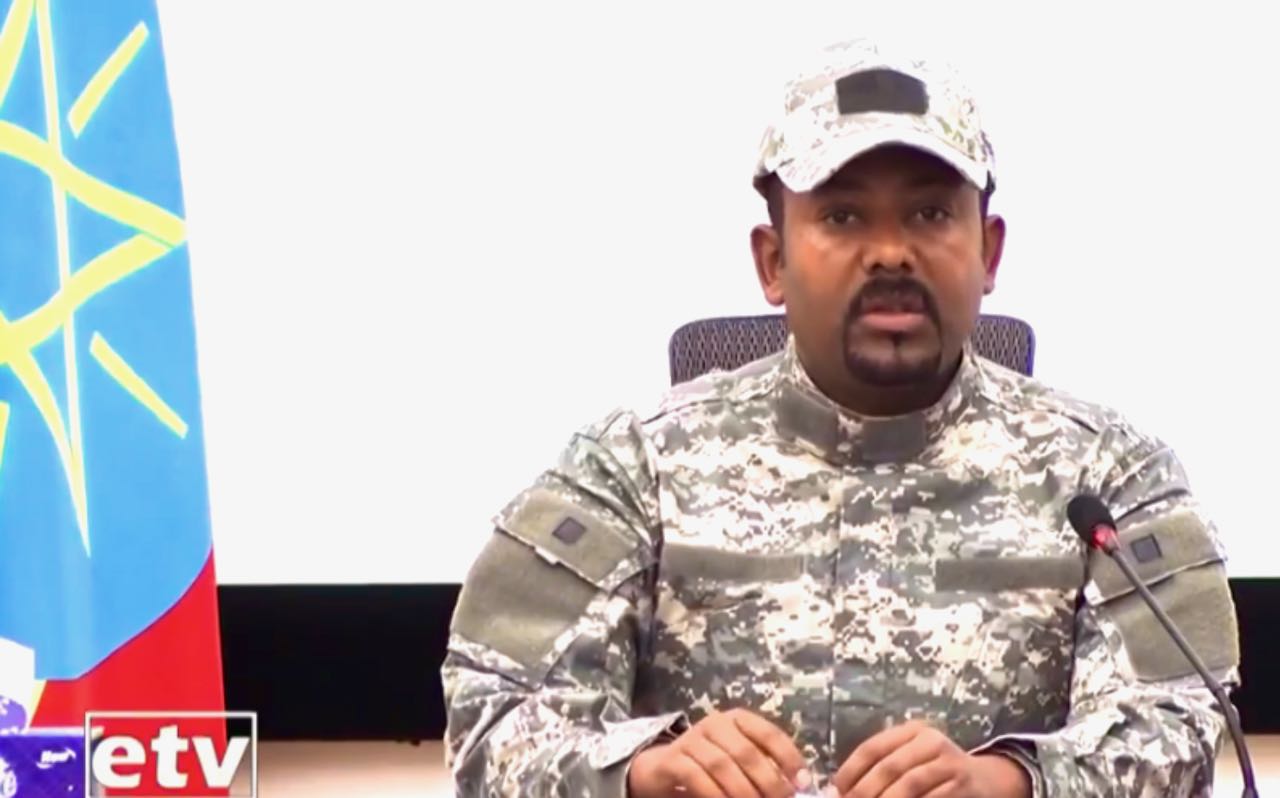 Even as the prime minister was being feted in Oslo last year, the seeds of this conflict were being sewn. (Kumera Gemechu/Reuters)
Source: Mail & Guardian
Several commentators have described this as tantamount to a declaration of war against one of Ethiopia’s own regional states.
About an hour later — still in the early hours of the morning — Abiy appeared on state television. He said that the Tigray People’s Liberation Front (TPLF), the party that governs the Tigray region, was guilty of “treason”. According to Abiy, Tigray regional security forces had assaulted Ethiopian military bases in the towns of Mekelle and Dansha, killing and injuring soldiers based there.
The Ethiopian army’s Northern Command, one of four regional commands, is based in Mekelle, the Tigrayan regional capital which is more than 700km north of the country’s capital, Addis Ababa. Tigray’s regional government has announced an airspace closure, according to AFP, and has claimed that the Northern Command will “stand with the Tigray people and the regional government”.
Tigray is home to about six million of Ethiopia’s population of 110-million people, and is located in the north-east of the country, along the border with Eritrea.
Tensions between the federal government in Addis Ababa and Tigray’s regional government have been running high for some time, and relations had soured considerably in recent months. Although this escalation remains shocking, analysts have warned for months that conflict loomed large.
Efforts by the Mail & Guardian to contact residents in Tigray were fruitless, because internet and phone lines were not functioning. Later, internet-service-tracking organisation Netblocks revealed that there was a considerable drop in Ethiopia’s internet usage that began about an hour before the prime minister’s announcement. As such, the Abiy’s claims remain difficult to authenticate, and the region is virtually cut off from the outside world.
BBC journalist Desta Gebremedhin, from the BBC’s Tigrigna language desk, was able to make contact with a relative in Mekelle. “My cousin in Mekelle could hear the raging gun battles,” he said. This indicates that the fighting is within the vicinity of a major urban centre.
Despite the prime minister’s claims that his soldiers were ambushed and pushed into the war, preparations for the eventual escalation had been made at least days in advance. Large-scale movements of Ethiopian troops heading northwards were reported in recent days. Meanwhile, on Sunday, Tigray regional president Debretsion Gebremichael announced that his forces were prepared for conflict, stating that “if war is imminent, we are prepared not just to resist but to win”.
A year ago, few could have predicted today’s events, when the prime minister of Ethiopia posed for cameras in Oslo at the award ceremony after receiving the 2019 Nobel peace prize. Hailed for bringing two decades of military hostility with neighbouring Eritrea to an end, the peace deal in 2018 sparked wild celebrations in both countries and was a rare feel-good story from the often conflict-ridden region. Yet already the seeds of conflict with Tigray had been sewn.
Prior to Abiy’s appointment as prime minister in 2018, the TPLF led a governing coalition that had monopolised power in Ethiopia for 27 years, ever since its armed wing helped to overthrow Ethiopia’s brutal communist junta in 1991. The coalition was called the Ethiopian People’s Revolutionary Democratic Party (EPRDF), and it ruled Ethiopia largely uncontested for three decades. This included the 21-year-rule of Meles Zenawi, who was himself from Tigray and a TPLF leader.
But the TPLF-led government’s authoritarian rule precipitated popular protests that began in 2015, and eventually led to upheaval within the governing coalition. In 2018, Abiy Ahmed — a relatively unknown leader from the Oromia region — and his allies usurped the ruling clique and took control of the EPRDF.
This was bad news for the TPLF. It lost its grip on power in Addis Ababa, and many of its former strongmen were declared persona non grataand detained or forced to flee the capital. But it remained in control of its home base in Tigray, where its armed wing is based. Initially, it also remained part of the country’s coalition government, but no longer enjoyed political dominance.
The rift between the TPLF and Abiy’s federal government in Addis Ababa widened, with officials in Mekelle openly expressing dismay with decisions made by the federal government. In late 2019, Abiy dissolved the EPRDF and merged its constituent entities into a single party he dubbed the Prosperity Party. The TPLF criticised the merger and decided against joining the new party, severing ties with Abiy and his allies — leaving the TPLF outside national government for the first time in three decades.
Officials from the two sides have since regularly traded barbs and accusations. Federal government officials accuse the TPLF of attempting to assassinate the prime minister at a rally in Addis Ababa in July 2018. A grenade was thrown near a podium where Abiy had been addressing a crowd, the explosion left five people dead and more than 140 injured. Abiy escaped unharmed. TPLF officials, meanwhile, have accused the federal government of discrimination against ethnic Tigrayans.
In June, Ethiopia’s parliament confirmed that the national elections scheduled for August 2020 would be postponed for up to a year because of the Covid-19 pandemic. The decision was heavily criticised by opposition critics, with many accusing the prime minister of using the pandemic as an excuse to unlawfully extend his mandate. The TPLF in Tigray denounced the decision, labelling it “unconstitutional”, and declared that it would unilaterally hold its own regional elections as scheduled.
In the meantime, a war of words broke out: state media outlets regularly broadcast anti-TPLF material to audiences nationwide, and the TPLF pushed its own line with its own broadcasters. Both sides also held military parades, which were interpreted as thinly veiled attempts at antagonising or intimidating each other.
In addition to the propaganda effort, Abiy’s friendship with Eritrean President Isaias Afwerki has been contentious. The Eritrean president loathes the TPLF. His enmity dates to the 1998-2000 war between Eritrea and Ethiopia which left 70 000 people dead. TPLF officials now accused Afwerki and Abiy of conspiring to destabilise Tigray. In February, one irate Tigrayan official accused Eritrea of meddling in Ethiopia’s internal affairs, going as far as threatening to “cut off [the president’s] hands” if Eritrea’s long-time dictator refused to refrain.
Last month, a televised broadcast showed Abiy giving his Eritrean counterpart a tour of Ethiopian air-force base installations. This only served to exacerbate tensions, which were not helped a few days ago when the Eritrean embassy in Ethiopia taunted the Tigray state leadership in a Facebook post, stating that it was “game over” for them. This led to suggestions that Eritrea could intervene militarily on Abiy’s behalf. The social media war of words continued with TPLF party official Getachew Reda tweeting on Tuesday that his party would prevail over the governments in Addis Ababa and the Eritrean capital Asmara, who he labelled “terrorists”.
The regional election in Tigray eventually went ahead on schedule, in defiance of the federal government, with the TPLF overwhelmingly defeating domestic opposition in Tigray. Abiy mocked the elections, calling them “hollow”, but at the time stated he did not intend to send troops to Tigray. Instead, the Ethiopian government stated it would not recognise the newly elected regional government and retaliated by slashing the budget allocated to the Tigray region.
For its part, Tigray announced that as of 5 October it would consider Abiy’s rule as illegitimate. This is the date that Abiy’s term would have ended if the national elections had gone ahead as planned.
On 30 October, perhaps with potential hostilities in mind, Abiy ordered Brigadier-General Jemal Mohammed to take up a post as deputy commander of the Northern Command at its base in Mekelle. But the brigadier-general never reached his new office: he was intercepted by Tigray regional government officials on arrival, and told to return to Addis Ababa.
Getachew Reda, the adviser to the Tigray state president, later clarified in a tweet that the officer was told to return because “any appointment after October 5th is unacceptable in Tigray”.
The consequences of conflict between Addis and Tigray are already being felt in the rest of the country. On Sunday, 54 ethnic Amhara civilians were brutally massacred at a school compound in Oromia. The Ethiopian government promptly accused the TPLF of involvement in the massacre, although it is yet to present evidence. The killings happened a day after Ethiopian soldiers based in the district suddenly vacated the region on Saturday, leaving residents at the mercy of armed militants. Some reports suggest that those soldiers were headed towards Tigray, giving weight to claims that the war was planned well in advance and not triggered by incidents that took place on Tuesday night.
These reports are difficult to confirm. Given the internet shutdowns across the region in which war is suspected of breaking out, and the government’s increasingly thin tolerance for independent journalism, verifying what has transpired in recent hours in Tigray is virtually impossible.
Neither side has heeded calls from both the African Union and the European Union to commence dialogue that would de-escalate the situation.
One of the poorest countries in the world, already struggling to contain the Covid-19 pandemic and grappling with deadly outbreaks of communal violence, is now on a war footing.
Debretsion Gebremichael – President of Tigray Region – has gone on television to warn his people to prepare for a looming war.

He says repeatedly that the Tigrayan people want peace but if war is waged against them, they are prepare to fight and to win.
This war, he adds, is being waged by the Federal Governmentt of Ethiopia and a foreign power, i. e. the Eritrean regime. He calls on Eritrea’s armed forces and its people to work hard to prevent this war.
The people of the region have had costly wars in the past, he says, and have no need for further conflicts. Instead they should be working to end the poverty of their people. President Debretsion pleads repeatedly for all differences to be amicably and peacefully resolved.
The tone of the President’s speech was measured, dignified and eloquent.
Source: Washington Examiner

The problem with dictators, whether Isaias, Kim, or Turkey’s Recep Tayyip Erdogan, is that they are seldom satiated by their own wealth: There is always something more they want, and they waste no effort trying to extract it from their own citizenry.
So, too, it has become with Isaias. Not content to wait for remittances to come from abroad, Isaias has sought to use the long arms of his dictatorship to levy a “diaspora tax” on Eritreans abroad, including those who now call themselves Americans. Within Eritrea, Isaias is the law. He bases demands for a “rehabilitation and recovery tax” on proclamations he issued in 1991 and 1995. Eritrean court journalists and regime apologists can say that the tax is legal, but the nature of law in Isaias’s Eritrea is akin to Louis XIV’s famous quip, “L’etat, c’est moi.” In short, the law is only the word of an absolute dictator and nothing more.
Imposing the tax inside the U.S. would be illegal on Eritrea’s part, but it would not be the first time countries have used their embassies for purposes that violate diplomatic protocols. President Jimmy Carter, for example, closed the Iranian Embassy on Massachusetts Avenue not because student radicals loyal to Ayatollah Ruhollah Khomeini had seized the U.S. Embassy in Tehran but rather because the new Iranian regime had run an operation from the property to kill a former Iranian diplomat living in Bethesda. Turkey, likewise, now uses its embassy just up the street to spy on political opponents real or imagined.
The State Department and U.S. law enforcement should neither ignore the evidence that Eritrea is abusing its diplomatic missions nor the precedent. In December 2011, U.N. Security Council Resolution 2023 called on Eritrea to “cease using extortion, threats of violence, fraud and other illicit means to collect taxes outside of Eritrea from its nationals or other individuals of Eritrean descent.” Isaias has simply ignored the call, and flagrantly so.
In 2013, for example, Canada expelled Eritrea’s consul-general after he ignored warnings to stop extorting, harassing, and threatening Eritrean emigres unless they forfeited 2% of their earnings to the government. The move had no discernible impact on Isaias, as a subsequent investigation showed that the consulate continued its extortion scheme. In 2018, the Dutch Foreign Ministry expelled Eritrea’s top diplomat in the Netherlands after he too ignored calls to stop the embassy’s taxation of the Eritrean community as a prerequisite for access to any goods and services, and the Dutch government may soon do it again. The United Kingdom has likewise investigated Eritrea for allegedly using its diplomats to threaten and coerce Eritreans living there to remit money directly to the government. A study conducted jointly by the DSP-groep, Tilburg University, and European External Policy Advisors found that Eritrean diplomats or unofficial government intermediaries also collected funds in Belgium, Italy, Norway, and Sweden and that the Eritrean government made collection of its levy part of its broader surveillance and intimidation scheme.
The problem appears to be worsening. The Eritrean government has defined Eritreans as “any person born to a father or mother of Eritrean origin in Eritrea or abroad,” imposing citizenship and its obligations on naturalized citizens, including Americans who have never stepped foot in Eritrea and have neither the desire nor the intention to do so. Survey respondents report at least some taxation of state welfare benefits paid by their new countries to those of Eritrean origin. While some Eritreans refuse to pay the tax in the belief they will never return to Eritrea, should they need to engage the embassy, they must first pay the tax levied and accumulated from the time they fled the country. If, for example, they must register a power of attorney, they might need first to pay tens of thousands of dollars in back diaspora tax assessments. Likewise, if they need documents such as marriage certificate copies to support emigration and asylum claims, they will find themselves blocked until they pay accumulated diaspora tax.
Eritrean diplomats, for their part, deny that the diaspora tax is illegal and liken it to U.S. taxation of its citizens living abroad, something to which European countries do not subject their citizens. U.S. double taxation is bad policy on Washington’s part, but the American analogy is simply inaccurate. The U.S. negotiates double taxation treaties with various governments. That the Eritrean regime will threaten the family members of its nationals abroad to compel diaspora tax payments likewise places it firmly in the camp not of the U.S. but rather of North Korea, Turkmenistan, or, in the past, Moammar Gadhafi’s Libya or Saddam Hussein’s Iraq.
The Eritrean violation in Washington both of normal diplomatic protocols and U.N. Security Council Resolution 2023 is unapologetic. The Eritrean Embassy in Washington might be temporarily closed, but its website solicits diaspora tax payments and states simply, “Eritreans who live abroad contribute 2% of their net income to rebuilding Eritrea.” It demands Eritreans turn over documents such as W-2s, U.S. tax returns, and Social Security statements so that Eritrean officials can calculate the tax owed. The Eritrean Mission in New York, however, remains open.
Ending illicit Eritrean activity on U.S. soil would be both easy and is necessary. For the State Department, the issue should not only be Eritrea but the fact that ignoring such violations gives a green light to other countries (from China to Turkey to Iran) to violate diplomatic norms at their U.N. missions and Washington embassies or interests’ sections. The European approach of simply expelling diplomats does not work because Isaias and his government simply rotate new officials in to continue the old practices. Instead, it might be time to shutter the embassy and U.N. mission if demonstrably in violation until such a time as Isaias commits both to canceling the diaspora tax and refunding the money extorted from Eritrean immigrants to the U.S.
Michael Rubin (@Mrubin1971) is a contributor to the Washington Examiner’s Beltway Confidential blog. He is a resident scholar at the American Enterprise Institute and a former Pentagon official.
NOVEMBER 2, 2020MARTIN PLAUTETHIOPIA, NEWS
Source: EU High Representative

Source: EU High Representative

Developments in Ethiopia are a cause of deep concern. All parties as well as Ethiopia’s neighbours must act to reduce tension, eliminate inflammatory language and abstain from provocative military deployments. Failure to do so risks destabilising the country as well as the wider region.
Building a national consensus through an inclusive national dialogue, comprising all the relevant political actors, is now more important than ever. This will be the key to a democratic and prosperous future for the Ethiopian people. Coercion or the threat of force can never be an alternative.
The European Union is firmly committed to supporting reforms in Ethiopia and reiterates that the only way to ensure the success of this endeavour is to uphold the rule of law while respecting human rights. This will also guarantee the possibility of free, fair and credible elections in 2021.

The regional government had threatened, a few days ago, that it would not accept orders issued by Prime Minister Abiy Ahmed for any movement of individuals or vehicles in the northern division of the Ethiopian army. The regional government argued that the Prime Minister does not have the authority to take these decisions. The northern division is stationed in the Tigray along the Ethio- Eritrean border.
It is worth noting that PM Abiy appointed General (Belay Seyoum from Amhara) as the new commander of the northern division some time ago, but until today he did not try to take up his duties in command of the division because of Tigrayan objections.
Some Tigrayans regard him as an Amhara. The objections also concern demands for the return of Walqait by Tigray. The other reason for their refusal to accept him as divisional commander is that he was appointed by PM Abiy. What happened today raises many questions.
Has PM Abiy lost control of the northern division of the Ethiopian army along the Eritrean-Ethiopian border? Does Tigray now really control the northern division, and its troops?
https://m.facebook.com/story.php?story_fbid=3397264327019693&id=100002084785738
خبر_عاجل : #Breaking_news حكومة #تجراي تطرد نائب قائد المنطقة الشمالية للجيش #الإثيوبي !
في تصعيدٍ خطير ضد #أبي_أحمد �� السلطات الامنية في ( إقليم تِجْرايْ ) تحتجز اليوم الخميس 29/10/2020 نائب قائد المنطقة الشمالية في الجيش الإثيوبي الجنرال جمال محمد من ( الأرومو ) المُعَيَّن حديثاً بعد وصوله مطار ( أَلُّولا أبَّا نقَّا في مدينة مَقَلِي عاصمة إقليم تجراي ) ثم تعيده مباشرة الى أديس أبابا من حيث أتى . وكان الجنرال جمال قد تم تعيينه مؤخراً من قبل أبي أحمد رئيس الوزراء والقائد العام للقوات المسلحة الإثيوبية . ويأتي طرد الجنرال جمال اليوم في تحدٍ واضح من قادة إقليم تجراي للأوامر الصادرة من أبي أحمد لإعتباره حاكماً منتهي الصلاحية وغير شرعي . وكانت حكومة الإقليم قد هددت قبل عدة أيام بأنها لن تقبل بأي أوامر يصدرها أبي أحمد لأي تحركات داخل للأفراد والآليات في المنطقة الشمالية للجيش الإثيوبي والتي تتمركز في الإقليم وذلك لأن أبي أحمد لا يملك الصلاحية لفعل ذلك . الجدير بالذكر أن أبي أحمد قام بتعيين الجنرال ( بَلاي سيوم من الأمهرا ) كقائد جديد للمنطقة الشمالية ولكنه حتى اليوم لم يصل الى حيث قيادة المنطقة الشمالية في الاقليم ليستلم مهامه نسبة لإعتراض الاقليم عليه شخصياً لأنه من ( الأمهرا ) وبالتحديد من المطالبين بعودة منطقة ( ولقايت ) من الإقليم . والسبب الآخر لرفضه كونه تم تعيينه من قبل أبي أحمد. وما حدث اليوم يثير الكثير من التسآؤلات ؟؟ هل فقد أبي أحمد فعلياً السيطرة على المنطقة الشمالية للجيش الإثيوبي المرابطة في الإقليم على طول الحدود الإريترية الإثيوبية ؟ وهل الإقليم الآن يحكم السيطرة على المنطقة الشمالية بأفرادها وعتادها ؟ وما هو الموقف الذي سيتخذه أبي أحمد لإعادة السيطرة على الفرقة إذا فعلاً أعلنت تمردها ؟ وهل في حال إندلاع أي مواجهة عسكرية بين أبي أحمد والاقليم أو إربتريا والاقليم إلى أي جهة ستقاتل المنطقة الشمالية ؟ * يبدو أن أبي أحمد كان يتوقع ربما تمرد المنطقة الشمالية أو انحيازها للإقليم لذلك قام بإنشاء فرقة عسكرية جديدة بمسمى ( منطقة االشمال الغربي ) مركزها مدينة ( بحر دار ) في إقليم الأمهرا المحادد لإقليم تجراي
Source: Human Rights Concern Eritrea
Hunger Strike by Two Eritrean Refugees in Long-Term Detention in Al-Qanater Prison in Cairo, Egypt
Two Eritrean refugees (aged 36 and 41), enduring long-term detention without charge in a prison for criminals in Egypt, have been on hunger strike since yesterday, 27th October 2020, in protest at the prolonged injustice of their treatment. Both men have been detained for 8 years without charge or trial, and without being allowed to apply for asylum or register a claim as refugees with the UN High Commission for Refugees (UNHCR) in Egypt.
Because of enforced conscription of all Eritreans of 18 years and upwards into often lifelong military service, hundreds of thousands of Eritreans attempt to escape from their country. In desperation, they leave by any means possible, travelling through neighbouring countries by very dangerous routes, such as via the Sinai desert, where they are frequently kidnapped by criminals, maltreated, tortured and held to ransom. Some of these desperate refugees reach Egypt, where they can be detained in prisons and denied refugee status, as has happened to these two Eritreans.
Only as recently as 23rd July 2020, officials of the UN Human Rights Council sent a memorandum to the Government of Egypt questioning the detention in a criminal prison of these same Eritrean refugees. The UNHCR memo highlighted their plight, questioning the legality and justice of their treatment. Both refugees have been in the hands of the Egyptian police, rather than being dealt with as refugees by immigration officials, and both were detained in Al-Qanater prison for criminals, rather than in an immigration centre.
The latest hunger strike by these two refugees in a criminal prison further highlights the very questionable justice of their treatment by the Egyptian authorities and draws attention to the so far unexplained length of their imprisonment without charge or trial in a prison for criminals.
Human Rights Concern-Eritrea (HRCE) has previously drawn attention to the illegal detention of Eritrean refugees in Egypt and the continued long-term illegal treatment of vulnerable Eritreans justifiably seeking sanctuary.
Elizabeth Chyrum, Director of HRCE, commented, “This hunger strike by the two Eritrean refugees is a desperate cry for help! —an action of last resort to call the world’s attention to their plight.
Their situation must not be ignored by any country which believes in the protection of human rights for all and supports the UN humanitarian treaties and principles for the treatment of refugees. It is now most vital that the Egyptian authorities release these two men without delay and enable them to make an application for asylum, as required by international law. They must on no account be returned to Eritrea, because of the danger they would face, since they would almost certainly be imprisoned and could face torture, disappearance, or death.”
28 October 2020
—
Human Rights Concern – Eritrea (HRCE)
This email address is being protected from spambots. You need JavaScript enabled to view it.
+44 7958 005 637
Sources indicate that the Eritrean who has been told to cease his diplomatic duties is Solomon Mehari. The Eritrean Minister of Information, Yemane Gebremeskel, reacted with fury on Twitter
 -
-
Source: Trou.nl
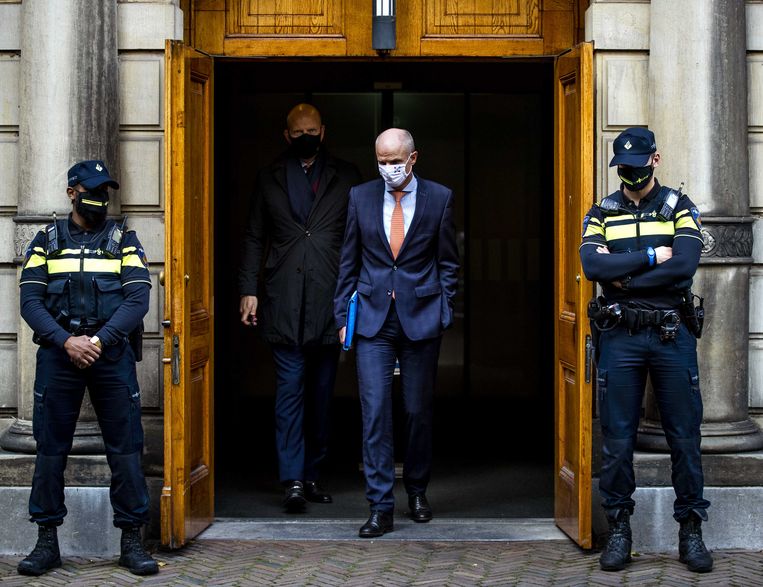
Stef Blok, Minister of Foreign Affairs, is leaving the Ministry of General Affairs. Image ANP
Minister Stef Blok of Foreign Affairs is taking steps against the diplomatic representation of Eritrea because it continues to collect money forcibly from fellow countrymen. An employee must stop working for the embassy office in The Hague.
The radio program Argos reported on Saturday that the embassy office has collected money from fellow countrymen to help the East African country through the corona crisis. Coercion would have been used in the collection. Eritreans living here were asked to donate at least 100 euros.
The ambassador of Eritrea was summoned to the Ministry of Foreign Affairs on Tuesday to clarify the matter. There, the envoy was informed that the local employee has been declared “unacceptable”, said a spokesman for the ministry.
It means that the man has to quit his job for Eritrea’s diplomatic representation. The man sometimes poses as consul of Eritrea, but he is not a diplomat. According to the ministry, he has often been involved in forcibly raising money.
Eritrea asks for money from fellow countrymen all over the world. This so-called diaspora tax is not prohibited, provided it is done without coercion. The cabinet would like to get rid of this diaspora tax, but sees no possibilities to do so. Two years ago, a diplomat from Eritrea had to leave the Netherlands because the embassy office continued to collect money.
Source: de Telegraaf

An employee of the embassy of Eritrea has been ordered to stop his activities by Minister Blok of Foreign Affairs. The man, posing as consul, put Eritreans in the Netherlands under pressure to give money.
Radio program Argos reported on Saturday that the Eritrean representation raised money from fellow countrymen to help the East African country through the corona crisis. People stated that they were being intimidated, including with the threat that family in Eritrea would not receive food coupons if they did not pay.
The ambassador of Eritrea has today been summoned to the Foreign Office to clarify things. There he was informed that the local employee has been declared “unacceptable”, which means that he is no longer allowed to work for the embassy. According to the ministry, the employee has often been involved in forcibly raising money.
A list that Argos has in its hands shows that at least 155,000 euros has been raised this time. Some come from supporters of the military regime or organizations affiliated with the regime. But the list also includes people who have fled precisely from that regime.
Two years ago, the highest Eritrean diplomat, the Netherlands, was expelled because the regime forced Eritreans in the Netherlands to hand over taxes to Eritrea. Intimidation was not shunned, the then Minister of Foreign Affairs Zijlstra wrote to the Lower House.
Eritrea asks for money from fellow countrymen all over the world. This diaspora tax is not prohibited, provided it is collected without compulsion.

The background to this story can be found below.


